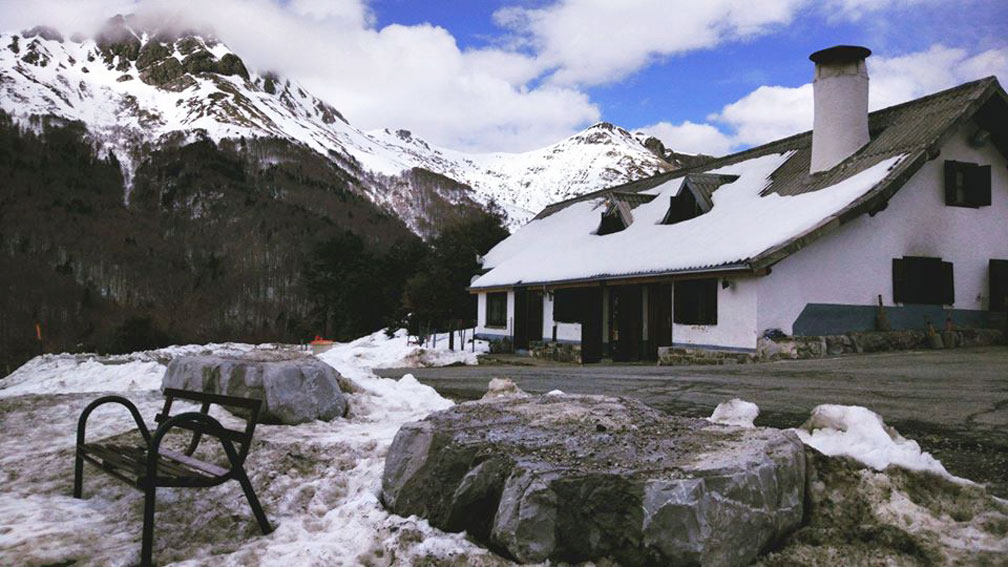
In the Belagua valley — a basin about a thousand meters deep carved by ancient ice — human history resembles the bustle of ants trapped in colossal geographies: shepherds, muleteers, and women who crossed the range in autumn to work in the espadrille factories of Mauleón. “When the north wind blows, the fog descends on us and this becomes a trap of hidden ravines,” Julián Gabás explained to me at the Venta de Juan Pito. On foggy days, his ancestor Juan would go out to blow a whistle — hence the name — to guide the shepherds to this refuge. He also guided the swallows, those women who returned from the factories dressed in black in spring. “They would cross the mountains and arrive exhausted, weighed down with everything they had bought in France, crockery, shoes, sheets rolled at the waist…”. The guards would descend on the women to fine them for smuggling, seize their merchandise, or squeeze them for a bribe. “Here at the sale the brothers or fathers awaited them with carts to take them back to the village; it was a spectacle. Sometimes a storm would catch them right in the middle of the mountain. In that chimney over there they would put the half-frozen women.” At the same doorway through which the swallows used to enter shivering, we mountaineers now place our backpacks: the fortunate ones who see in the mountain a magnificent stage for leisure and not a terrible environment in which to survive.
Columns
John Pito