
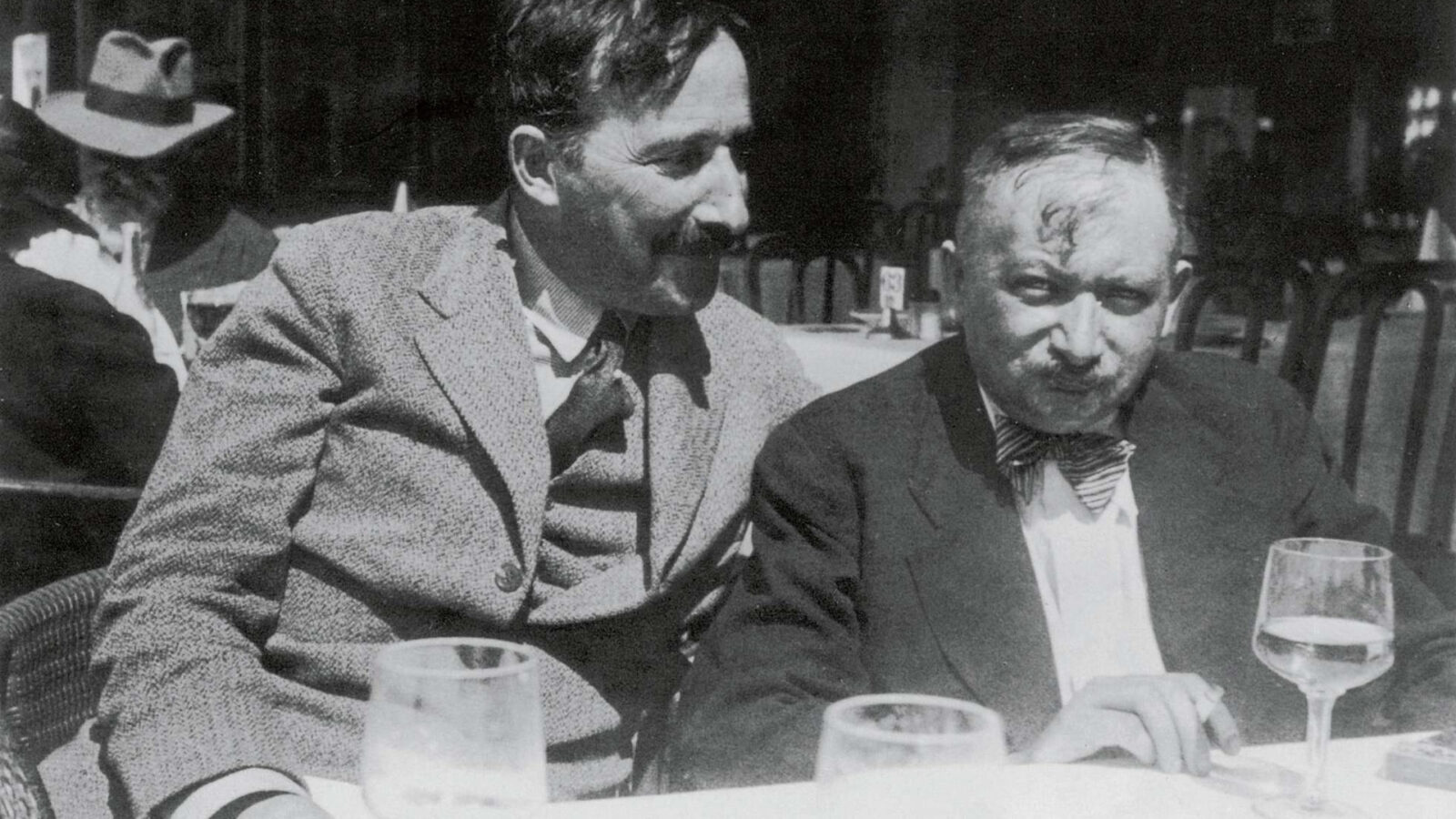
Some of these chronicles are disturbingly timely, such as the one that portrays a group of students —”fifteen-year-old stockbrokers”— who, amid the runaway inflation of the Weimar Republic, devote themselves to stock speculation instead of preparing for their exams, one of the scenes that most unsettled the author of The Holy Drinker, alongside those of the war-wounded begging in the streets.
“Between eleven and one in the afternoon, the lobby of the Stock Exchange is crowded with high school students of all ages and backgrounds. They have abandoned their studies of ancient metrics. Homer is recited in the form of interest rates,” Roth writes in one of his chronicles.
The editor of these texts, Javier Fernández Rubio, warns about Joseph Roth in the preface to this first Spanish edition that, “combined with his Jewish status and his role as a critical intellectual, he became at once a victim and a privileged witness to the Prussian authoritarian impulse” and as a portraitist of the “moral corrosion” that made the Nazis’ rapid ascent possible. 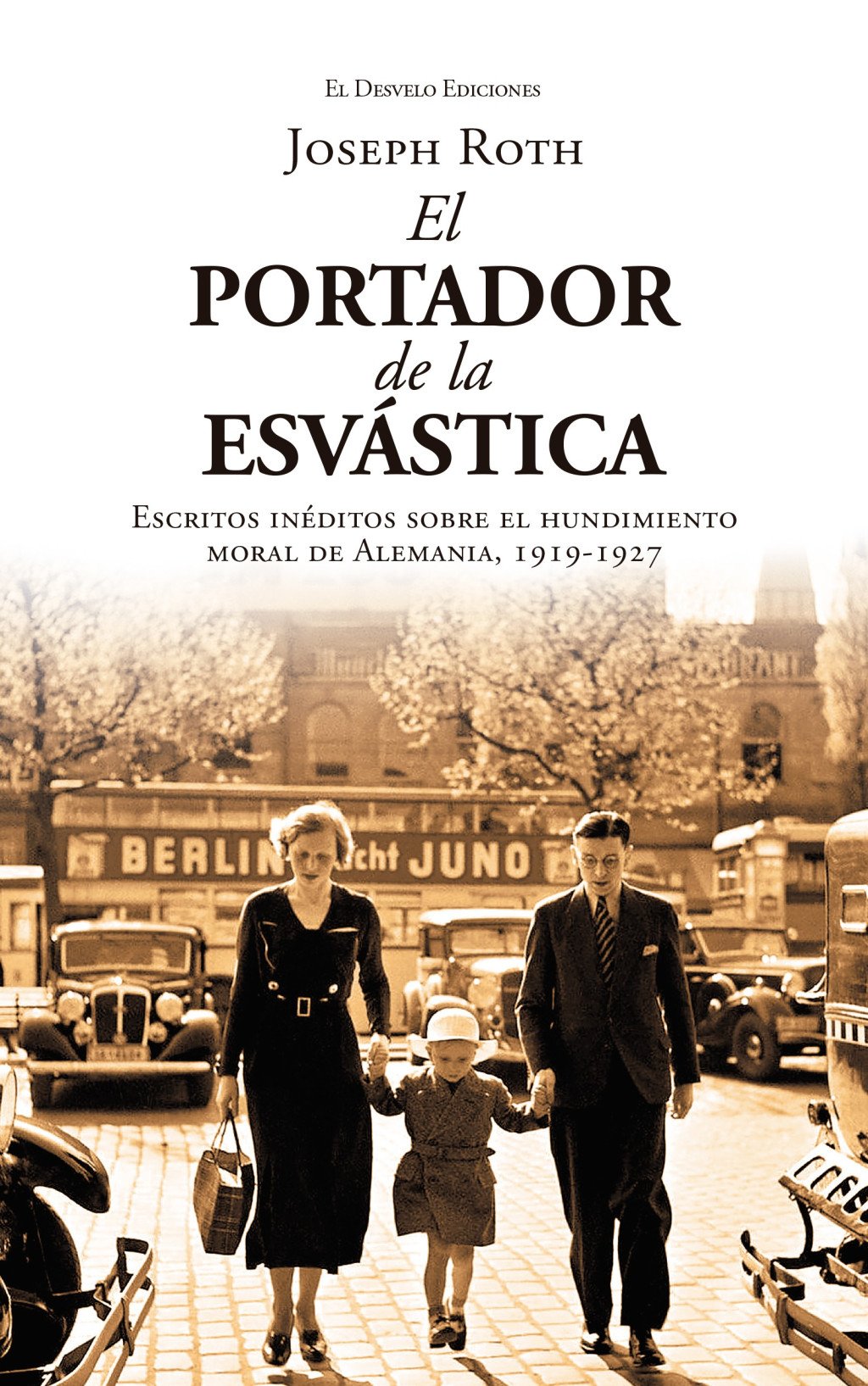
Fernández Rubio adds that Roth, in the wanderings and sufferings of the creatures he portrays in his chronicles, sees the prelude to what would come after, and hence the pieces he published in the era’s leading German magazines lack cynicism but are not devoid of irony or compassion.
Intellectual complicity and cowardice of writers
They are also belligerent writings against those who refused to see the obvious and, at times, “a declaration of war against the intellectual complicity and the cowardice of writers who preferred to keep silent”, according to the editor, who recalls that Roth authored no fewer than four thousand articles, a original, brave journalistic output with literary overtones that is now coming to a hundred years old.
Born in 1894 in a territory of the Austro-Hungarian Empire that today belongs to Ukraine and who died in Paris in 1939, Joseph Roth, in addition to the author of The Radetzky March and Job, was the great chronicler of daily life in Vienna and Berlin and became one of the most influential and best-paid writers of his time, a circumstance that, paradoxically, allowed him to imitate the vagabonds with whom he illustrated his chronicles and, at least in Berlin, no fixed residence was known.
“It was inevitable that he would end up exiled, poor, alcoholic, horrified to learn that his books ended up on the pile of the Action Against the German Spirit that the Nazis piled up in 1932 at the Bebelplatz in Berlin,” says Javier Fernández, concluding: “The same culture, the same society that had given Goethe, Kant and Nietzsche had built the gas chambers,” a demonic invention that Roth also glimpsed almost twenty years before its materialization in the chronicle titled “Natural History of the General”: “The general who cannot find prey suffers the torments of frustrated ambition (…). I mock him as a demon who cannot find with whom to experiment.”