
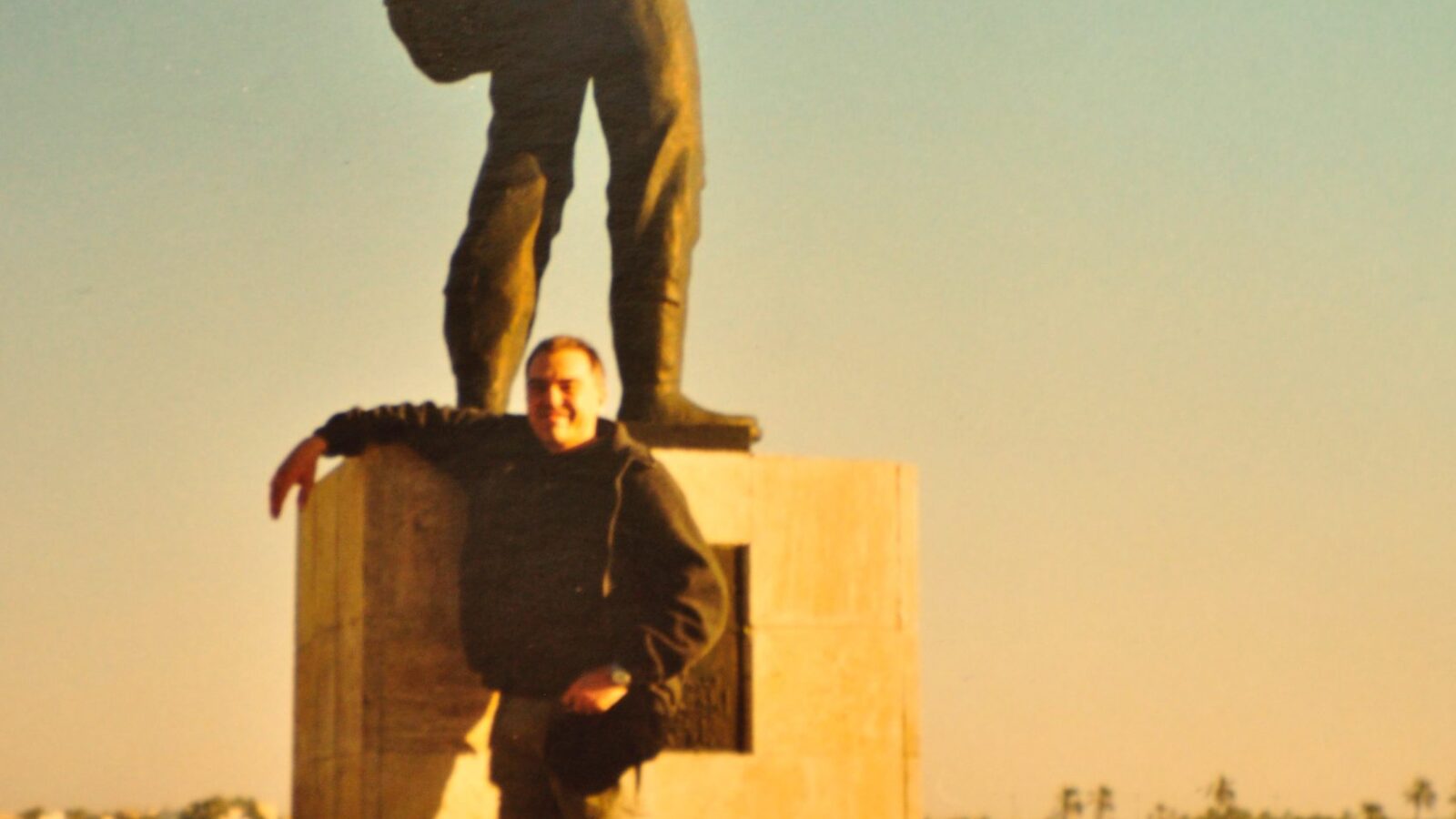
On November 19, 2001, the Spanish journalist Julio Fuentes was killed along with three other reporters while attempting to reach Kabul. Twenty-five years later, the memory of that tragedy remains among those of us who shared with him wars, the craft, and a way of understanding journalism.
*****
Julio Fuentes was one of those journalists who seemed more comfortable roaming the paths of a war than staying in a newsroom for too long. He had a reserved character, a smile that came easily when he was among colleagues and a sense of humor that helped cope with the most difficult situations. He had devoted much of his life to covering conflicts, but he retained the curiosity of someone who still finds something new to tell behind every story.
I had known him in other war scenarios, in Basra (southern Iraq), in Afghanistan, in Pristina (Kosovo). Meeting Julio meant encountering an experienced journalist, used to working under challenging circumstances and with whom there was always an opportunity to exchange information about what was happening. In those places, where encounters between correspondents are often brief and goodbyes are left pending for a future destination, relationships are formed that have a lot to do with trust and the awareness of the risks we all share.
Julio had spent more than twenty years devoted to international reporting and had covered some of the most important conflicts of the latter decades of the 20th century. Central America, the Gulf War, Sarajevo, Chechnya and many other places were part of a professional trajectory in which he had learned to view wars from the perspective of those who suffered their consequences.
His chronicles were not limited to recounting the movements of armies or the decisions of political leaders. He was especially interested in the people who ended up trapped between the fighting, the families that left their homes, the children who grew up surrounded by violence, and those who tried to preserve something resembling a normal life amid the destruction.
In 1989 he joined the founding team of El Mundo, after his early years in the profession, and over time he became one of the newspaper’s most experienced war correspondents. Sarajevo held an important place in his career. During the siege of the Bosnian capital he stayed for long stretches in a city where bombardments and snipers conditioned every move of the civilian population. That experience would be reflected in his book Sarajevo, Final Judgment.
But Julio also had a life outside of conflicts. Gervasio Sánchez, who shared with him numerous experiences, recalls how during the Bosnian War he drew on napkins the plans for a house he was building in the Picos de Europa. He spoke of that project with enthusiasm, imagining a peaceful place to return to after so many years traveling through war zones.
On November 19, 2001, when he was killed on an Afghan road, he was 46 years old, married to journalist Mónica García Prieto, and still possessed many personal and professional projects.
Twenty-five years later, his death remains one of those events that linger in the memory of those of us who shared that period with him.
Afghanistan was then living through one of the most turbulent moments of its recent history. The Enduring Freedom Operation, launched by the United States on October 7 as a response to the September 11 attacks, had precipitated the collapse of the Taliban regime. The forces of the Northern Alliance, supported by American air power, advanced toward Kabul and between November 13 and 14 the Taliban abandoned the capital.
The team from Televisión Española had entered Afghanistan from the north, accompanying the Northern Alliance forces, and we arrived in Kabul coinciding with that withdrawal.
The city was deeply scarred by years of fighting. There were destroyed buildings, armed men everywhere, and a population that was only just beginning to reclaim the streets. But the Taliban withdrawal did not mean the war was over. Numerous fighters remained hidden in the mountains and the roads continued to be extremely dangerous.
Those days we stayed at the Intercontinental hotel, which had become one of the main meeting points for the international press. Conditions were quite precarious. There was no electricity, the elevators did not work, and hot water was a luxury that did not exist. At least, the restaurant continued to offer meals and allowed journalists to gather after long days of work.
Julio was in Jalalabad and planned to travel to Kabul to relieve Alfonso Rojo, his colleague at El Mundo, who had been in Afghanistan for more than a month and had entered the capital with us.
We had spoken with Julio and knew he was preparing the move. As the situation in Kabul was complicated and almost all newly arrived journalists were looking for accommodation, we managed to find him a room at the Intercontinental. It was not easy, but it was eventually resolved.
We expected him for Monday, November 19.
The day before, Julio had spoken with the International section of El Mundo to request authorization to join a convoy of journalists that was being organized in Jalalabad. The journey to Kabul was about 150 kilometers, a distance that in those circumstances could take four hours or more along deteriorated roads and through territories where armed groups still operated.
At dawn, between six and eight vehicles left the Spin Ghar hotel and began the journey toward the capital. In the first cars were Julio Fuentes, Italian journalist Maria Grazia Cutuli, of Corriere della Sera, Australian cameraman Harry Burton and Afghan photographer Azizullah Haidari, both of Reuters.
They had traveled about two hours when, near Sarobi, about 90 kilometers from Kabul, several armed men appeared among the rocks and stopped the convoy’s lead vehicles.
They forced the journalists to disembark and led them off the road. According to the later account of one of the drivers, the attackers identified themselves as Taliban and reproached the reporters for having announced the end of their power.
“Didn’t you journalists say that the Taliban were finished? Well, here you have us.”
Julio tried to ensure they could be released, but the men began to assault them and then opened fire.
The four journalists were killed.
The vehicles traveling behind were able to return to Jalalabad after their drivers were warned about the attack. Among the journalists traveling in that portion of the convoy was Eduard Sanjuán, from the TV3 team.
The news took a while to reach Kabul. Communications were difficult and for hours there circulated confusing information about what had happened. In Jalalabad, an ambulance from the Red Cross managed to gather local personnel to recover the bodies, but nightfall and the insecurity of the roads forced the operation to be postponed until the following morning.
When they were finally able to transport the bodies to the Jalalabad hospital, the Televisión Española team comprised by José Antonio Guardiola and the cameraman José Manuel Freán recorded the arrival of the first bodies, those of Harry Burton and Julio Fuentes.
In Kabul, the news produced a profound shock among us. In the Intercontinental we found numerous journalists and special correspondents, among them Fran Sevilla, Joan Marcet, Alfonso Rojo, Enrique Serbeto and Ricardo Ortega, another colleague who would be killed three years later while covering the events in Haiti.
I remember especially Alfonso Rojo’s reaction. Julio was going to relieve him and he was waiting for his arrival so he could return to Spain. When he learned what had happened, he immediately wanted to get into a vehicle and go search for him. Together we managed to persuade him to abandon that idea, because traveling the Afghan roads at night, after what had just happened, would expose him to another attack.
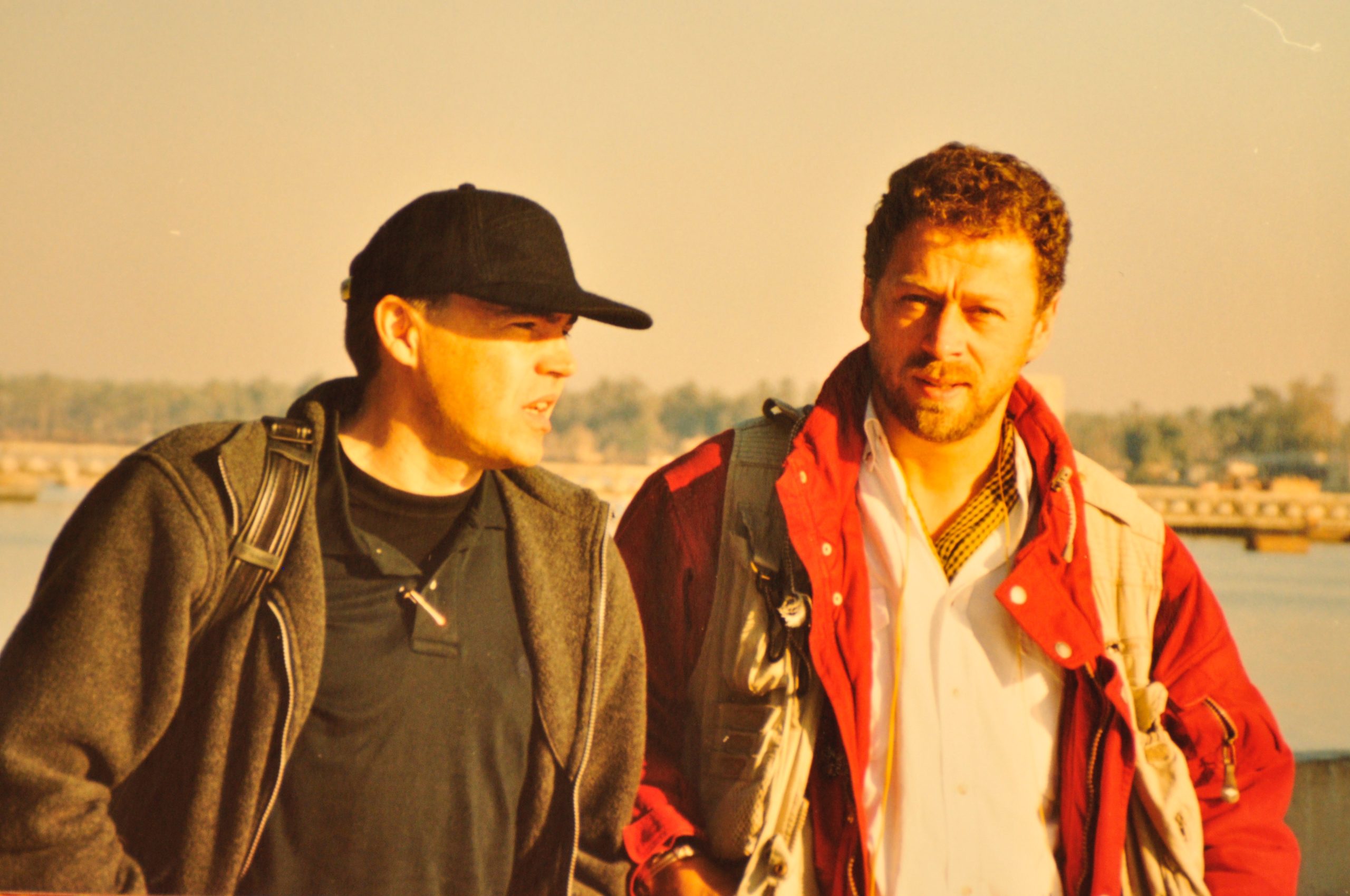
That reaction from Alfonso spoke volumes about the bond that forms between colleagues when they work in a war. For weeks you share information, vehicles, lodgings, and decisions in which any choice may have unpredictable consequences. The death of one of them is experienced in a particularly intimate way because we all know the risks and we know we could have found ourselves in similar circumstances.
In those moments you set aside for a few hours the news you have to tell and begin to ask yourself about the colleague you have just lost.
I have always thought that those who work in wars learn to live with danger, even if we never quite get used to the death of someone close.
You know death is near, but you shrink when you feel it breathe.
The body of Julio was transported by the Red Cross to Peshawar, in Pakistan, where he was identified by his wife, Mónica García Prieto. He later returned to Spain on a CASA 235 aircraft of the Spanish Air Force.
His killing, along with that of Maria Grazia Cutuli, Harry Burton and Azizullah Haidari, provoked a deep international shock and once again highlighted the risks faced by journalists in Afghanistan.
Six years later, on October 8, 2007, Reza Khan, condemned for his role in those deaths, was executed in Kabul. The families of the journalists had requested that the death sentence be commuted, a request also conveyed by the Spanish government.
During the twenty-five years that followed, Afghanistan has continued to headline. The international military intervention ended with the withdrawal of American troops and their allies in August 2021, when the Taliban regained power and returned to Kabul, precisely the city that Julio had been trying to reach that November morning in 2001.
It is inevitable to think about the stories he would have written about that outcome, the people he would have spoken to, and the human consequences he would have pursued behind the political and military events.
Those of us who knew Julio retain different memories of him. His smile, his sense of humor, his excitement when he obtained a good bit of information, and that ability to connect with the people he met during his travels. Also his interest in the life that awaited him outside the wars, in that house in the mountains, and in the projects he still had pending.
War journalism has something that is difficult to explain to those who have never worked in a conflict. Colleagues meet in far-flung places around the world, share a few days or weeks, and then each continues on their way. Sometimes years pass before we meet again, but when we do, we easily resume the conversation we had left unfinished in another country, in another war.
Julio belonged to that generation of correspondents who traveled the great conflicts of the late 20th century and understood that to tell a war you had to be there, to know its protagonists, and to listen especially to those who suffered its consequences.
On November 19, 2001, he left Jalalabad with three other journalists to traverse a road that should have led them to Kabul. There his colleagues awaited him, among them Alfonso Rojo, who planned to return to Spain after handing over the relay.
Also waiting for him was a room at the Intercontinental hotel that we had managed to reserve for him amid the difficulties of those days.
Julio never arrived to occupy it.
Twenty-five years later, that room remains part of my memories of Afghanistan. As does the memory of Alfonso trying to go out to search for him and of so many colleagues who shared with Julio a profession in which farewells are often made with the next meeting in mind.
Julio Fuentes will continue to be one of us, a fellow member of that great family of war reporters we call the tribe.