
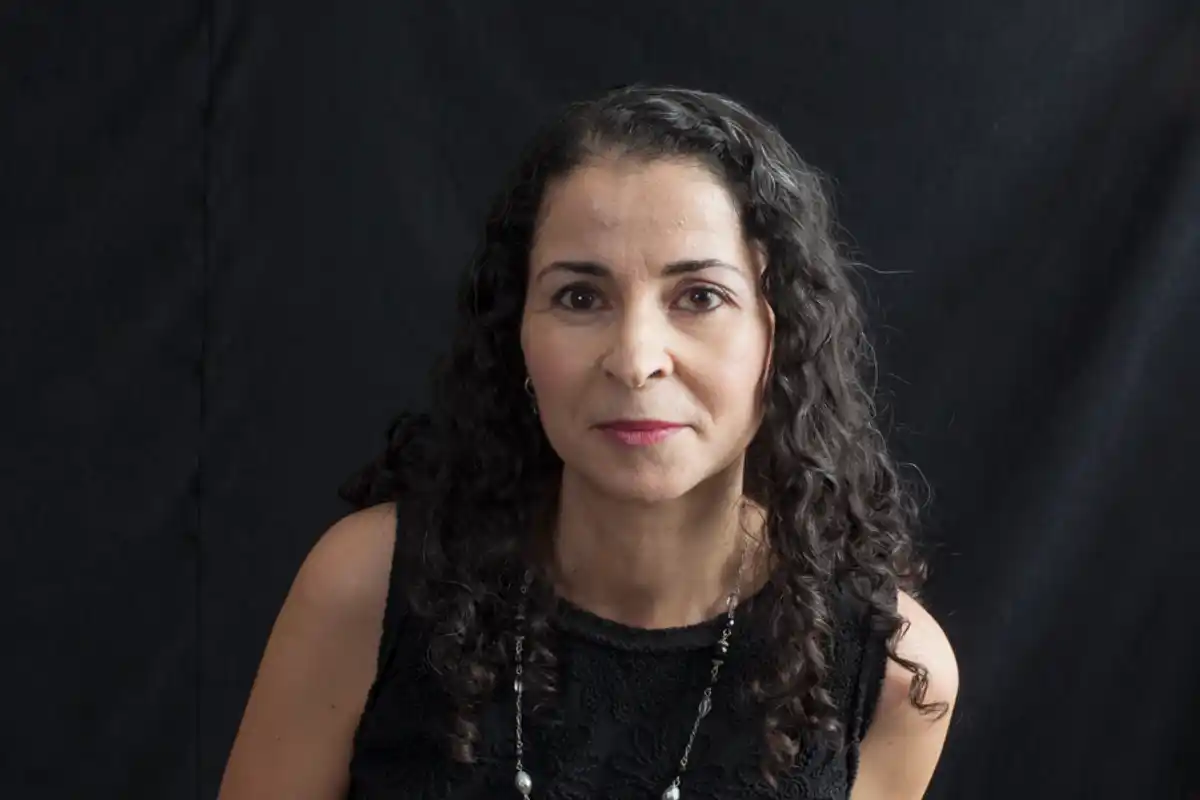
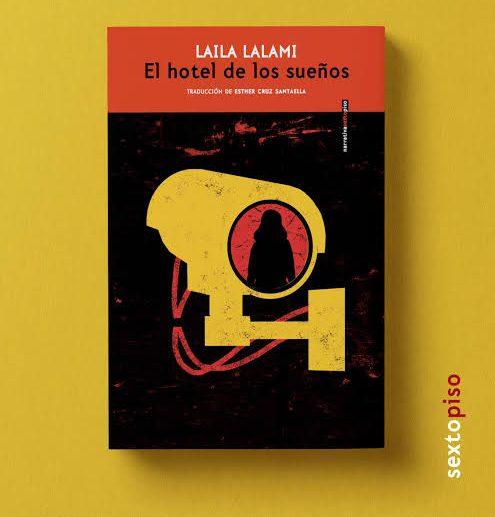
Perhaps because she has trouble sleeping, or perhaps because she senses that her smartphone knows more about her than she does, the Moroccan-American Leila Lalami wrote The Hotel of Dreams, her latest novel, a dystopian tale born years ago from a question: “What would happen if dreams were not private?”.
In an interview with EFE, the writer, who took part in one of the panels at the 42nd Festival of Fantasy Genres in Barcelona, asserts that today “dreams are the last islands of freedom we have,” although perhaps one day this could change in light of what is happening now, when thanks to the searches everyone does on Google, “it is possible to know what a person thinks.”
Winner of the American Book Award and the Arab-American Book Award, among others, for The Moor’s Account, a finalist for the Booker Prize and the Pulitzer Prize for Fiction, and winner of the Joyce Carol Oates Prize for The Other Americans, Laila Lalami arrives in Spanish bookstores, through Sexto Piso, for the first time translated into Spanish, with a disturbing work, featuring a menacing algorithm, fed by data drawn from people’s dreams.
A Museum Archivist Detained by an Algorithm
Sara, a museum archivist specializing in the postcolonial history of Africa, married to Elias, mother of twins, of Moroccan origin, arrives one day at Los Angeles International Airport, the city where she lives, after giving a lecture in London, and is detained by several agents from the Risk Assessment Agency.
The reason is that an algorithm, leveraging a dream-related technology used by this woman, determines that she poses a threat to her husband.
Although she has committed no crime, she is confined to a detention center, initially for 21 days, until her risk index is deemed acceptable, but her stay at the facility, called Madison, will be longer than expected, giving her the chance to meet other women in the same situation and to interact with guards like Hinton.
“Sara —the novelist reveals— is a woman like many others who uses technologies without thinking of their consequences, and who even accepts that privacy is to be sacrificed. One day, returning from abroad she will see how all the data she has generated will be used against her.”
On the character of Hinton, she believes he is “very interesting to see not only as a villain but also as a victim.”
“When I was thinking about the character —she confesses— I always saw how easy it is for a person to become an abuser once power is granted.”
Having lived in the United States for more than thirty years, arriving in the nineties to study from her homeland Morocco and staying for love, Laila Lalami, who lives in Los Angeles, expresses hope regarding the outcomes of the US midterm elections held last Tuesday, in a country led by a “buffoon,” and where “the cost of living has risen a lot in recent years.”
The author, who will use her first visit to Barcelona to see the Sagrada Família and stroll along the sea, will also participate on the 9th in a conversation at the Centre de Cultura Contemporània de Barcelona (CCCB) with writers Pankaj Mishra and Arundhati Roy on The World to Come.