
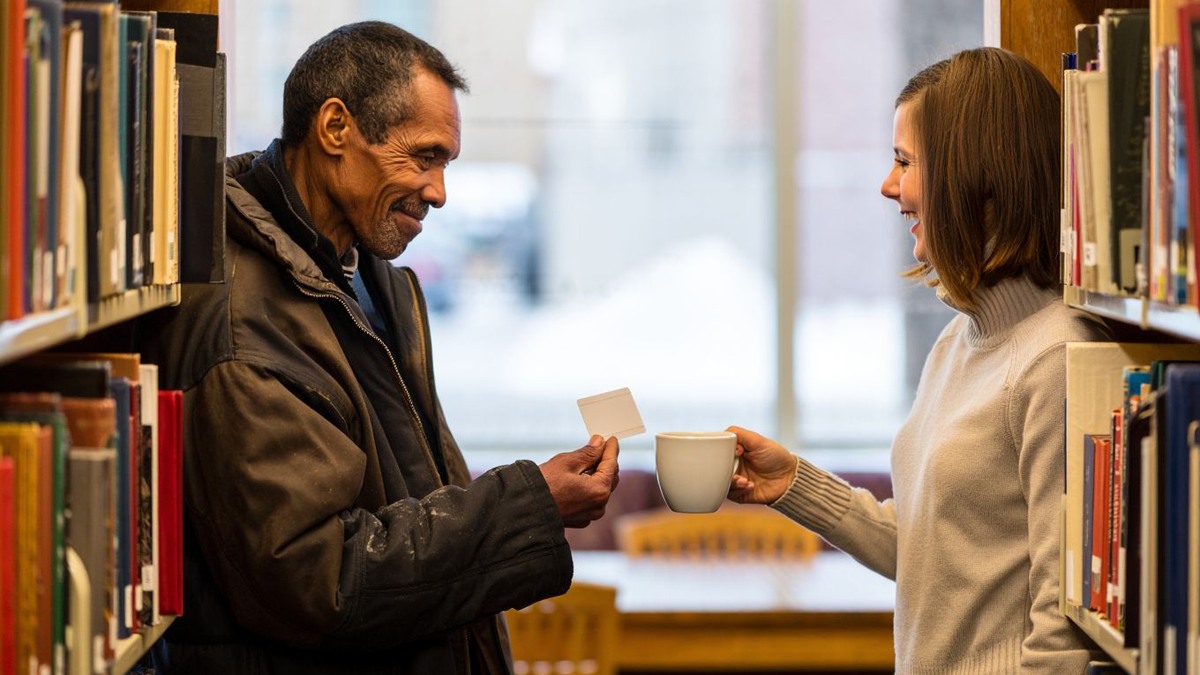
Public libraries are among the last truly open indoor spaces in most communities. No purchase required. No membership demanded at the door. Warmth in winter and shade in summer, offered to anyone.
That openness means libraries are often where a person with nowhere else to go can simply be, and where the small dramas of dignity quietly play out.
The Man by the Window
He came in most days and sat where the light was good. He was unhoused, and in many places that fact alone invites suspicion, surveillance, or a polite request to move along.
Here, instead, he was offered a seat. Not grudgingly, not as a test of patience, but as the ordinary courtesy any patron receives.
The librarian noticed him the way she noticed everyone: as a person with a name, not a problem to be managed.
She decided he belonged there, because he did.
The Gesture That Sounds Too Small to Matter
The thing that changed the tone between them was almost absurdly simple. She learned his name, and she used it.
Not a label. Not sir in the wary tone people reserve for those they wish would leave. His actual, preferred name, spoken as a greeting, every time.
It is difficult to overstate what this does for someone who has grown used to being looked past. To be named is to be recognized as real.
For a person who spends much of the day treated as scenery or nuisance, a single sincere greeting can feel like being handed back a piece of himself.
Being known is not a luxury. It is a human need.
Beyond the Greeting
The relationship did not stop at hello. Over time, the library became a practical foothold.
She helped him navigate the maze that stands between an unhoused person and basic stability, the sort of quiet, unremarkable assistance libraries provide constantly:
- Guidance toward obtaining identification documents
- Referrals to local services and support agencies
- Reliable access to computers, information and a phone
None of this was dramatic. It was patient, procedural and easy to miss. But for someone locked out of systems that assume you have an address, a login and a fixed identity, it was a lifeline.
Why This Is Not a Rescue Story
It is tempting to frame this as one heroic figure lifting another out of despair. That framing is flattering and false, and it does real harm.
One librarian cannot end homelessness. She cannot conjure housing, heal what put him on the street, or repair the gaps in a social safety net stretched far too thin.
Homelessness is a structural failure, not a personal one, and it will not be solved by kindness alone, however genuine.
What she could do was refuse to add to his invisibility. She could make the library a place where he was safe, recognized and treated as a full member of the public.
That is meaningful and limited at the same time, and both halves of that truth deserve to be held together.
What the Gesture Really Teaches
The lesson is not that a warm heart fixes everything. The lesson is smaller and more durable.
Dignity is something we can extend immediately, at no cost, to anyone. It does not wait for policy, funding or reform.
Using a person’s name is not a solution to poverty. But it is a refusal to pretend they are not there, and that refusal is where every larger solution has to begin.
The man’s life did not transform overnight, because lives rarely do. What shifted was that he had one place where he was expected, greeted and known.
In a world that so often looks straight through people like him, that turned out to be far from nothing.
Sometimes the first step toward being helped is simply being seen.
And libraries, quietly and imperfectly, keep doing that work every single day.