
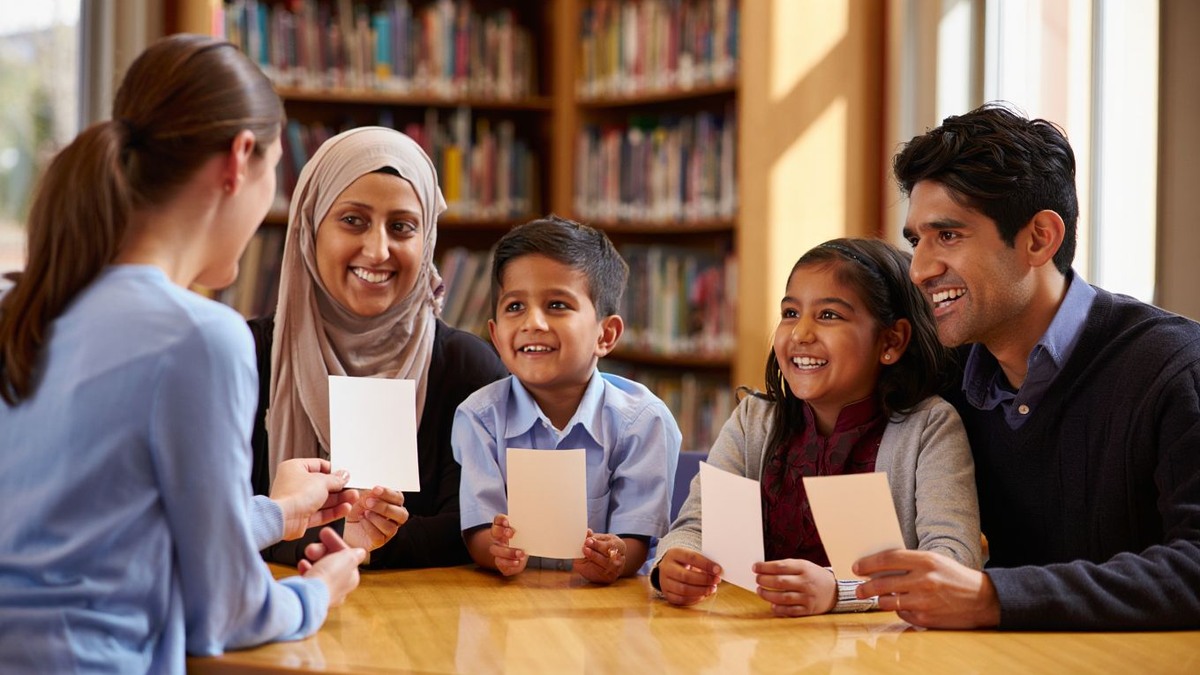
A family arrives in a new country carrying very little, and almost none of it fits in a suitcase. There is language, familiarity, the confidence of knowing how things work. All of it has to be rebuilt.
For many newcomers, one of the first buildings where that rebuilding begins is the public library.
A Door That Asks Nothing at the Threshold
Libraries are unusual among public institutions. You can walk in without money, without documents, without a reason you have to explain to anyone.
For a family still finding its footing, that openness is not a small thing. It is a rare place where they are not being assessed, processed or asked to justify their presence.
The librarian who greeted them understood this instinctively. She did not begin with paperwork. She began with a welcome.
Dignity came first, before any lesson. Everything else followed from that.
The Tools Were Free, the Effort Was Theirs
What the library offered was practical and unglamorous. Language-learning materials. Computers with internet access. Quiet tables. Programs where people could practise speaking without fear of being laughed at.
The parents came back again and again. They worked through exercises after long days, sounded out unfamiliar words, and slowly stopped apologizing for their accents.
The librarian guided them toward resources and sat in on conversation sessions, but she was careful never to mistake herself for the engine of their progress.
That engine was the family. Their persistence, their willingness to be beginners in public, their refusal to give up on a hard afternoon.
Help opens a door. It does not walk through it for you.
Small Wins That Added Up
Progress rarely announced itself. It arrived in fragments.
A parent filling out a form without needing every line explained. A child reading a picture book aloud at a story program and glancing up, proud. A phone call handled in English that would have been impossible weeks earlier.
The children often moved fastest, absorbing the new language the way children do, then carrying words home to their parents like small gifts.
Some of what the library provided was strikingly ordinary, and that ordinariness was exactly the point:
- Access to computers and the internet at no cost
- Practical help understanding forms and instructions
- Conversation practice in a low-pressure setting
- Children’s programming that made reading feel like play
Why the Library, and Not Somewhere Else
There are other places a newcomer family might turn, but few combine what a library does under one roof, free of charge, with no appointment required.
It is a language classroom, a computer lab, a reading room and a community hub at once. And crucially, it is somewhere you are allowed to simply exist while you figure things out.
That combination is difficult to replicate anywhere else in a community. It is also easy to take for granted until you need it.
For a family starting over, the library became a fixed point. A place that was the same each week while everything else was still shifting under their feet.
What Actually Changed
The phrase changed everything gets used loosely, but here it points at something concrete. Not magic. Momentum.
With language came the ability to advocate for themselves. To ask questions, read a lease, help their children with homework, apply for work, and speak up rather than nod along.
None of that erased how hard the journey was. Rebuilding a life is not a triumphant montage. It is slow, tiring and often lonely.
But the family had a place that assumed their success was possible, and a person who treated their effort as worthy of support rather than suspicion.
The library did not save them. It made room for them to save themselves.
That distinction is not a technicality. It is the whole meaning of the story.
Long after the hardest early months, a family like this one keeps coming back. Not out of need now, but out of belonging. And often, they become the ones who quietly help the next newcomer find the door.