
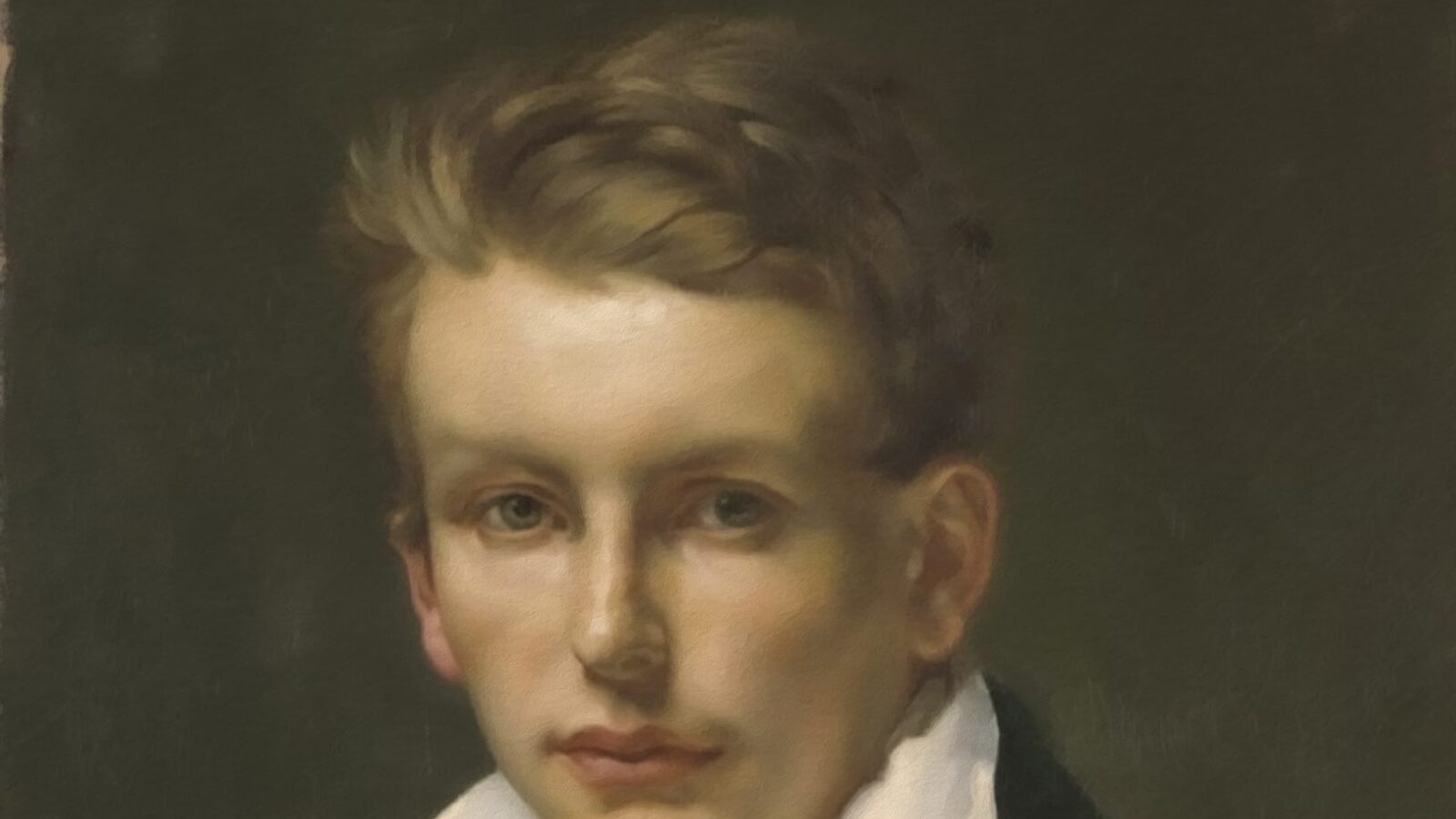
This novel holds a central place in The Human Comedy. A young man arrives in Paris hungry for a triumph as a poet. Clearly, he will have to contend with the usurers and swindlers of the publishing world.
At Zenda we reproduce a fragment from Lost Illusions (Akal), by Honoré de Balzac.
***
A few days before Coralie’s debut at the Gymnase, Lucien arrived, arm in arm with Hector Merlin, at the Vaudeville foyer. Merlin reproached his friend for having helped Nathan in the Florine affair.
—You have forged two mortal enemies in Lousteau and Nathan. I had given you good advice and you did not take it. You have showered praise and performed acts of goodwill, and you will pay for it with a cruel punishment. Florine and Coralie will never live in peace if they share the same stage: one will want to outshine the other. You rely only on our newspapers to defend Coralie. Nathan, beyond the advantage his craft as a playwright gives him, controls the liberal press regarding the theaters and has been in the journalism world longer than you.
This line confirmed Lucien’s secret fears, for he did not find in Nathan or Gaillard the candor he had a right to, but, having recently become what he was, he could not lament it… Gaillard harried Lucien, insisting that newcomers must prove their loyalty for a long time before the party can trust them. The poet discovered within the monarchical and governmental newspapers a jealousy he could never have imagined, a jealousy that arises among men when confronted with a share to divide and that makes them resemble dogs fighting over a prey: they growl, display the same temperament and exhibit the same attitudes. Those writers secretly cheered themselves with thousands of schemes to harm one another before those in power. They accused each other of weakness, and to rid themselves of a rival they hatched the most treacherous plots. The liberals had no internal grounds for dispute because they stood apart from power and its favors. Upon glimpsing that intricate web of ambitions, Lucien lacked the courage to unsheathe the blade and cut the knots, nor the patience to unravel them; he could neither be the Aretino nor the Beaumarchais nor the Fréron of his era, so he clung to his single hope, to obtain a noble title, understanding that with that distinction he would secure a good marriage. His fortune then depended on a chance, aided by his looks. Lousteau, who had placed such trust in him, knew his secret. The journalist knew how to deal a death blow to the Angoulême poet; thus, the day Merlin brought him to the Vaudeville, Étienne had prepared Lucien’s terrifying trap in which the young man would fall and perish.
—Here is our handsome Lucien,‒said Finot, drawing Des Lupeaulx, with whom he was speaking, before Lucien, whose hand he took with the deceptive flattery of friendship‒. I do not know anyone who has forged a fortune as quickly as you have‒continued Finot, glancing between the poet and the maître des requêtes‒. In Paris, fortune comes in two kinds: there is material fortune, the money that anyone can acquire, and there is moral fortune, the connections, the status, the access to certain spheres that are unattainable for certain people, no matter what their material wealth, and my friend…
—Our friend,‒said Des Lupeaulx, casting a affectionate look at Lucien.
—Our friend,‒continued Finot, taking Lucien’s hand in his and giving him a few pats‒has won a brilliant fortune in the latter sense. Truth be told, Lucien has more resources, talent, and wit than all who envy him, and moreover his charm is captivating; his old friends do not forgive his successes and say that he has simply been lucky.
—This kind of luck,‒said Des Lupeaulx,‒is never possessed by fools or the incapable. Can one call luck the fate of Bonaparte? There were twenty generals ahead of him to command the Italian campaigns, just as today there are a hundred young men who would like to enter Miss des Touches’ house, whom the great world has already named your future wife, dear lad!‒Des Lupeaulx said, giving Lucien a pat on the shoulder‒. You are the favorite! Mrs. d’Espard, Mrs. de Bargeton and Mrs. de Montcornet are crazed about you. Haven’t they invited you tonight to Mrs. Firmiani’s soiree and tomorrow to the Duchess of Grandlieu’s party?
—Yes,‒Lucien replied.
—Allow me to introduce you to a young banker, Mr. du Tillet, a man worthy of you, who has managed to build a fortune in a short time.
Lucien and Du Tillet exchanged greetings, started a conversation, and the banker invited Lucien to dinner. Finot and Des Lupeaulx, two men equally profound and who knew each other well enough to remain friends, seemed to continue a conversation already begun, left Lucien, Merlin, Du Tillet, and Nathan talking together, and moved to one of the divans that furnished the Vaudeville foyer.
—Very well, my friend,‒Finot said to Des Lupeaulx,‒ tell me the truth. Does Lucien count on powerful protectors? Because he has become the public enemy of all my editors, and before backing the conspiracy they have hatched, I wanted to ask you, to know whether it would be better to disrupt it and help him.
In that moment the maître des requêtes and Finot looked at each other with intense attention.
—How can you think, dear,‒Des Lupeaulx replied,‒that the Marquise d’Espard, Du Châtelet and the Lady of Bargeton, who had the baron appointed as prefect of Charente and count so that she could return triumphantly to Angoulême, will forgive Lucien for his assaults? They have brought him into the royalist fold in order to neutralize him. Right now everyone is looking for excuses to deny the young man what they had promised him; if you find any, you will have done the greatest service to those two women and the day will come when they remember it. I know the secret of those two ladies: they detest that poor man to such an extent that it astonishes me. This Lucien could free himself from his greatest enemy, Lady Bargeton, if he did not continue his assaults until he secured terms that all women like to fulfill, do you understand? He is handsome and young and could have drowned that hatred in torrents of love; then he would have become Count of Rubempré, the Sepia would have obtained him a place at the Royal Court and some sinecures! Lucien would have been quite a dashing reader for Louis XVIII or perhaps librarian somewhere, a mock maître des requêtes, director of something at the Menus-Plaisirs. This fool has missed the opportunity. Perhaps that is what they will not forgive him. Instead of asserting his terms, he has accepted others. The day Lucien yielded to the promise of a noble title, Baron du Châtelet took a major step. Coralie has led that boy to ruin. If he had not had the actress as a lover, he would have returned to loving the Sepia and would have made her his own.
—So we can sink him,‒said Finot.
—In what way?‒asked Des Lupeaulx coolly, who wanted to show the service to the Marquise d’Espard.
—He has a contract obliging him to work for Loustet’s small newspaper; since he has not a penny, we will have him write a few articles. If the Postmaster gets annoyed by a mocking piece and it is proven that Lucien is the author, he will be deemed unworthy of the king’s favors. To drive a little crazier this great man from the provinces, we have prepared Coralie’s downfall: he will see his lover jeered and will end up with no papers. Once the royal order is perpetually suspended, we will joke about the aristocratic pretensions of our victim, we will speak of his mother, who works as a midwife, and of his father, who was a apothecary. Lucien, whose courage is only superficial, will succumb, and we will send him back to where he came from. Nathan has arranged for Florine to intervene so Matifat would sell me the sixth part of the magazine he owned, and I have managed to buy the shopkeeper’s stake as well; now I am the sole owner, aside from Dauriat; you and I can understand each other to absorb this newspaper for the benefit of the court. I have only protected Florine and Nathan with the condition that they restore me my sixth, and since they sold it to me, I must help them; however, before doing so I wanted to know Lucien’s possibilities…
[…]
—————————————
Author: Honoré de Balzac. Title: Lost Illusions. Translation: Francisco López Martín. Publisher: Akal. Sales: All Your Books.