
This essay questions the idea that adopting a dog or a cat is, in itself, a virtuous act, and invites breaking the illusion that having a pet automatically makes us “better people.”
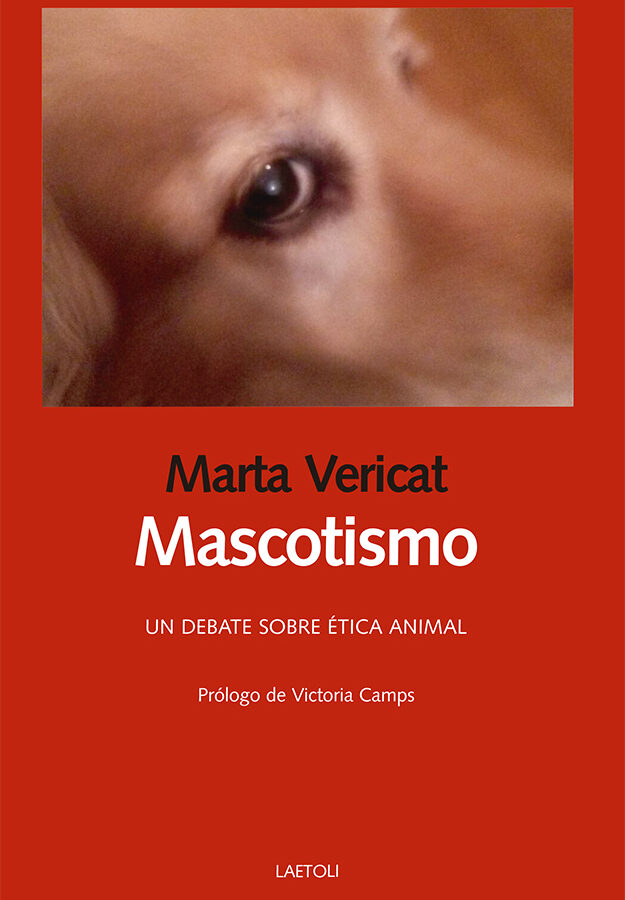
At Zenda we offer the first chapter of Mascotismo: A Debate on Animal Ethics (Laetoli), by Marta Vericat.
***
Should we have pets?
I currently live with two cats whom I adore and consider exceptional beings. I am captivated by their agility, their eyes, their fearless actions, their sounds, and, above all, their insatiable curiosity. And I enjoy seeing them when I return home. Anyone drawn to the beauty of cats and who relishes their interaction surely understands that sense that is so genuine and extraordinary. Cats have been my source of inspiration and the reason why so many questions (thousands!) often trouble me and even keep me from sleeping as I would like.
I spent a lot of time thinking that in our relationship with pets everything was in order if people loved the animals they lived with, because what matters and is truly significant in relationships with nonhuman animals was the love and care they receive. I believed the only serious problem with having pets was direct physical mistreatment, whether through beating them, sexually abusing them (zoophilia), or failing to provide them with proper care.
Why would I be mistaken if animal-rights circles that fight for animal rights share the same reading of reality? Almost unanimously, animal activism focuses on eradicating the number of abandonments, preventing irresponsible adoptions, and detecting and punishing instances of mistreatment. Efforts are dedicated to obtaining more legal rights for companion animals, such as access to establishments or to public transportation. All these demands are very honorable, but the paradox lies in an infinite loop: mascotismo generates abandonment, and abandonment generates mascotismo through adoption. The rest of the ethical problems also sit within this kind of vicious circle in which the animals are the most harmed.
We don’t think much about what may be questionable in the very act of having pets because we don’t devote much time to rigorous analysis of this issue. If we did, a little reflection would be enough to realize that in almost any area of the animal-rights world, conversations about pets tend to be superficial and unserious. At most, the animal-rights militants talk (and indignantly) about some of the most brutal consequences of mascotismo, but rarely is the very act of having pets brought into debate. The general “good vibes” surrounding this issue helps build a mascotist mindset within the community, and questioning it can sometimes be viewed unfavorably. But we must go beyond whether we can provide a good life to individual pets and pose the question not from pure goodwill, but from the realm of rights and the dignity of all living beings.
From childhood we internalize the belief system through which we relate to animals. We build the foundations of the bond we have with them and learn to classify them as food, as pests, as predators, and also as pets. Melanie Joy, in her work Why We Love Dogs, Eat Pigs, and Wear Cows, explores very well the belief system that leads us to love some animals and not others, to eat some animals and not others, and to treat some animals well while considering others an obstacle: “Based on the classification we assign them, we will relate to them in one way or another: we will hunt them, flee from them, exterminate them, stroke them, or eat them.”
In my case, recurring narratives about the love or friendship we establish with pets stopped being sufficient reasons to justify it all. I suspected that this type of argument could disable critical thinking and generate a smokescreen that prevents us from seeing exploitation. I have never found a reason why we should automatically discard the benefit of the doubt: how can we be sure that the sincere love we feel for them does not whitewash situations of exploitation?
Family, school, or television teach us that certain animals, like pigs, cows, and chickens, are farm animals, and that rats are dirty and disgusting beings (even though they are becoming more and more often pets); and in the same way, they also tell us that dogs and cats are family animals. As a consequence of these lessons, which we absorb without realizing, we gradually develop our form of human supremacist stance in the world that prevents us from looking beyond our own interest in living alongside them. In the words of Marta Tafalla, “we think they must live for us, so that children have a playmate, so that grandparents go out for a walk every day, so that they provide companionship to the sick, so that they give us affection and good humor.”
We tend to consider that the majority way of life reflects universal values, and that is why we normalize this kind of exploitation. In my case, I never thought about how bland and boring life can be for dogs living in big cities, where much of their existence unfolds on dirty pavement, from tree to tree, sniffing gases that make them dizzy and filling their lungs with exhaust smoke, instead of following the scent of a hare in the countryside; or the reality of many cats living confined, day after day, in tiny apartments where hardly any light enters through the window; cats who never have the simple vital experience of climbing a tree or running on the grass.
The reality I just described is not extreme or minority cases. It is the everyday life of millions of dogs and cats around the world, beings with the capacity to feel who suffer as a result of being trapped in our human world, forced to live in our way and obliged to adapt to our lifestyle and our quirks and cultural standards. We deny them full expression of their natural impulses, and restrain many of their desires, such as digging holes, rummaging in the trash, or wallowing in mud.
I set out to undertake a radical exercise in empathy that would allow me to put myself in the shoes of the other in order to gain a partial or approximate understanding of the reality of other ontologically different beings. A task not easy, though the effort is enormous because, in addition to its own limitations, one must guard against substituting their subjectivity, since nothing and no one, beyond our anthropocentric arrogance, has authorized us to be their voice.
From then on I was haunted by questions such as: Could a dog really be well off being walked on a leash three times a day through city streets, taken to the countryside only once a week, with a bit of luck? Could millions of cats truly live a meaningful life locked up for years in apartments or flats, without the opportunity to experience what it is like to run free without any wall stopping them? Isn’t it immensely necessary for a dignified life that all dogs and cats have environments that stimulate their senses and their curiosity?
These doubts always led me down a long, often stormy, road, full of light and shadow. A solitary path, with no signposts, seemingly impassable. I would take a few steps and then go back, until the possibility of return ceased to exist. From then on, the intuition that something disturbing underlies mascotismo grew increasingly unbearable, like a splinter that, though not embedded in the skin, constantly brushes you and wounds you. This subtle agony, so to speak, became my energetic substrate for confronting this topic in all its breadth.
Questioning our relationship with those whom we, with obvious anthropocentrism, call companion animals has caused me wrenching discomfort because it entailed a break with the way I had thought (and lived) until then, and I have often felt torn within myself. Although it has frequently been a topic I have wanted to avoid because it is extremely uncomfortable, I have never wanted to turn my back on it. At some point I learned that problems or facts do not disappear by simply not thinking about them. If I am convinced of anything, it is that the reflection on the relationship we maintain with pets cannot escape the well-known Kantian maxim sapere aude (“dare to think”), ever-present in my commitment to philosophy. It is not easy to swim against the current of the social trend that blindly defends mascotismo (in its double standards), and that at the slightest comment labels you as anything other than a person committed to the cause of animals. On the other hand, it is not easy to examine and revisit topics that involve our (often very intimate) feelings directly; but it is essential to do so if we want our conduct to align with our convictions, or if we aspire to live in harmony between how we act and the values we deem desirable.
Questions of this nature do not have to lie outside the reach of rational analysis nor become an obstacle to philosophical progress. Moral theory must attempt to approach them in as dispassionate a way as possible because, beyond appealing to the subjective, good arguments are required to sustain a consistent moral reasoning. It is as important to think about our emotions and passions as it is to allow what we feel to stimulate critical thinking because, as Val Plumwood says, we need criteria of ecological rationality “fostering both organic rationality and critical rationality.” Moral reflection cannot yield to fear of not fitting social trends or pleasing (almost) everyone, because its aim has never been to relieve us of the world’s ills, but to provide enough lucidity to make them thinkable.
Perhaps some people may take offense or feel some annoyance with the topic at hand, but in no case has the intention been to point fingers at anyone, much less to make anyone feel bad gratuitously. Mascotismo has many faces, including those that reveal and abundantly demonstrate the more compassionate and noble part of our humanity. For all these lights and shadows, reflecting on this moral dilemma is a crucial matter.
—————————————
Author: Marta Vericat. Title: Mascotismo: A Debate on Animal Ethics. Publisher: Laetoli. Sales: Todos tus libros.