
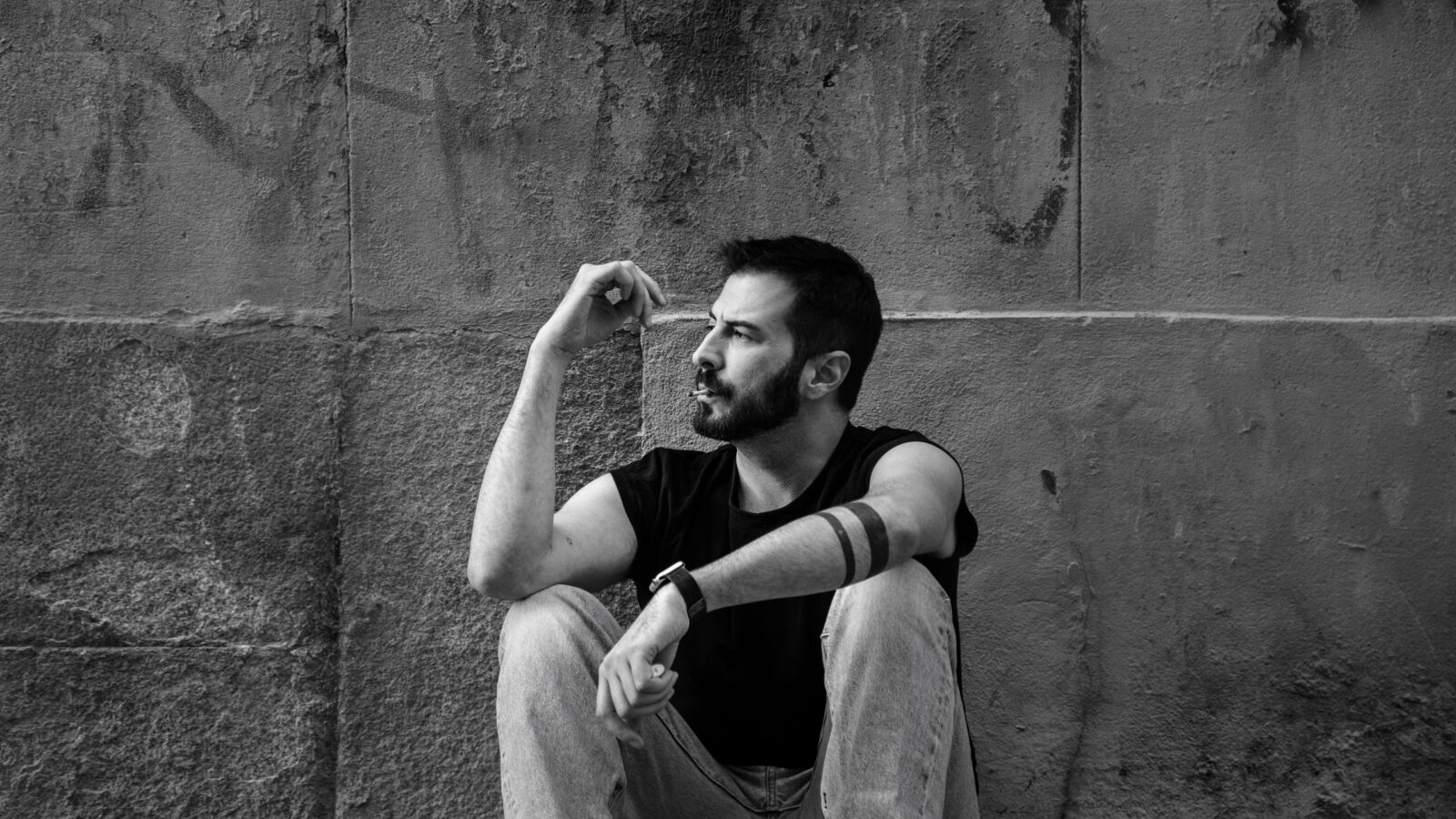
Miguel Aute makes his fiction debut with a complex novel, The Threshold (Contraluz Editorial), a dystopian tale in which society lives under a sinister paradigm that enables its own self-financing.
This work, set in the United States, turns up the dial on the “society of spectacle” we experience through overexposure on social networks, proposing that the viral spread of evil could generate economic benefits for states that embrace the Threshold Law. The Threshold Law is the umbrella that justifies brutal and media-driven crimes carried out by the “professionals,” killers who execute murders and whose actions have made them global stars.
This is the chilling backdrop in which the plot of this thriller unfolds. We are in 2073, in the United States, and one of the most famous professionals, The Madman, has just been killed. The novel follows Inspector Cassidy in an investigation that often moves against the grain of the dystopian society in which they live and against the country’s new moral standards.
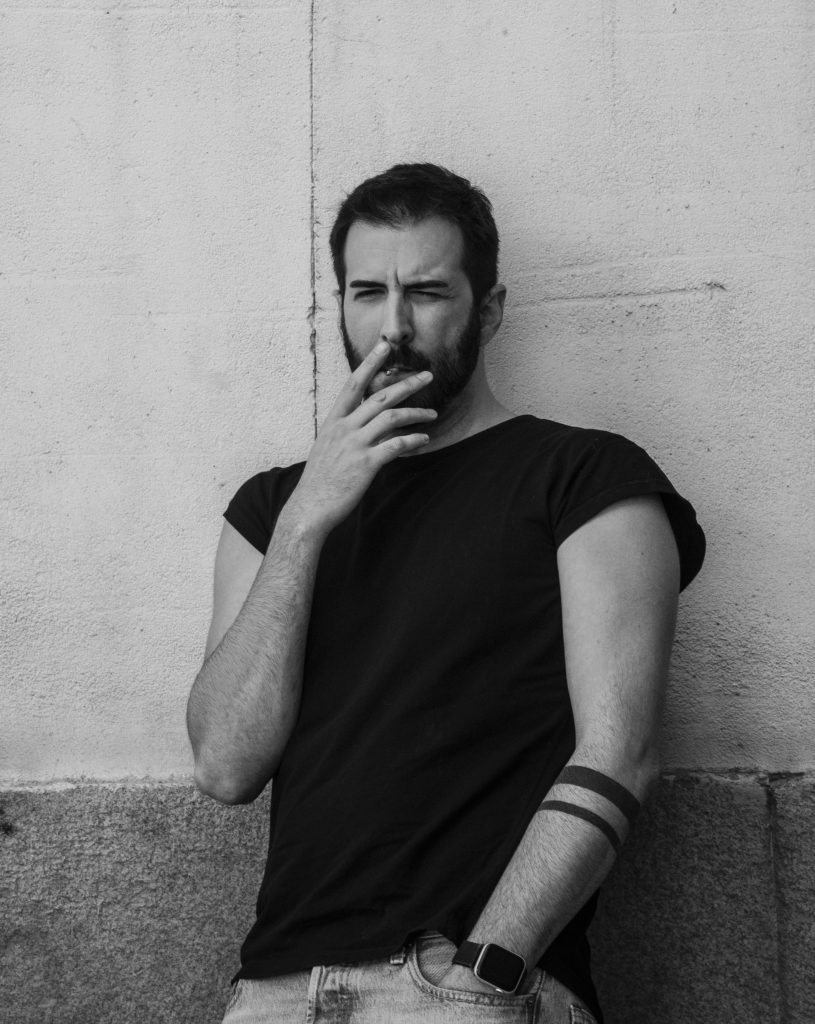
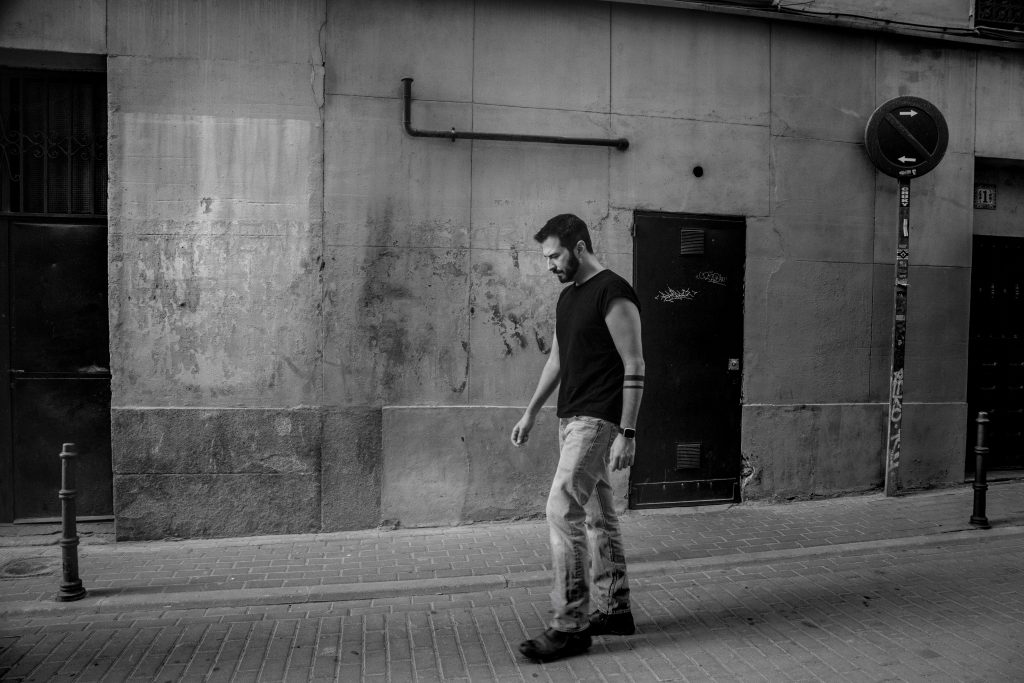
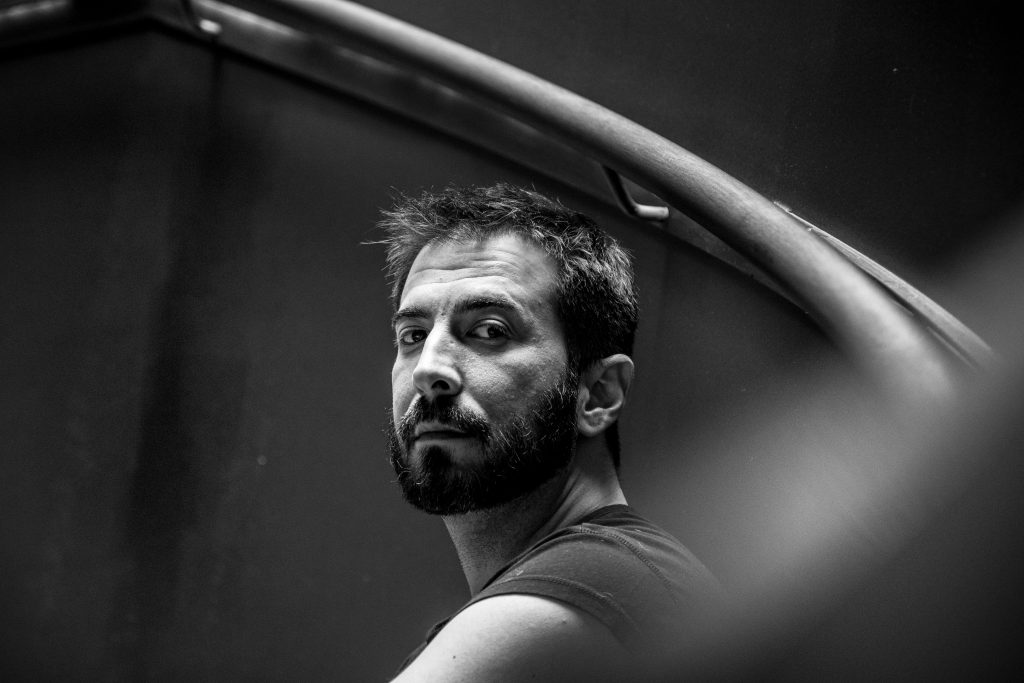
Zenda meets the author at the OnlyYou in Atocha, a few days before the book’s launch. We talk with Aute about literary and cinematic tributes, about how a story like this emerged, about literary creation, and about how society ends up blurring the lines between what is moral and what is ethical.
*****
—The novel opens with a homage to One Hundred Years of Solitude
—A little, yes.
—What readings have shaped the writer you are today or the writer you want to become?
—Among them One Hundred Years of Solitude, which I think is my favorite book. No one had mentioned it to me, but there is the homage. It begins as when Colonel Aureliano Buendía faces the firing squad. It is such a masterpiece that I wish it had influenced me more. In terms of narrative: Orwell, Huxley… but it’s true that the opening of One Hundred Years of Solitude has stayed with me.
—What is the Threshold Law?
—A new paradigm that takes root in this future dystopia where the maxim “pay your debts to society” is taken literally. It is believed that, once killings are filmed on video and become views that generate advertising revenue, they can be used as fuel to relaunch institutions, in this case in the United States. A society is driven by goodness, cooperation, and fraternity… Evil had never been considered a fuel for this type of society. From the Threshold Law, that paradigm includes evil as just another trait that can be beneficial. Through the Threshold Law, which means paying your debts to society, it is believed that if you pay economically and improve society enough, you have literally paid your debt to society.
—Do you think we will ever reach a situation like this?
—Very unlikely but not impossible. The changes that today may seem very abrupt can become real in two or three months. We’re seeing this with technology, and history has shown us many such episodes. It’s like asking someone two hundred years ago if they could imagine watching a person who is not there, or who is on the other side of the world, through a tiny screen. Even the tech depicted in science-fiction films lags behind. Technologically I wouldn’t rule it out, but morally anything is possible.
—In the novel, in 2048 a treaty is signed to halt AI development. Do you think we can expect that kind of pause in reality? Could we wait until 2048 to slow it down?
—In the novel, we wait that long because, in the meantime, a catastrophe occurs and AI disappears, and by the time it reappears and is regulated, time has passed. In our case I’m not a big fan of regulations in that sense, but I understand that this is different. AI is different. When it reaches a certain point it’s like placing nuclear weapons in the hands of the population. It doesn’t mean they shouldn’t exist, but they surely must be regulated so that not just anyone can use them. That doesn’t mean any kind of AI: a more stable one, like the user-level AI we have today, I think should be allowed and even advanced. But I don’t think anyone—let alone the authorities or its creators—could handle a superintelligent AI. You can’t try to control a being that could be a superior one.
—How did you conceive this story? Was there any episode or piece of news that inspired you?
—No. It came from a set of YouTube videos, very heavy-handed pranks but well produced. From there I built an entire corpus to cloak that story, to give it sense, to make it logical and without holes.
—Did you write a dystopia because, if you stated this was a reality, people wouldn’t believe you?
—For now it remains dystopian. The novel itself contemplates its dystopian nature. It takes place in the United States. In the rest of the world they haven’t had that moral turning point to reach those extremes, though they consume it.
—Do you think literature should serve, in addition to entertaining, to denounce?
—Literature can serve many purposes: to denounce, to entertain, to teach, to instruct… It is a tool in the hands of its author.
—What have you learned about human beings, about the moral and social boundaries we set, while writing this novel?
—The capacity we have to resemble a dystopian society. What appears in dystopian books is often considered fiction, and it is, but as you write—while events such as the pandemic occurred—the realization grows that it’s far from far-fetched, that humans can be as foolish as the most foolish among us, that we are highly susceptible to manipulation, and it’s not implausible that anything you read in a dystopia could actually happen.
—It is a very cinematic novel, with a fast, clearly delineated rhythm. What films or screenplays have served as references while writing?
—From all kinds of sources. I haven’t drawn on a single piece in particular. I am a big fan of series like Game of Thrones, which I think is a marvelous adaptation and production. The first season of The Boys is very curious and there you can sense some influence, though it’s more entertainment. There is a series that surprised me a few years ago, a Disney Star Wars spin-off. If we go back to my roots, to my studies, films like Citizen Kane or The Third Man. That sort of film noir may have left traces in this work.
—Tell us about the writing process for this title: how you chose the settings, invented these new transportation methods, this idea that the climate is controlled by the state.
—There is a lot of Orwell, for example in the Climate Ministry, which is a homage to Orwell. The transportation aspect as well: autonomous vehicles are already here. The fact that no one is driving is what is going to revolutionize the transport of all kinds of machines. The settings emerged as I progressed with the writing. The novel led me there. There are influences from film noir in the train, the station, the hotel… As the story demanded I go somewhere else, I followed. I considered several titles: at first it was La Cuota, then Los Profesionales, later Un Bien Mayor, and finally The Threshold. With it I could play on the double meaning: not only the threshold of visits but also the threshold between good and evil.
—You have previously pursued an artistic career in audiovisual work and painting. Why this book?
—One thing led to another. I studied cinema because I enjoyed it a lot. I did a technical job, in photography, in the image department. That brings you closer to cinema but not so much to what I loved, which was the stories. I started writing screenplays and realized that what I enjoyed was creating stories. In a career impasse I had in 2016, I began to turn the idea of writing over. I had this idea swirling; I would have liked to make it into a short film or a screenplay, but in the end I took the leap because the story’s scope wouldn’t fit a short-film script. The novel was the most suitable medium.
—Are you a compass writer or a map writer?
—More of a map writer. I started out trying to use a compass, but it didn’t work. (Laughter) I’m more of a map person. I built a whiteboard, full of post-its, with pages where I worked the stories, arranging them… I nearly went crazy. At first there were going to be ten chapters, but then there came a point when I had to structure things; that helped the novel a lot, afterward I took notes, wrote on the iPad, revised, moved things around…
—Why or what is the purpose of your writing?
—Because I had a story to tell and I felt compelled to tell it.
—You mention it was in 2016 that you began to turn the idea of this novel over. If you could travel back in time to 2016, what advice would you give yourself?
—I don’t know if giving myself advice would be counterproductive, because you must go through that process to learn. But considering that midway through the novel I threw away 300 pages and started over, I’d tell myself: “What you think are four loose ends at the outset that you can tie up as you write will become a tangle; there’s no way to patch them. So tie everything up neatly from the start, to the millimeter.”