
Thirty years after its first publication, Candaya reissues this novel by José Antonio Garriga Vela, set in Barcelona during the 1950s and 1960s. Through the eyes of a tailor’s son, the author reconstructs a universe of memories, ghosts, defeats, and unattainable dreams. The new edition includes thirty-eight images from the writer’s intimate universe.
At Zenda we present the prologue that José Antonio Garriga Vela wrote for this new edition of the contemporary classic Muntaner, 38 (Candaya).
*****
GROUND FLOOR
I landed on my parents’ marriage bed on November 20, 1954. It was a Saturday, noon, the sun shining over Barcelona. The gate of entry wasn’t at the airport, but at number 38, ground floor, of Muntaner Street. There I came into the world. And in that apartment, that staircase, and that block of the Eixample, my childhood and adolescence unfolded.
I hadn’t read the novel Muntaner, 38 since it was published exactly thirty years ago. Sometimes I would open the book to any of its pages and, after reading a randomly chosen paragraph, I would close it again. I flipped through it to guard it against oblivion. I did not wish to abandon forever the paper house in which I had been coexisting with so many memories and fantasies.
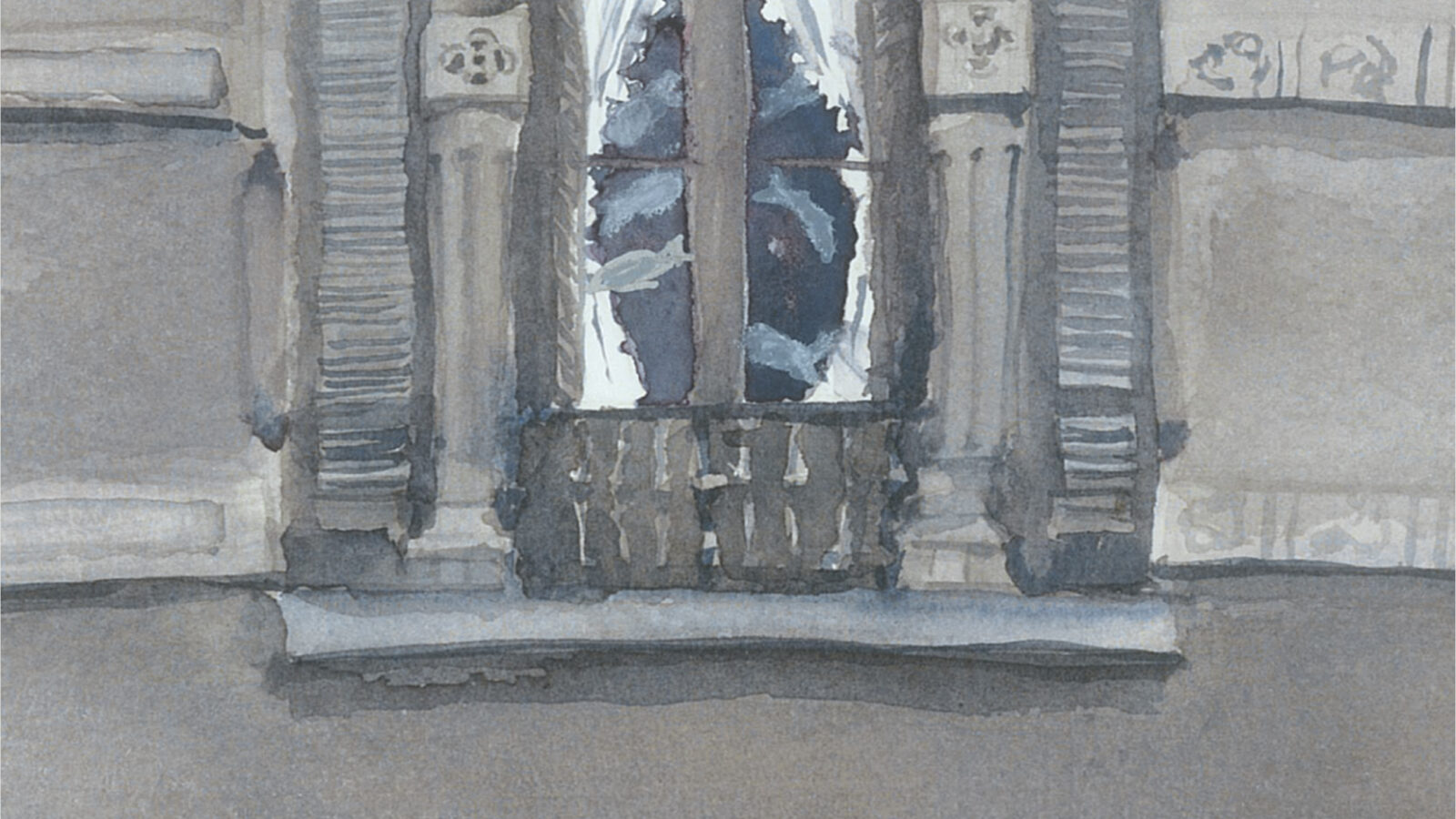
The novel changed my name and usurped my identity. I would be pointed at in the street and people would say: Look, that’s Muntaner 38. Some people I had never seen would come up to greet me as if we had known each other all our lives, others peered through the balcony windows as if they were truly observing an aquarium, with my father’s workshop lingering in the background. Friends who visited Barcelona sent me photos they had taken in front of the portal, as though the building were a tourist monument.
On May 8, 1997, Enrique Vila-Matas sent me by postal mail copies of several pages from the book Tres artistes. Santiago Rusiñol i el seu temps by Josep Pla. A couple of months earlier, Vila-Matas had asked in the magazine Qué leer whether I knew that Muntaner 38 was precisely where Santiago Rusiñol founded the Cau Ferrat. It was then I discovered that at the end of the corridor of my home, in the same place where my father kept his tailor’s workshop, under the same skylights, stood the workshop with Rusiñol’s forged irons. I had moved through the same rooms that the great artists of that generation had inhabited. The news overwhelmed me. Cau Ferrat, the iron den, the refuge. Fourteen years later I told the story in El anorak de Picasso. I don’t know if I would have been capable of writing the novel Muntaner, 38 if I had known that Eleonora Duse had slept in my room. The day I arrived in Barcelona to present El anorak de Picasso, I was surprised to see the posters hanging from the lampposts on Gran Vía announcing the exhibition Pablo Picasso versus Rusiñol. That same afternoon the exhibition opened, and I presented the book. A mysterious coincidence. Chance again joined reality and fiction, something that happens to me so often that I tend to confuse them. Muntaner 38 had become the tourist monument that my friends had foreseen. Now a plaque on the facade commemorates Cau Ferrat, next to the balcony and the shutters where, for so many years, the marks of the gunshots remained.
I open the novel and step into the portal. The door to the ground floor is ajar, just as if the entrance hall of the house were the courteous page, a blank sheet. When I first opened the book, it was November 14, 1996; the first thing I did was write my name and the date at the top of the page. I have not read the novel again until today, April 3, 2026, Good Friday, a holiday, the sun also shining in Málaga. As I cross the threshold, I suddenly encounter the boy I once was. As I move through the haunted house, I feel as if I am listening to a declaration from someone who knows scenes and details of my life that I had forgotten. And he narrates it with sincerity, with tenderness but also with bluntness, not caring for the consequences. Everything sounds at once distant and intimate to me. That is how the voice of memory must sound.
Now I feel a certain unease at realizing how spontaneous I was while writing Muntaner, 38. As if someone was dictating to me what I had to write twenty-four hours a day. The inner voice, a voice that spoke like a dreaming man. It was 1994. My father had died six years earlier; yet the echo of his words resonated in my brain. The Civil War stories he told at the dinner table came back to memory. My father’s voice was the confidant who reveals the plot of the novel. Back then I did not suspect that real and imaginary characters would come to life and stand before me. The characters have accompanied me these past thirty years. Those who left remain present. It does not matter whether they are made of paper or flesh and blood; they all accompany me, and I am convinced that they will continue to do so as long as memories exist.
———————
Author: Juan Antonio Garriga Vela. Title: Muntaner, 38.Publisher: Candaya. Availability: Todostuslibros.