
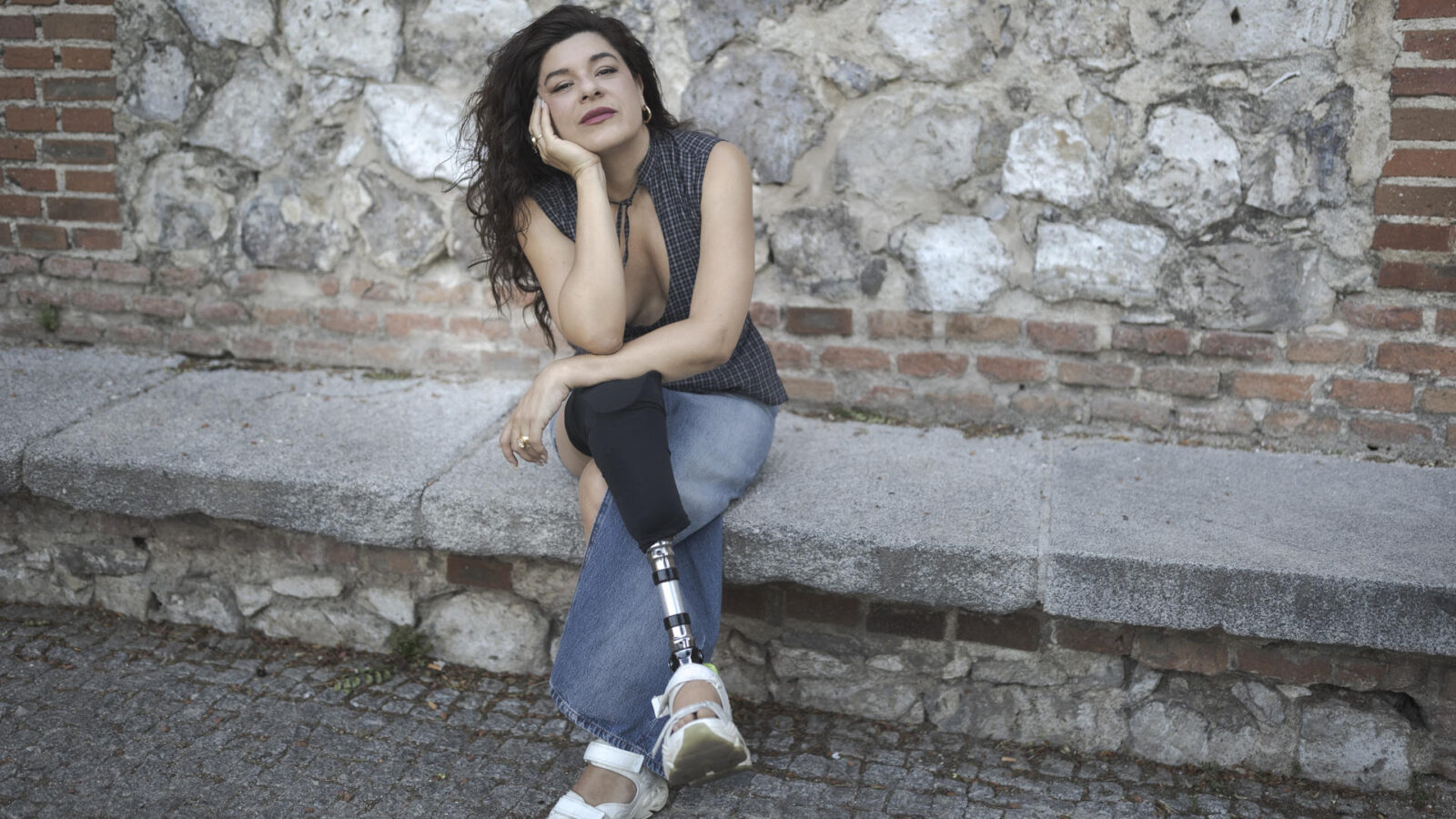
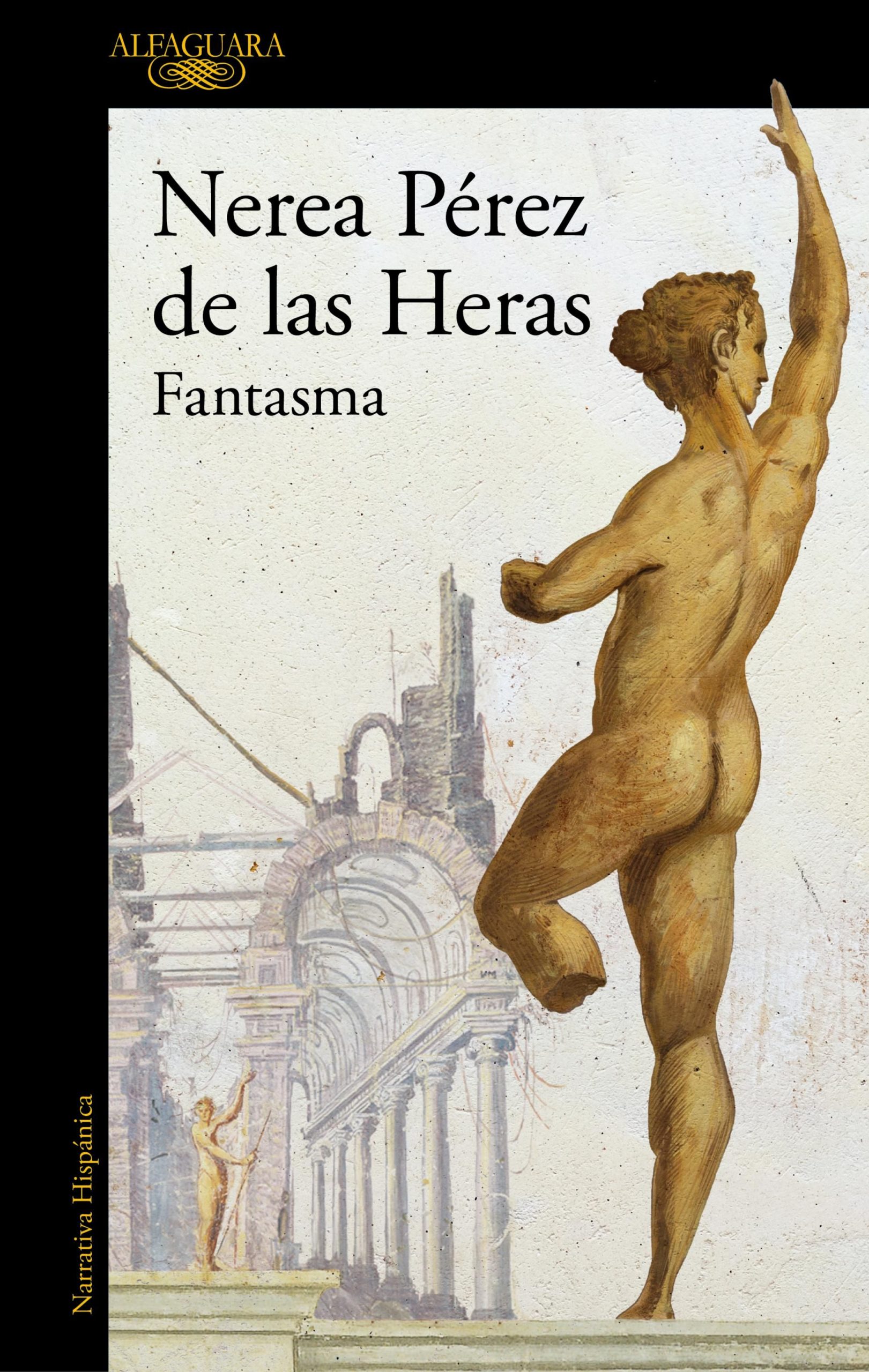
An “auto-essay” filled with “joyful anger.” This is how Nerea Pérez de las Heras describes her new book, Fantasma (Alfaguara), in which she recounts the accident that left her without part of a leg three years ago, while reflecting on friendship, fame, and public health, in a vow to defend the collective.
The journalist and communicator, co-host of the podcasts Saldremos mejores and Lo normal, exudes humor and optimism. “I’m like a nun shaped by Los Morancos, idealistic and highly motivated,” she says, though she also admits that “dependence brings a lot of darkness, for both the caregiver and the one who suffers. You have to be a little angry and a little hopeful, like 50-50,” she asserts.
On July 23, 2023, coinciding with the general election day, Pérez de las Heras (Madrid, 1982) suffered the impact of a boat propeller on her right leg while she was swimming in the waters of Menorca. Only a month and several surgical interventions later she told the incident in a post on her Instagram account; in September of that year she discussed it on a radio interview and in January she reappeared, dressed in formal attire and using crutches, on a red carpet. “I was very clear that I wanted to return to work, and for that I had to tell what happened to me. It would have been a bit strange to present myself to the world without a piece,” she says. “I’m self-employed and, like all freelancers, a leave of absence is a real subsistence problem, in this case for me and for a couple of teams of people.”
The Alfaguara edition presents Fantasma as the leap into literature for Pérez de las Heras, but she says she does not see a big difference between this book and Feminismo para torpes (2019), where she also began from personal experience to move toward essay. What Fantasma is not, by any means, is a self-help book, a “positivist” and “individualist” philosophy, which the author rejects decisively. “It’s a fallacy, a lie so big that it must be fought from every possible angle. We are exposed to a huge amount of advertising around self-improvement and what you can do. You can do almost nothing. You can do very little, you can four crappy things, and for a very limited time,” the author maintains, convinced that “more than ever we need any gathering in the analog world, from a union to a PTA or a rave, whatever it is.”
The writer laments the tendency to take the welfare state for granted and acknowledges that she is outraged by the mistreatment of health professionals after so much clapping during the pandemic. “Perhaps it was middle fingers and not applause what was heard.” But she is also angry at indifference. “I find it astonishing that you keep scrolling through 20 years of privatization of the public health system in the Community of Madrid and reading one thing after another about how it is being sliced up and sold.”
In the book she also talks about the neurological aspects, about the initial shock followed by nerve pain, “something very mysterious and difficult to combat”; about the moment when they asked her at the hospital what to do with the amputated limb and she, at that moment talking with her friends, answered “the cheapest,” and kept on with her day. Or another moment, when she returned to bathe in the sea. “Not only have I returned, but I dive, I kayak, I do everything.”
But when asked whether there is a “new” Nerea after what happened, she is clear: there isn’t. If anything, one that is more impatient and who listens more to her own body. “The experience is incorporated and metabolized. I’m not romantic about this idea of versions—old and new. We are all full of absences and scars. We are our wounds all the time.”