
To commemorate the 90th anniversary of the Civil War, José Ángel Mañas recreates in Zenda, day by day in this section, what happened in 1936, perhaps the most pivotal year in all recent Spanish history.
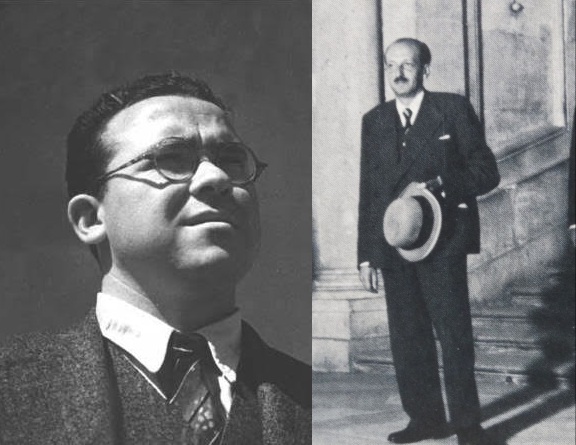
Tuesday, November 17, 1936: Carrillo and Rosenberg
On the same day that the legionaries of the sixth banner and the regulars of battalions one and three of Alhucemas took the Santa Cristina asylum (now Casa de Brasil) and reached the Clinical Hospital; on that same day a delegation from the Defense Junta departed by car to present themselves in Valencia, summoned by Largo Caballero, to clear up the misunderstandings in the relationship with the Government of the Republic. They were accompanied by Rosenberg, plenipotentiary ambassador of the USSR. They traveled in the same car and discussed the latest news from the Ciudad Universitaria.
—Miaja and Rojo had to report to the front. Seeing that the anarchists led by Durruti were fleeing in a panic, Miaja drew his pistol. He forced them to endure at least until the arrival of the reinforcement trucks…
There was a certain relish in Carrillo’s voice. Durruti’s was the most renowned red column. But the Moroccan regulars were not like the cadets he had commanded Goded in Barcelona. The anarcho-syndicalists, effective in the streets of Barcelona and in nocturnal raids on the Aragón front, were newcomers in the static and bloody trench warfare of Madrid. A different scene, as he explained to Rosenberg, who nodded in agreement. Carrillo’s French was not spectacular, but it was enough to communicate.
—With the fascists about to attack Madrid and me staying here, with a government controlled by socialists, no one can accuse me of opportunism.
—They have frightened themselves into panic. Now they say they were given defective weapons. They complain about the Mexican Winchesters and about a Swiss rifle model belonging to a batch purchased by the Generalitat, of poor quality. The ammunition doesn’t fit well, requiring the barrel to be cleaned every four or five shots, which bursts in their hands. They attribute it to sabotage by our party, but that is false. Durruti asks that bombs from the FAI be sent to him, which are large, heavy, and only good for throwing down from a balcony, posing danger to the user. He has presented himself to Miaja. He wants to redeem himself by reclaiming the Clínico. Besides, I want to tell you that I have just made my affiliation public — Rosenberg half-turned in his seat, pleased —. I have met with other comrades from the JSU with whom I live and informed them that I am applying for admission to the Communist Party. They know that I am increasingly identified with communist politics and increasingly less sure that PSOE and PCE will unite. With the fascists about to attack Madrid and me staying here, with a government controlled by socialists, no one can accuse me of opportunism.
The idea was not to make it public yet, in order not to strain the bond between the two parties any further, but thousands of JSU members were entering the PCE. Not only young people. Also veterans.
—Very well, comrade —said Rosenberg—. But it matters to maintain contact with the Caballeristas. Your decision must not affect our relationship with the leadership of the PSOE. The Comintern prioritizes good relations with the Socialists. We must cooperate in defense. In any case, the most important thing is that the evacuation process not be interrupted. Comrade Koltsov says that in his visits to political centers he finds demoralization and defeatism. He urges the Central Committee that it is essential to continue with the policy of evacuating fascist prisoners. The Committee believes that evacuating eight thousand people requires logistics. But Koltsov and I believe that it does not have to be eight thousand… It is enough to evacuate the two thousand most dangerous.
—The evacuation has been interrupted by the pressure of three or four members of the Diplomatic Corps. But tomorrow we will continue with more prisons. We will proceed, albeit discreetly, because we are under international scrutiny — said Santiago Carrillo.
Outside, rain poured down. The drops of rain and the vapor fogged the car windows.
All the Day-by-Day Entries of 1936
Interview with José Ángel Mañas about 1936 Day by Day