
To commemorate the 90th anniversary of the Civil War, José Ángel Mañas recreates in Zenda, day by day in this section, what happened in 1936, perhaps the most pivotal year in all of Spain’s recent history.
Saturday, November 28, 1936: Talking with Companys (IV)
I have already received, Mr. Companys, news that you were at the funeral of Durruti on Sunday. If you wish, we can now discuss your relationship with the anarchists. Before, I would like to resume our conversation at the point where we left off. Taking advantage that you are in Catalonia, Azaña, whom many accuse of having withdrawn from the war, would you mind talking to me about your involvement in the coup of 1934? What was Manuel Azaña doing in Barcelona at that time?
—The answer is simple, Nogales: I don’t know.
—Doesn’t it seem rather coincidental that it was precisely an Azañista who gave the starting pistol for the seizure of the Gobernación building, and that the very Azaña was in Catalonia at that moment under the pretext of attending a friend’s funeral?
—And what do you think?
—For me, Azaña was a kind of guest star. His idea was, in agreement with you, to make Barcelona the provisional seat of the first revolutionary government and, once the Lerroux government fell, to seize power and proclaim himself president of an alternative government to save the Republic after the right-wing attempt to put Spain at the service of fascism. For Azaña it is intolerable to be in opposition. He was willing to do whatever it took to regain power.
—And he has achieved it, hasn’t he?
—You too, Mr. Lluis.
—Look, I cannot tell you what Azaña was doing those days, nor his plans. I can only speak about my own…
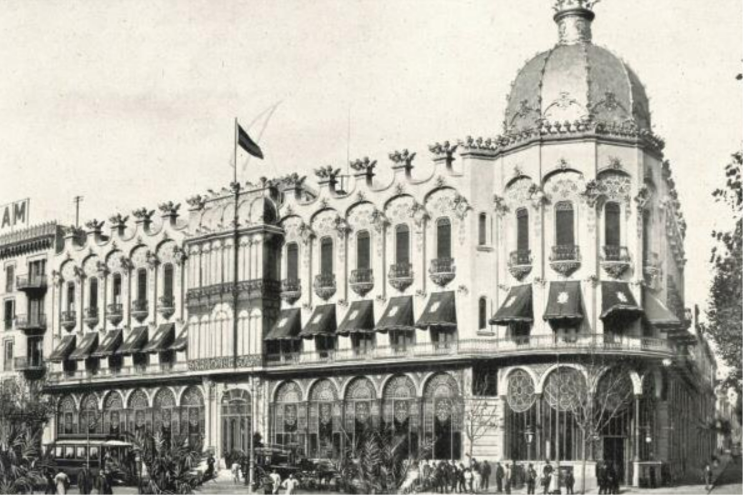
—Then let me tell you, Mr. Companys. Azaña, from the Colón Hotel, was conferring with Madrid. He believed he could control the uprising, organize the ministries and the new distribution of power. Between Prieto and Largo Caballero in Madrid, and you and him in Catalonia, he thought he could draft a new republican order. He counted on you and on his contacts in Madrid. Both things failed him. Upon seeing that none of his backers appeared, he had to surrender. I think that is one of the keys to his personality: the resentment he fostered against all of you from then on, for having felt abandoned.
—Hmm…
—That is why he hid in the house of Rafael Gubern, where he was arrested. From there the spectacle begins. Azaña defending himself against accusations that, although everyone knows that they are true, cannot be proven. And, above all, he designs with Prieto what will be the most decisive action of his covert work: to publicize the Estraperlo scandal to bring Lerroux down, his enemy, with whom he takes his revenge in grand fashion. Lerroux, in February, gains only four deputies and loses two hundred seats, clearing the way for Azaña’s triumphant return in the February elections that we have all lived through.
—I see you know well the behind-the-scenes history of Azaña, Nogales.
—I would like you to confirm the part I suspect, Mr. Companys. A simple nod would suffice, and that laugh of yours is enough… It would be a confirmation of what we all know.
All the day-by-day entries of 1936
Interview with José Ángel Mañas about 1936 Day by Day