
To commemorate the 90th anniversary of the Civil War, José Ángel Mañas recreates in Zenda, day by day in this section, what happened in 1936, perhaps the most momentous year in all recent Spanish history.
Saturday, November 7, 1936: Dance of Envelopes
Good evening, gentlemen —said General Miaja with a hint of irony.
The ironic and affable
Miaja
always had a dubious reputation and an unclear ideological stance. Of liberal leanings, he had abandoned the monarchy, yes, but he did not hesitate to join the right-wing
Unión Militar Española.
In February, after the elections,
Azaña appointed him to head the provisional
Ministry of War
, in the absence of
Masquelet. His stance during the uprising proved ambiguous. He maintained contact with commanders on both sides, and in the end remained loyal to the Republic, who knows if upon recognizing the poor organization of the rebels. He was also named minister of War during the brief pactist government of
Martínez Barrio —from the eighteenth to the twentieth of July—, it was said that this was due to his good relations with the coup leaders, but he did not want to continue as minister with
Giral.
In July he left from Albacete at the head of the troops that were to take Córdoba. His vacillations and the time wasted allowed the Córdoba defense to take shape, and the bloody governmental defeat fueled doubts about his republican commitment. The Russians distrusted him. And now the Government was abandoning Madrid and Largo Caballero entrusted his defense to him, placing him at the head of the improvised Junta, a decision that many interpreted as defeatist.
Under his command were Lieutenant Colonel Casado and Lieutenant Colonel Vicente Rojo, two minor officers. Casado, head of the presidential guard of Calvoes—Corrections: Alcalá-Zamora—had been dismissed by Azaña. They were accompanied by representatives of parties and unions, starting with the communists of Santiago Carrillo, today responsible for Public Order, and Líster, at the head of the Quinto Regiment. Except for Líster, all were minor figures, whom Miaja treated with paternalism. For the first time in the war, they seemed willing to submit to his authority, aware that there was no other choice, if they wanted to defend Madrid, than to entrust themselves to a professional military.
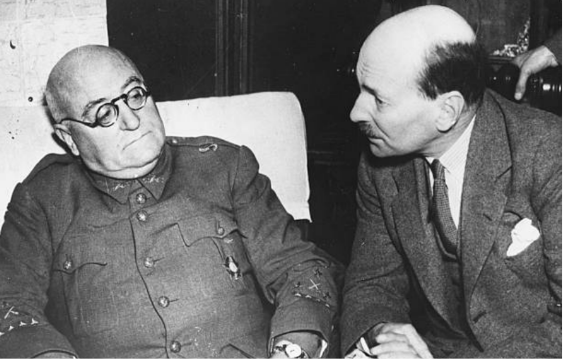
Once the Defense Board had gathered in his office, Miaja looked at them with two inquisitive eyes behind his pince-nez. He stroked his bald head.
—As you will know, yesterday the Government was evacuated under hurried circumstances, harmful to morale —he said, noting the impact—. The latest episode of this tragicomedy has been these envelopes… —he pulled one from his pocket—. The Government of Mr. Largo Caballero, which is en route to Valencia, before departing left an envelope addressed to each of the military commanders with instructions not to open them until seven in the morning…
—Like a masquerade party —observed Líster.
—Naturally, given such a dramatic situation we could not risk hours passing without knowing what to do. I opened mine yesterday… only to discover that, in the rush, the Government gentlemen have included in it the instructions for General Pozas, present here —there were outbursts of indignation—. Fortunately, I was able to contact Pozas and exchange envelopes… The orders are to resist as much as possible and, in the end, retreat toward Cuenca to establish a defensive line there…
—We will not withdraw —said Líster—. That would be the same as losing the war.
—… I will not deny you —continued Miaja— my pessimism regarding the mission entrusted to us. However, as God squeezes but does not suffocate, a hopeful circumstance has arisen. Yesterday, at four in the afternoon, General Varela issued the order for the taking of Madrid. It is addressed to the columns led by Asensio, Barrón, Delgado Serrano, Tella and Castejón. The attack is intended to be formidable. But we have had a stroke of luck. The instructions were carried by a Italian tank commander who died in action before delivering them. He fell on the Extremadura road. By chance, the orders were picked up by Lieutenant Colonel Trucarte and immediately brought to the General Staff, where the Lieutenant Colonel Rojo has been studying them all afternoon — Miaja pulled out the document. He placed it on the table — Here they are. If the plans do not change, we can prepare adequately… This luck has given us this single advantage in the unequal battle that lies ahead. Either we defend the Manzanares bridges or, if the enemy crosses the river, the city will be theirs, and the day after we will have, those of us here today, a date with the firing squad… We already know the clemency of Franco and Mola.
A ninguno en la Junta le hizo gracia que bromease con aquello.
Todas las entradas de 1936 día a día
Entrevista con José Ángel Mañas sobre 1936 día a día