
To commemorate the 90th anniversary of the Civil War, José Ángel Mañas recreates in Zenda, day by day in this section, what happened in 1936, perhaps the most pivotal year in all of Spain’s recent history.
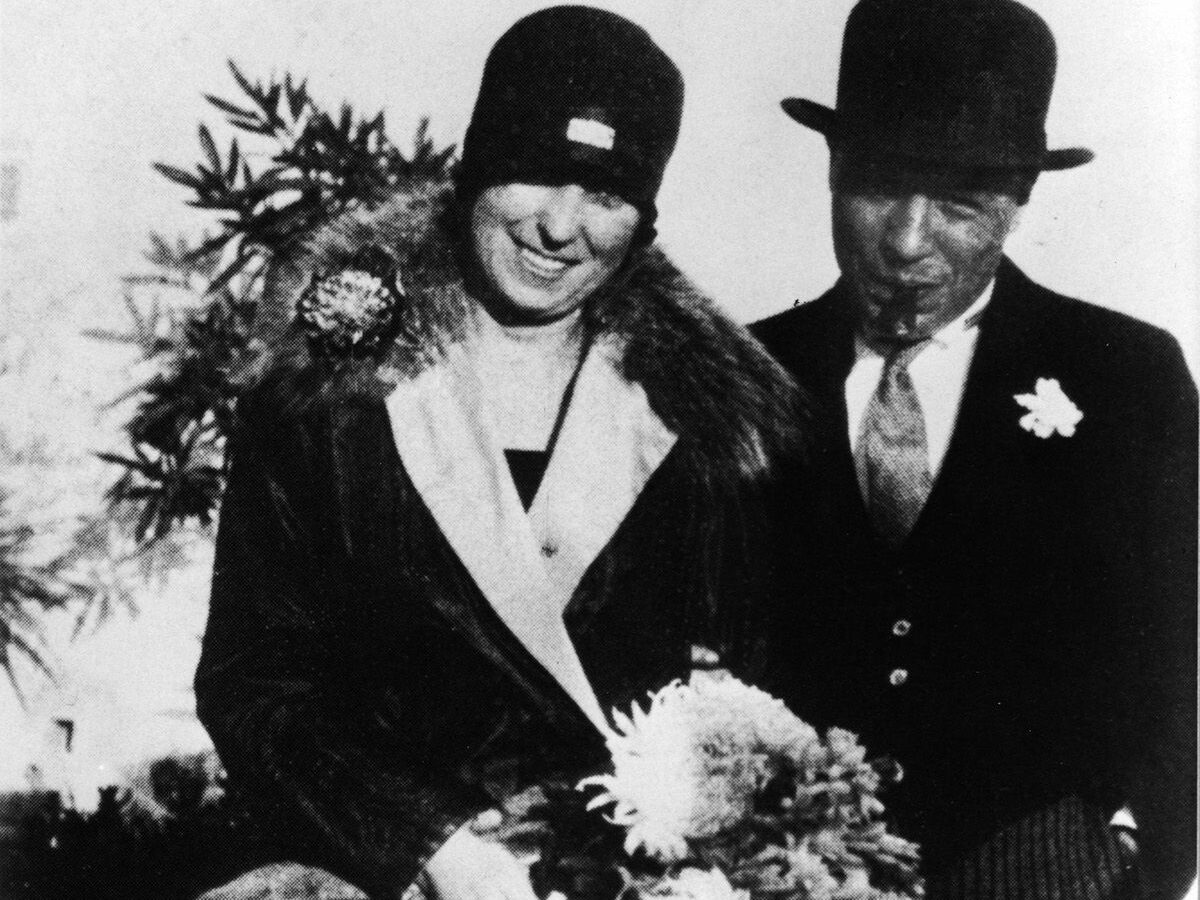
Tuesday, October 13, 1936: And where were Josep Pla and Adi Enberg?
Josep Pla y Adi Enberg, in that October month, were in France. Let us say that the role of the intelligentsia, like that of civilians, once the fighting began, lost importance. Perhaps the confrontation of Unamuno with Millán-Astray at the Paraninfo of the University of Salamanca was the last symbolic gesture, the last revolt of the intellect against force.
For then, most people had moved far away:
Juan Ramón, Ortega, Azorín, Baroja, and Pla himself. There were also those who did not succeed or did not want to and died in poor fashion: Lorca, Muñoz Seca. And finally, those who took sides. The nationalists such as Foxá, Ridruejo or Eugenio d’Ors, who joined them. And the Republicans who defended the legitimate regime, among whom stood out the duo composed of Rafael Alberti and María Teresa León.
The Alberti were the most visible leaders, along with Bergamín, of the Alliance of Antifascist Intellectuals that from the Spinola Palace published jibes about colleagues such as Sánchez Mazas, in that section of El Mono Azul, bluntly titled “A stroll.” Alberti moved from the neopopulism of Marinero en tierra, which was praised by Juan Ramón, with whom he won the National Poetry Prize, and the Gongorism of the twenties, a current that Pla never liked, to a political tone very much in step with the era. His Rubicon was his trip to Russia. On returning, he turned into a furious communist. He, Miguel Hernández and Pablo Neruda were emblematic poets of the Popular Front.
Adi and Josep Pla had left, as I already said, as soon as the uprising occurred. Both headed for France just before militiamen in trucks went to fetch Pla at his father-in-law’s house in Barcelona.
They were lucky.
In Marseille awaited Carlos Sentís, former secretary of Cambó, to invite them to lunch a bouillabaisse and hire them for his information office: the Northeast Frontier Information Service of Spain. He helped them find an apartment on Cours Joseph Thierry, a short, enclosed street, not as leafy as today, full of small hotels and shops.
In Marseille, the Spanish conflict mobilized the Communist Party, which was responsible for securing maritime communications between Europe and the Republic. While Soviet aid arrived, the Republicans bought arms on the European black market. But the surveillance by the Non-Intervention observers made their transport difficult.
To aid Non-Intervention, the SIFNE was created, which collected information in Marseille for the Francoists. Adi, with his languages and shorthand skills, stayed in the office, while Josep wandered through port taverns or restaurants and listened to what was being said about ships provisioning the Spanish Government.
That twelfth of October, people aligned with the Republican side saw him at the port, where he noted entries and exits of vessels that appeared on the port’s board. The information was valuable. It served to produce statistics and summaries on movements of armament that were later sent to the General Staff of Mola.
Josep also drew near to monitor the locks of the Rhône Canal, which links The Hague with Marseille, and the Canal du Midi, half-abandoned, running from Sète to Toulouse, where it connects with the Garonne Canal, reaching Bordeaux, on the Atlantic, since to evade surveillance the transport of war matériel was carried out on small coastal boats through the canals.
That was, in short, what Pla devoted himself to on that autumn day of the ill-fated 1936.
All the day-by-day entries of 1936
Interview with José Ángel Mañas about 1936 Day by Day