
To commemorate the 90th anniversary of the Civil War, José Ángel Mañas recreates in Zenda, day by day in this section, what happened in 1936, perhaps the most pivotal year in all of Spain’s recent history.
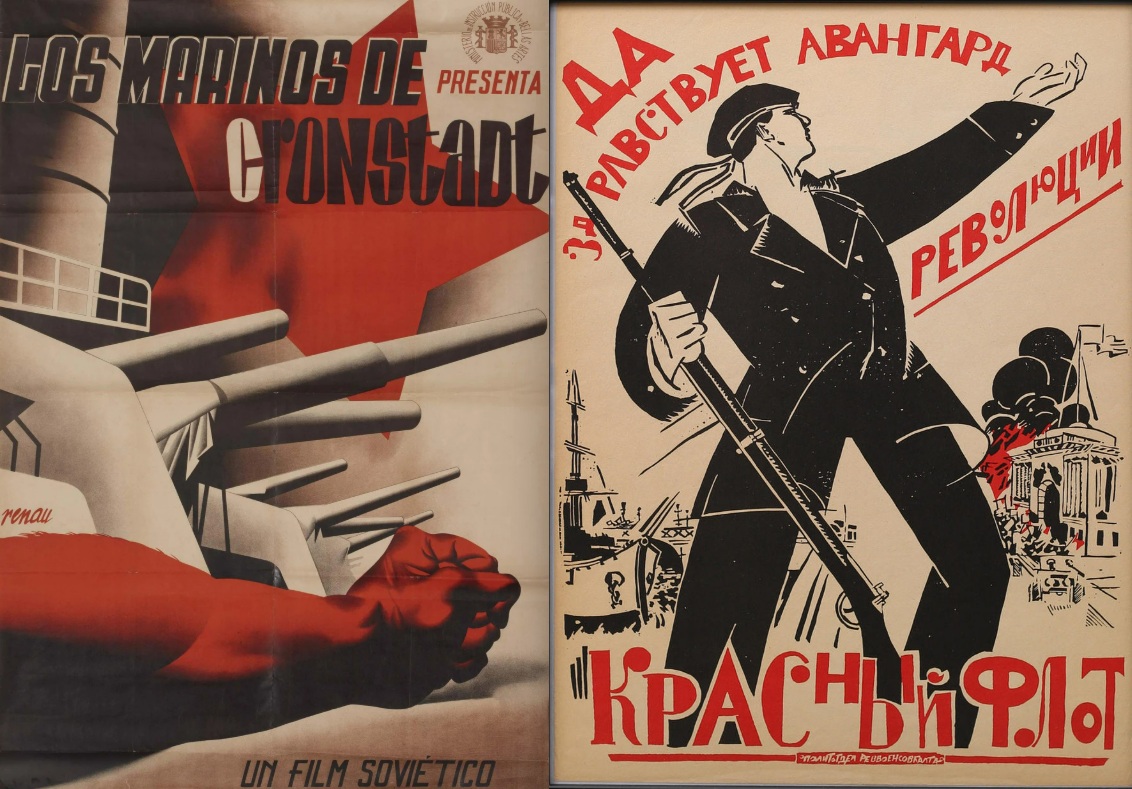
Sunday, October 18, 1936: The Kronstadt Sailors
MINISTRY OF PUBLIC INSTRUCTION, PROPAGANDA SECTION.
Thus stood the luminous inscription on the Capitol cinema’s façade. Pepe Mañas looked at it and lowered his gaze to the traffic: lately nighttime circulation was prohibited from eleven o’clock at night to six in the morning. Public venues closed at ten. The metro and tram services interrupted at night, until five thirty in the morning. But four theatres, numerous cinemas, and the Price Circus were still operating, although none of them had so many people.
On Gran Vía there was no one passing, neither on foot nor by car. Among the dense crowd, dozens of automobiles advanced stubbornly, at pedestrian pace, between lamp posts plastered with signs: “DEFEND MADRID”. “HISTORY WILL HELP YOU TO DEFEAT.” “MADRID WILL BE THE TOMB OF FASCISM.” From time to time, the orchestra played a few bars and the applause announced that the official delegation was approaching through Callao. The militiamen crowd parted to let the political leaders pass.
—Long live Azaña! Long live Giral! Long live Largo Caballero! Long live Prieto! Long live the Pasionaria! Long live José Díaz! Long live Russia!
The delegation, half Republican, half Communist, staged the new power dynamics. Russian aid was boosting Communist influence; more and more people were joining. The young Minister of Public Instruction, who as host did not abandon his militiaman’s attire, greeted them in the lobby. After the politicians, the others entered the cinema. Among them were Ángel Navarrete, leader of the CNT, and Pepe Mañas, who accompanied him.
—Largo Caballero has lately been determined to invite us all —Navarrete explained—. He wants the anarchists to serve as a counterweight to the communists. He has no choice.
The auditorium was packed. The militiamen were asked in vain to leave their weapons in the vestibule: many still had pistols or rifles on their seats. At first they spoke, but they grew quiet as the Communists hissed at them. From his seat, Mañas could see, in a small lobby behind the dais, Azaña conversing with Giral and with Manuel de Irujo, Basque minister of the PNV.
Azaña looked aged. His round, soft face hardly smiled when he received the audience’s ovation. It was known he was bound for Barcelona: no one held it against him. Ángel Navarrete made a comment, but Mañas remained deep in thought. Since his father’s death, he had a fondness for silence.
—This place is infested with communists —Navarrete whispered in his ear.
Again the president Azaña and the ministers were cheered. Then the lights went out. The orchestra in the pit played a preludio. The curtain rose. The Ministry of Public Instruction dedicated the Soviet film, which narrated an episode that occurred in the midst of the Russian Civil War, to the Spanish sailors fallen in defense of the Republic.
In the opening scene, a motor boat carried a mature man amid the Baltic winds and flocks of birds that rose into flight as he passed. The protagonist was a commissioner of the Communist Party sent by Soviet leaders to take charge of the defense of the fortress of Kronstadt, where Soviet sailors were besieged.
The commissioner managed to enter the fortress, join the sailors. The czarists were closing in and Mañas began to take an interest in the film, when suddenly he saw someone looking toward the balcony: Largo Caballero and the Communists had left.
In the darkness, the militiamen murmured.
A neighbor rose from his seat, left the hall. Only a few minutes had passed when he returned, agitated, and leaned to whisper something into Ángel Navarrete’s ear.
—Bad news — Ángel explained — Illescas has fallen. The loyal troops continue to retreat… Franco’s Moors are at the gates of Madrid.
All the entries of 1936 Day by Day
Interview with José Ángel Mañas about 1936 Day by Day