
To commemorate the 90th anniversary of the Civil War, José Ángel Mañas recreates in Zenda, day by day in this section, what happened in 1936, perhaps the most pivotal year in the entire recent history of Spain.
Wednesday, October 28, 1936: Rosa Krüger
There was a need to pass the time at the Chilean embassy.
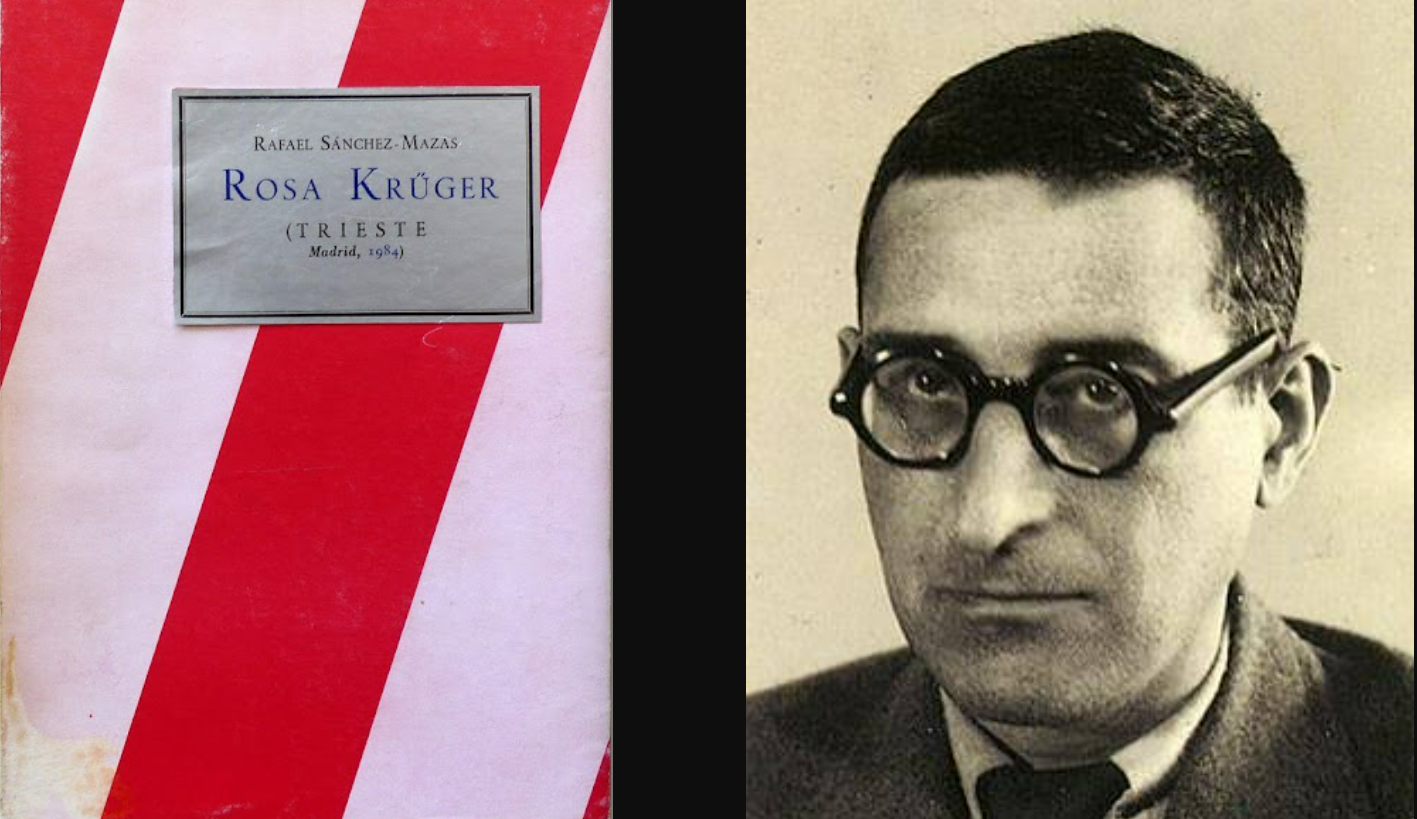
Rafael Sánchez Mazas, cofounder of the Falange
—who was imprisoned together with José Antonio,
but who managed to escape from the Modelo
—, took advantage of each afternoon to read his companions a new fragment of the novel he was composing on the fly.
It was titled Rosa Krüger, as his heroine. The action took place in the distant Catalonia. The characters were ones that in Madrid seemed exotic. Sánchez Mazas delighted in dazzling with his linguistic erudition, and in camouflaging himself behind the masks of fiction.
—… From the beginning it was clear that Pepet’s style was very good. As his tale outlined the heartbreaking misfortunes or the nefarious cases of immorality, Pepet’s joy grew until it reached a delirious jubilation, which bordered on satanic. Conversely, when his stories happened to drift toward unusually casual endings—normal, moral, and happy—the tone of Pepet declined and faded until it clouded over with melancholic nostalgia. When this wise and ruthlessly crafted style was fixed and solidified, it left people in awe and, one might say, in every respect surpassed all the narrators celebrated by the Alto Pirineo.
Sánchez Mazas knew perfectly well that his listeners identified him with Pepet from the tale, and he kept reading.
—After listening to him, who would dare to recount a horse-smuggling, a bolt of lightning and a fire in the beech forest, a bear-hunt, a robbery in an abandoned place, or a rape of maidens on the eve of the major holidays? Even the very uncle Pepet, in the ingenuous and poetic narrator of maritime odysseys, remained astonished and even more astonished, scared, and stupefied by the pupil he had produced. Little by little, Pepet began to assert his indisputable personality, and anything he told was terrible, mysterious, and divine. He spoke now of a dark, arcane, and intoxicating world that he had created, and about which ordinary mortals only knew something by his own doing and grace. I have since had some experience with narrators of fables and tales. I have understood that Pepet was nothing other than a pathetic, selfless, and fabulous liar who did not lie for personal gain or harm others but out of an imperious artistic necessity and an unconfessed longing for immortality. Recently his style had become lighter and more expansive. He gained in novelty and poetry what he lost in verisimilitude and rawness.
»This Pepet was very tall, thin, and ungainly, with a bony, drawn face; a prominent chin like the Stuarts and the Austrias, thin lips, the nose audacious, large, and upturned, and the skin always reddened by the cold. He had eyes set close together, yellowish with freckles, bright as two animal eyes, under the hair that lay over his forehead and was very tangled. “It seems you’re coming from hell,” my father used to tell him. He produced a wide and authoritative voice for his age, moved like a doctor with a stiff finger on a skeletal hand, and kept very grave silences, jutting his chin and nodding slowly as if speaking to himself: “What things, Holy Christ, what things!” All the narratives carried a hidden meaning.
Sánchez Mazas enjoyed the attention of his listeners, all refugees. It seemed that his imagination had freed them. That it had taken them out of that forced confinement. And that they were no longer in the Madrid of the militiamen, on an island in the middle of the Red Sea, but in the beautiful Provençal lands that the Bilbao writer’s imagination nostalgically recreated.
—You know what an old proverb says. What is not told to the closest friend is told to the companion of the inn you meet on a journey. Those days he seemed to forget himself and stand suspended over the reality of things, as if he were swollen with dreams and fables…
All the entries of 1936 day by day
Interview with José Ángel Mañas about 1936 day by day