
To commemorate the 90th anniversary of the Civil War, José Ángel Mañas recreates in Zenda, day by day in this section, what happened in 1936, perhaps the most pivotal year in all recent Spanish history.
Sunday, October 4, 1936: The Last Interview with José Antonio
The piece would appear in the Chicago Daily Tribune and it was signed, as one might expect, Jay Allen. In it he prepared American readers for the background: “When the military rose up against the Spanish Republic, their allies, the 80,000 young fascists of the Falange Española, found themselves without a leader. That is to say, their leader and founder, the aggressive José Antonio Primo de Rivera, age 30 — the eldest son of the general who was dictator of Spain during the ‘seven ignominious years,’ as the republicans used to say — had been imprisoned in Alicante since June. He had been arrested many times, jailed, released, sentenced to death, and pronounced dead. In the confusion of the early weeks we were told in Gibraltar, a source of the wildest rumors of the war, that he had escaped from loyal Alicante and was commanding a rebel column near Albacete, in the plain of La Mancha. The same General Franco told me in Tetuán on July 27 that this was not true, addin,g concerned that he had no news of José Antonio…”
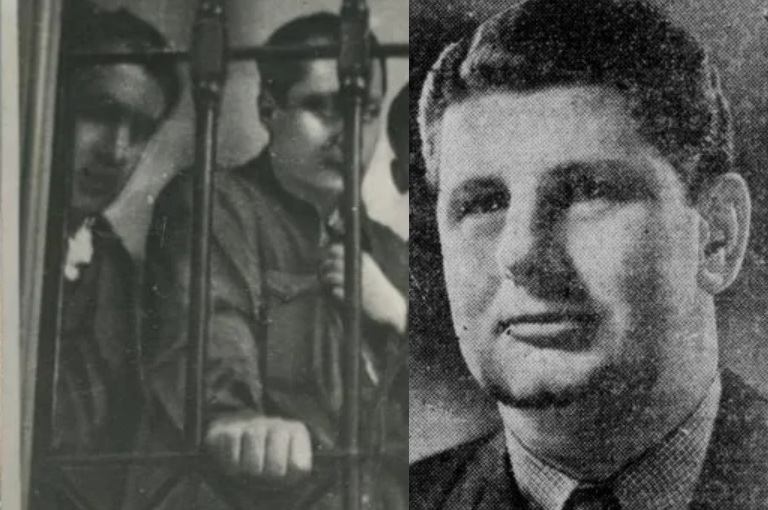
As the article explained, José Antonio was very much alive and kicking inside the Alicante prison. There, he awaited him with the five kilos more he had supposedly put on during his incarceration. When Jay Allen arrived, José Antonio stood in the courtyard with his brother Miguel. They exchanged a courteous handshake. The four armed militiamen who accompanied the American stepped back a few paces.
—Shall we start with the interview? —Jay Allen asked. He pulled out a small notebook.
—With great pleasure. The thing is I know nothing of what is happening outside… I’m not going to be able to tell much.
The journalist noticed that the guards were tense. He suggested they could talk about what happened before his detention, starting with the role of Gil-Robles, the leader of the CEDA, who had been toppled and exiled in France. José Antonio was eager for news, though, sighing, he agreed to go along with the game.
—Gil-Robles is to blame for the disaster. For two years, when he could have done everything, he did nothing. But if you want us to go deeper, you’ll have to bring me at least up to speed on what’s happening outside.
—I’m sure our friends didn’t bring me here to brief you —said Jay Allen, pointing with his chin at the militiamen—, but I’ll ask you a few hypothetical questions to which you may or may not respond. What would you think if I suggested that, in my view, General Franco’s uprising has run amok and that, whatever his initial aim, it now simply represents Old Spain fighting for lost privileges?
—I wouldn’t believe it —replied José Antonio.
—And what if I say that your men fight shoulder to shoulder with mercenaries at the service of the landowners? Or that Franco, the Spanish patriot, has brought Germans and Italians here, promising to hand over Spanish territories: Mallorca to the Italians, the Canaries to the Germans?
—I hope this isn’t true, but if it is, it is a mistake… —José Antonio’s gaze sharpened—. If you recall my speeches in the Cortes, I always said that if the Right, after the Asturias revolution, continued with its repressive policy, Azaña would return to power. I feel the same today. If they merely intend to push the clock back, they are mistaken. They will not be able to control Spain. And I represent something else. You have read my program where national syndicalism, agrarian reform, and so on are discussed.
—Apparently, the Spanish people never believed in your sincerity.
—I am sincere. I could have joined the communist movement and many would have applauded, but I chose not to take the easy path. I hope and believe that what you say isn’t true. Do not forget that Falange has had no leader since my imprisonment. And also, that many other people have been driven to violence by Casares Quiroga’s policy of provocation.
—Well, I seem to recall that it was you who introduced political pistoleros in Madrid…
—If my men have managed to kill, it was after being attacked: that is something everyone knows. In any case, I repeat that I know nothing about what is happening outside. The one thing I am sure of is that, if the military rebellion wins and is nothing more than a reaction and a return to the past, I will withdraw my Falange and return to be here, or in another jail, within a few months. Because you know I have always fought against the Right as much as or more than against the Left.
Todas las entradas de 1936 día a día
Entrevista con José Ángel Mañas sobre 1936 día a día