
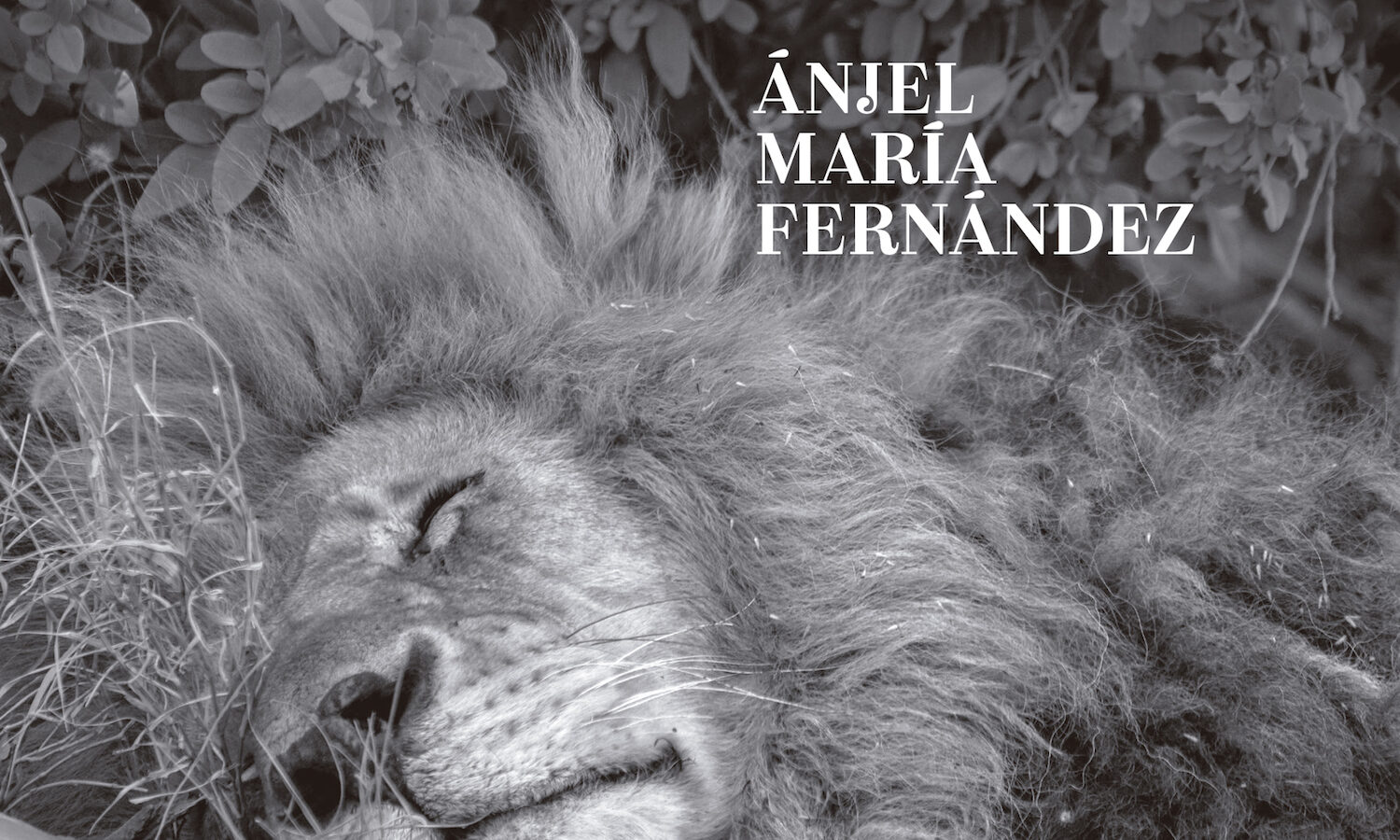
The closing of a zoo is announced and the cages’ doors swing open, but its inhabitants have no intention of leaving. Moreover, they have not yet eaten. Thus begins this playful and psychedelic contemporary fable.
In this making of Ánjel María Fernández explains how she wrote Rey Elnó (Pepitas).
***
Rey Elnó is born inspired by reading a tale by Rachid Lamarti and by the envy I felt when listening to a couple of friends tangled in the writing of their own novels. From time to time, Jorge Olivera, Ignacio Miranda, Chús Arellano and I would meet at Neila, a Madrid bar, to talk about our things, and there was a period when the happiness and the troubles that flowed from the explanations Jorge and Ignacio shared with Chús and with me moved me to want that happiness.
Rey Elnó comes from my early literary exercises, in which a number of animals crowded my imagination with a want-to-do-but-can’t that, perhaps this time, I have managed to salvage with the craft I have learned over the last three decades: a yes-I-want that is bound to writing.
Let’s say that that boyfriend writes with the weapons of today’s husband.
Rey Elnó owes everything to my early readings of Augusto Monterroso and the more playful Cortázar. It owes much to the fact that Borges’ stories hardly moved me or won me over—aside from the magic of The Aleph—which I leafed through with little profit, and which later, thank God, led me to Borges’ poetry, which I read in full several times, and among whose prefaces I discovered genuine masterpieces.
Rey Elnó owes something to the passion awakened in me by the games proposed by the historical avant-gardes. If one is supposed to be avant-garde at seventeen and stop being so at eighteen, I have returned, for a book and a moment, to my seventeen-year-old self, so this novel is a homage to that youthful longing and also a parody of that longing and of myself.
Rey Elnó drinks from the fountain of the Historias de Obaba and the nivolas of Unamuno. It does not resemble much Abel Sánchez or Love and Pedagogy, but I like to believe it comes from there as much as from Niebla.
A mi editor le gusta creer que Rey Elnó está emparentado de algún modo con La Fontaine, Samaniego y Wenceslao Fernández Flórez. No le negaré el gusto. Tampoco desdiré a mi editorial cuando anuncia que Rey Elnó es la cara B de El rey León, una versión psicodélica del clásico que, modestamente, creo no haber visto, escuchado ni leído. Todo lo que hago es siempre desde la ignorancia. No obstante, debo decir —ahora que nadie nos oye— que en algún momento pensé que en vez de una novela estaba escribiendo un musical, pero es solo porque los personajes cantan temas de Antonio Vega, Jarcha y Family, y clásicos de Raffaella Carrà, Mina, Adriano Celentano y Edith Piaf.
También pensé, aunque no se lo dije a nadie, en un juego de palabras según el cual lo que el lector encontrará ante sí cuando abra las páginas de Rey Elnó es una novilette, una novela-motocicleta que uno puede leer desnudo y sin casco, en un desvergonzado verano continuo. Dicho todo lo cual, mi ambición en realidad no aspira ni al magisterio de Monterroso, Cortázar, Unamuno o Bernardo Atxaga ni al de La Fontaine, Samaniego y Wenceslao Fernández Flórez, sino a escribir como torea Diego Urdiales, como jugaban al fútbol Zidane y al básket Magic Jhonson; aspira mi ambición a escribir una novela igual que un disco de Björk o de Perrate, a contar una historia como lo hacen Alauda Ruiz de Azúa o Pilar Palomero, a que el lector baile en mis párrafos como Israel Galván.
Rey Elnó aspira a lo que no se puede aspirar, a sabiendas de que no hay nada original ni en mis deseos ni en lo que hago, pues de todos es sabido que la originalidad es una horterada.
—————————————
Autor: Ánjel María Fernández. Título: Rey Elnó. Editorial: Pepitas. Venta: Todos tus libros.