
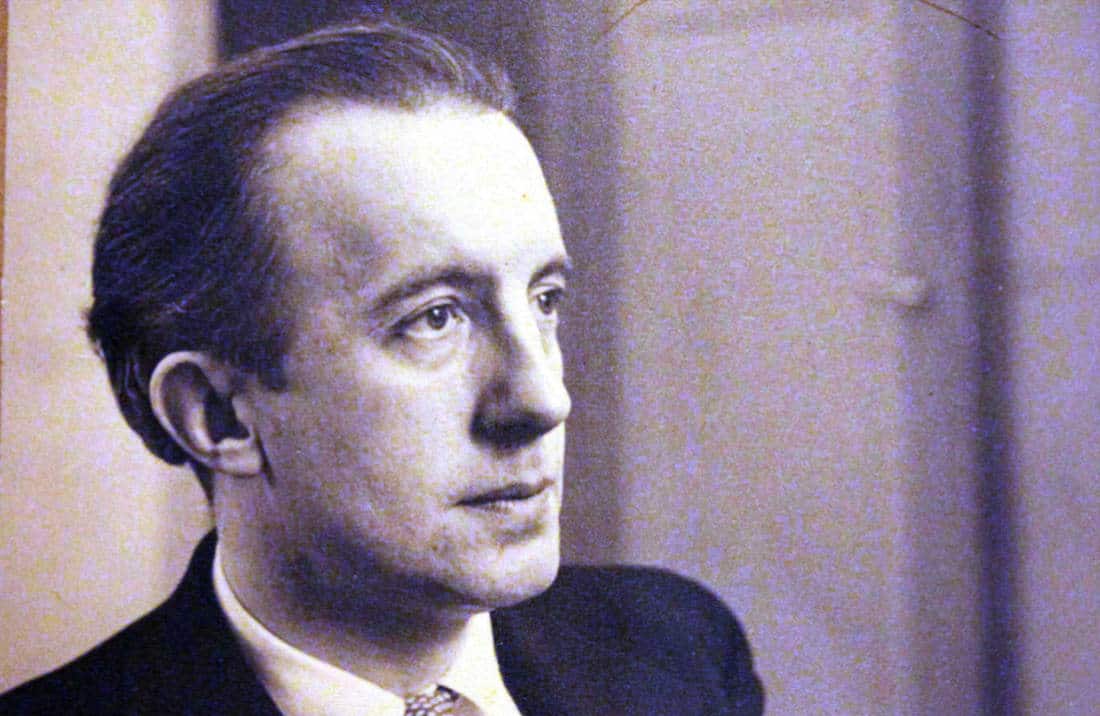
Paul Éluard died on a day like today, when people still died, with alarming frequency, of heart attacks. The other great Stalinist poet, he was carried off by the Muses —and this time never to return— in 1952. His prime moment occurred ten years before his death. It was when he wrote a poem for Nusch, a profound source of inspiration for surrealism, cubism and other historic avant-gardes; a woman without prejudice, his second wife, his eternal accomplice, his partner in the struggle for the freedom of France.
“Para concluir, pensé en revelar el nombre de la mujer a la que amaba, a la que iba dirigido el poema. Pero me di cuenta de que la única palabra que tenía en mente era
Libertad
—confesó en su momento el poeta. Al menos, eso es lo que recuerda Guy Krivopissko, conservador del museo de Champigny, donde actualmente se guarda y admira el manuscrito—… Así, la mujer a la que amaba encarnaba un deseo mayor que ella misma. La confundí con mi aspiración más sublime, y esta palabra,
Libertad,
aparecía a lo largo de todo mi poema solo para eternizar una voluntad muy simple, diaria y aplicada, la de liberarse del ocupante”.
Few concepts are as subjective as Freedom. Indeed, there are objective aspects, to be sure—rights, laws, material conditions—that limit it. Its meaning and priority shift according to ideology, history, and each person’s intimate experience. Freedom may be, as those who call themselves measured claim, subjective in its meaning and evaluation, but not entirely arbitrary because it always appears conditioned by norms, institutions, and shared contexts.
Contested as a concept, rarely has it generated as much consensus as in 1942, when RAF planes —the British air force— flew over occupied France, not to bomb it nor drop the usual leaflets against the enemy. What rose from the sky on that Allied flight was a Paul Éluard poem, Une seule pensée which bore that title when the author wrote it a few months earlier, in Vichy France. After passing censorship, it appeared within the collection gathered under the motto Poetry and Truth. That was June of ’42. Its author had changed the title on the galley proofs.
They are verses built in the manner of a “children’s litany.” The critics, fascinated ever since, say they speak to us of Freedom as if it were a child’s game. And indeed there is in them something of those star-crossed hearts, wounded loves, with the name of the boy and the girl who sometimes scribbled discreetly in a blank space of a textbook:
“In my school notebooks/ In my desk and in the trees/ In the sand, in the snow/ I write your name”, echoed the first stanza.
A sensation very much akin to what a teenager feels when secretly writing—the name of that first classmate for whom, not yet knowing what love is—yet feeling a powerful magnetism—already, he is drawn to her. But ultimately—or first—Éluard’s Nusch is what Marianne is to that allegory of the French Republic, at the head of the revolutionaries, standing topless among the dead for the homeland, in Delacroix’s famous Liberty Leading the People (1830). In fact, as soon as the poem was read in the newsroom of La France Libre —the mouthpiece of General De Gaulle’s resistance—, the Gaullists printed it and asked the RAF to drop it from the sky: it was a symbol of hope for occupied France. And it was indeed so, the resistants, the conspirators for the freedom of their country, against the German invader, repeated its verses as a slogan and a password to recognize one another as comrades.
The surrealism, as Luís Buñuel always answered whenever asked—and today precisely, it’s worth repeating once more—was “a poetic, revolutionary, and moral movement.” And Paul Éluard—born in Saint-Denis in 1895—the great surrealist poet we honor today, holds a hegemonic position in the lyric of Baudelaire’s language and in all 20th-century politically engaged poetry. Far from embodying solely the iconoclastic pose or the formal scandal typical of many avant-garde artists, Éluard turned surrealism into an ethical, loving, and political experience. He was Stalinist, no more and no less—the surrealists, who made scandal against the bourgeoisie one of their main arguments, for that purpose found nothing better than embracing communism—but the communists of the 1930s, although their legion of poets justified the atrocious purges of the Red Tsar, were of a moral quality far superior to that of the accomplices in the alleged corruptions of the Dancing Messiah. Those who opposed the Nazis; these—who change their names with every new election because with communism as a banner they no longer attract anyone—are in politics solely for personal gain, to satisfy the hatred instilled in them by their grandparents and their parents toward Madrid, toward the rich, toward the fascists… And of course, toward Spain.
André Breton was the defender of surrealist orthodoxy, the theoretician; Salvador Dalí—which, on a visit to Cadaqués, fell in love with Gala, Éluard’s first wife—the hallucinatory plastic arts; and Paul Éluard, the creator of catchphrases and slogans, the pure lyric. His poetry did not seek gratuitous artistry or the intellectual hieroglyph; rather, it sought the revelation of an inner truth through free association and visionary imagery.
In The Capital of Pain (1926) or The Immediate Life (1932), Éluard showed that surrealism could be a tool of knowledge as rigorous as it is luminous. His verse, free of complex rhymes, possesses an internal hypnotic musicality. Experts say it displaces Cartesian logic to open the way to a higher reality: one where desire, dream, and waking merge.
Yes sir, surrealism was a moral, revolutionary, and poetic movement.