
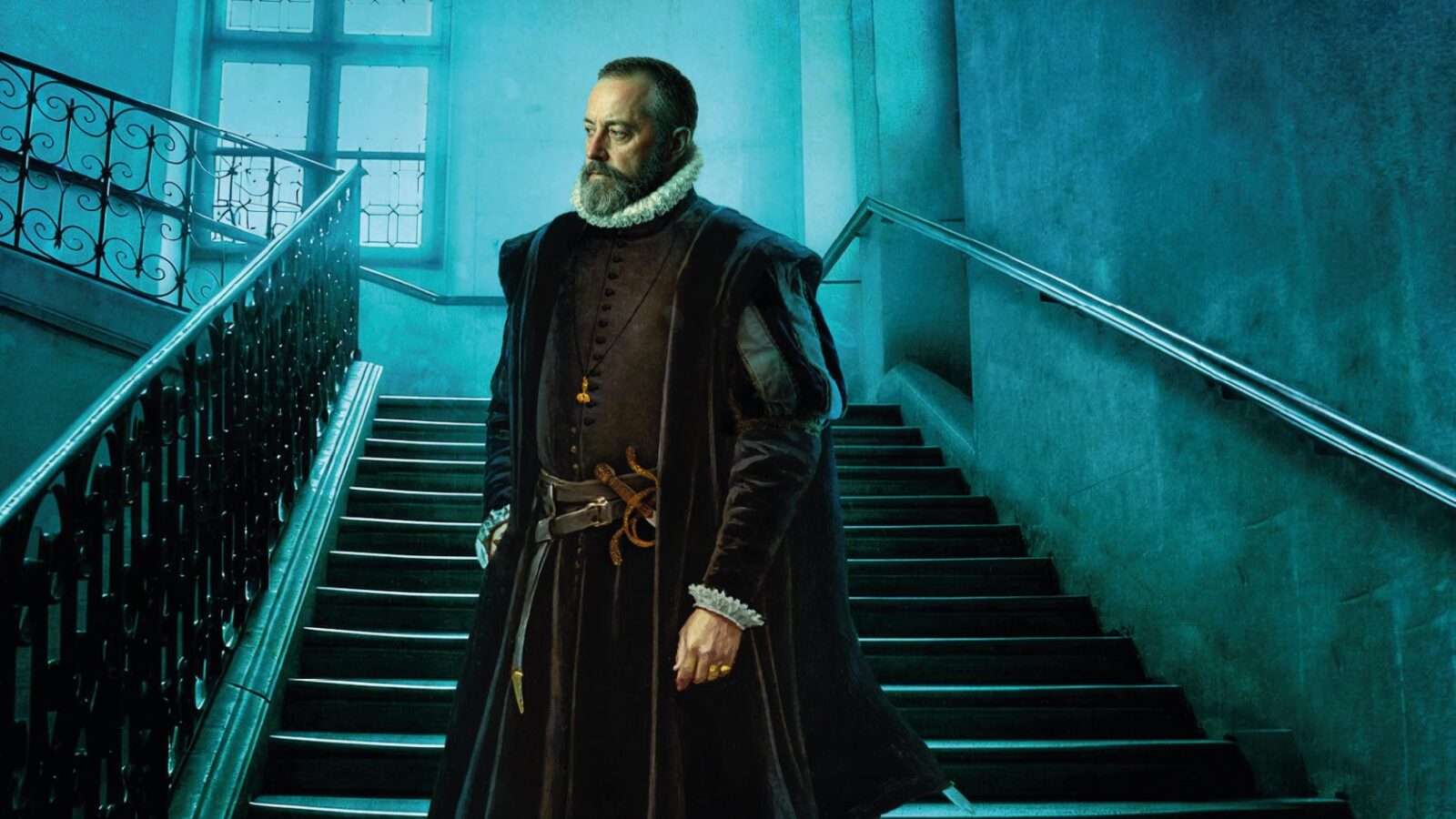
Madrid, 1578. An anonymous letter falls into the hands of the Grand Inquisitor with an unimaginable accusation: the king would have ordered the death of Prince Carlos. No one dares to give credence to such infamy… until the men who, years earlier, stood close to the deceased heir begin to die.
In this making of Juan Pedro Cosano explains how he wrote Conjura contra el rey Felipe (Espasa).
***
There are historical figures about whom writing without taking sides seems impossible. Philip II is one of them. Four centuries after his death he remains trapped between two nearly irreconcilable images: the Prudent King, a tireless worker and convinced that ruling was an obligation before God, and the dark monarch, fanatical and cruel whom his enemies created and who ultimately fed the so-called Black Legend.
Entre ambas imágenes nació
Conjura contra el rey Felipe.
The novel unfolds mainly in 1578, an extraordinary year. In August, the Alcazarquivir disaster leads to the death of the young Sebastian of Portugal and opens a succession crisis that will place Philip before the possibility of incorporating the Portuguese crown into his realms. Meanwhile, Flanders remains in rebellion, William of Orange fights the Spanish king, Don Juan of Austria is dying in Namur, and the Madrid court is a boiling pot of factions, ambitions and secrets in which figures like Antonio Pérez, the Princess of Éboli, or the Duke of Alba move.
But over Philip hangs a much older shadow.
Ten years earlier he had ordered the imprisonment of his eldest son, Prince Carlos. The lad died six months later. Philip never publicly explained all the reasons that led him to make such a terrible decision, and that silence left a void that his enemies were quick to fill. Soon, a devastating accusation began to circulate across Europe: the King of Spain had caused the death of his own son.
That historical fact constitutes the starting point of the fiction.
In the novel, Philip begins to receive anonymous letters that accuse him precisely of that crime. All of them bear a strange symbol: Saturn, the god who devoured his children to prevent any of them from seizing power. It was hardly imaginable as a crueler allegory for a king accused of sacrificing his heir.
From there begins an investigation that travels through Madrid, El Escorial, Flanders, Portugal and Rome, in which historical events mingle with fiction. There are spies, assassinations, coded letters, hitmen, court rivalries and a conspiracy whose true purpose Philip will have to discover. But as I wrote, I realized that the enigma of who stood behind those letters was only part of the story I wanted to tell.
I was interested in another question: what happens when the most powerful man of his time discovers that there is something he cannot command?
Philip could mobilize armies, dismiss ministers, imprison a grande of Spain or govern territories separated by thousands of leagues. But he could not order what History should remember. And he could not dictate a verdict on his own conscience.
There lies, for me, the true heart of the novel.
I have not wanted to write a book to absolve Philip II nor to condemn him. I have tried to approach the man who existed behind the monarch and understand him within the categories of his own time. For Philip, faith, the dynasty, the honor, the obedience and the raison d’État were not abstractions. They constituted real obligations, and at times terribly contradictory.
That is why the novel ends by taking the king to Rome and before Pope Gregory XIII. Philip must confront the accusation that has haunted him for ten years and explain why he imprisoned his son and what responsibility he bore in his death. For once he will not appear as judge, but as the judged; not as owner of half the world, but as a father who must reconcile what he did as king with what he can accept as a Christian.
Because perhaps that is the ultimate limit of any power: a king may impose silence upon his subjects, but he can hardly impose it on History.
And far less on his conscience.
—————————————
Author: Juan Pedro Cosano. Title: Conjura contra el rey Felipe. Publisher: Espasa. Retailer: Todos tus libros.