
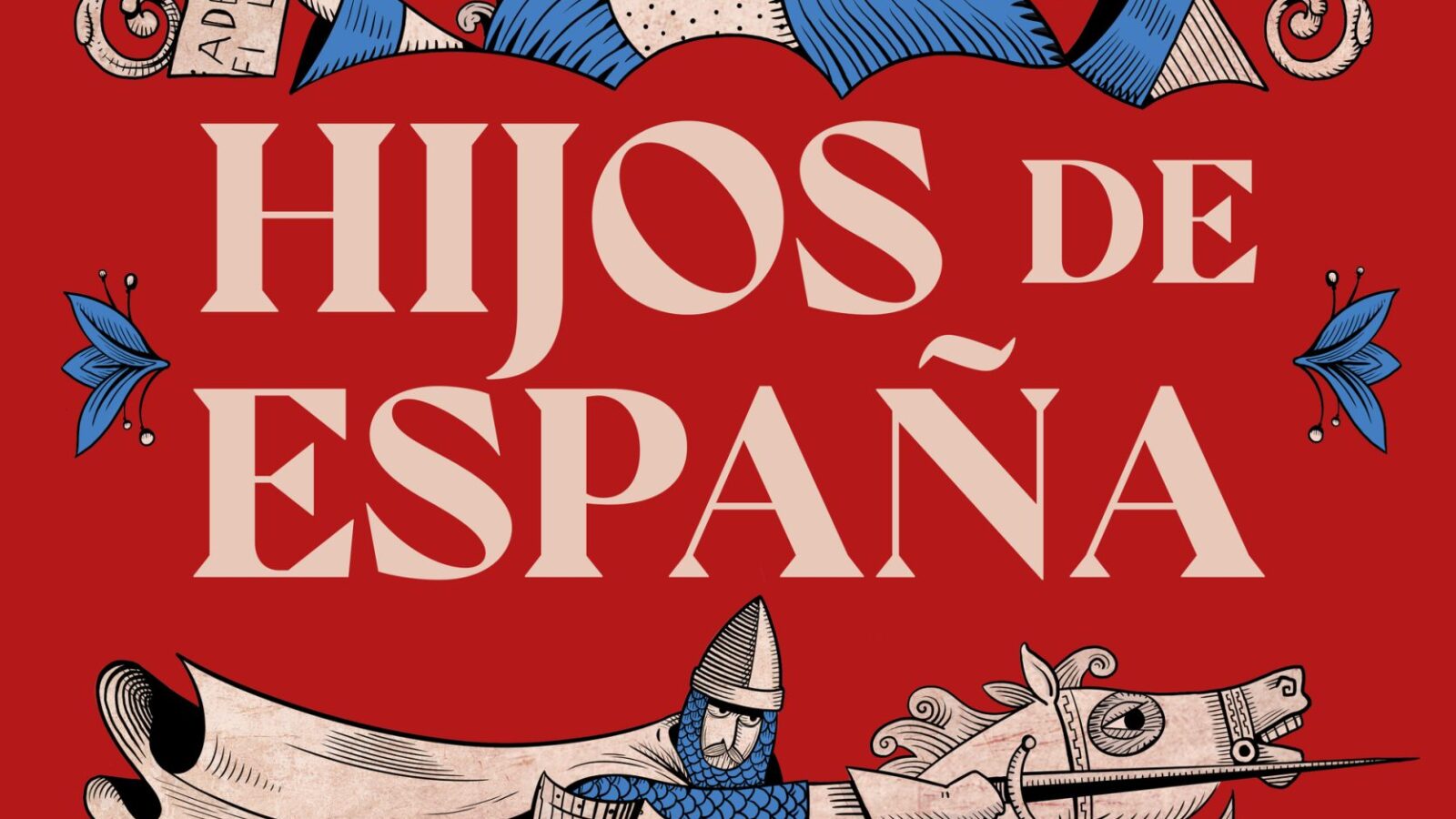
While reading Hijos de España, the latest book by writer and journalist Antonio Pérez Henares, an anonymous reflection that I have always considered apt came to mind: «We must keep intact the hunger and interest to learn and know». A timely recommendation in these times of vacuous or self-serving opinions.
To think for ourselves and exercise our freedom of judgment, we must distance ourselves from prefab truths and from those pseudo-intellectual currents that make a lot of noise but offer little certainty. To achieve it, one only has to read those whom we know possess historical rigor.
That is precisely the exercise proposed by Hijos de España, a historical divulgation essay that traverses thousands of years of our past through fifty-eight figures who left their mark on history.
Even before Spain existed as a nation, the Iberian Peninsula was the cradle of men and women whose decisions, discoveries, and feats helped shape a historical heritage that has arrived to our days. Not all, despite their merits, have managed to remain in memory; many are practically forgotten. The author aims to rescue both the great figures celebrated by historiography and those forgotten, equally worthy protagonists of being remembered. A choice that adds variety to the whole and allows us to discover forgotten episodes.
The journey begins in prehistory, with the “Homo Heidelbergensis” of Atapuerca nicknamed Miguelón and the so-called Lozoya Girl, “Homo Neanderthalensis,” whose remains speak to the presence of the peninsula’s earliest inhabitants. Then come the Carthaginian and Roman eras with figures such as the Barca brothers, Seneca, Trajan, Hadrian, or Theodosius, whose biographies help to understand the growing importance of Hispania and the influence of its natives in the governance, philosophy, army, and culture of the Roman Empire.
Pérez Henares continues his journey through the medieval centuries, moving on to the Modern Age, and ends with some figures closer to us. This journey is populated by popular figures and others less known to the general public that make the essay even more attractive. Among its characters we find queens capable of challenging the conventions of their time, men and women full of ardor and bravery whose feats still inspire admiration.
I do not intend to turn these lines into a roll call of the fifty-eight characters who inhabit the book. It would distort one of the book’s attractions: to discover who they are, what they did, and why they deserve a place in our memory.
I would like to stress that our History is not limited to five dozen historical protagonists, no matter how extraordinary their lives were. I am convinced that Pérez Henares treasures in his mind hundreds of characters whose biographies could fill one, two, three, or even dozens of new books. Protagonists who await rescue from oblivion and whose achievements will allow us to know better many episodes of our past of which we can legitimately feel proud today.
Those of us who have read a large portion of the writer from Bujalaro’s historical novels and essays recognize in this selection some of his favorite characters. Throughout his literary career, the writer from Castilian Extremadura has demonstrated a deep knowledge of the different eras of the peninsula’s history, especially those he has turned into settings for his narratives.
Pérez Henares, popularly known as Chani, has demonstrated his ability to craft historical novels and high-flown essays, with a narrative tempo that draws its roots from the tradition of those troubadours and storytellers whom he knows so well and who walked roads, squares, castles, and palaces, delivering tales that helped enrich the Spanish language. From that tradition he seems to have inherited the taste for storytelling and the capacity to keep the reader’s interest alive.
In Hijos de España, the author places the character in their time, selects their most notable deeds, since many of them possess more than one standout episode, and explains the circumstances that determined their trajectory. A synthesis that, inevitably, leaves some aspects underdeveloped but also invites the reader to delve deeper, through other readings.
As I closed the book, that reflection with which this review began returned to me. Maintaining the need to learn and know intact is one of the best ways to preserve our independence of thought.
Because knowing our history does not obligate us to feel proud of everything our ancestors did, but it does prevent us from feeling ashamed, out of ignorance, of what deserves to be recognized, which is extensive and remarkable.
—————————————
Author: Antonio Pérez Henares. Title: Hijos de España. Publisher: Roca. Available at: All Your Books.