
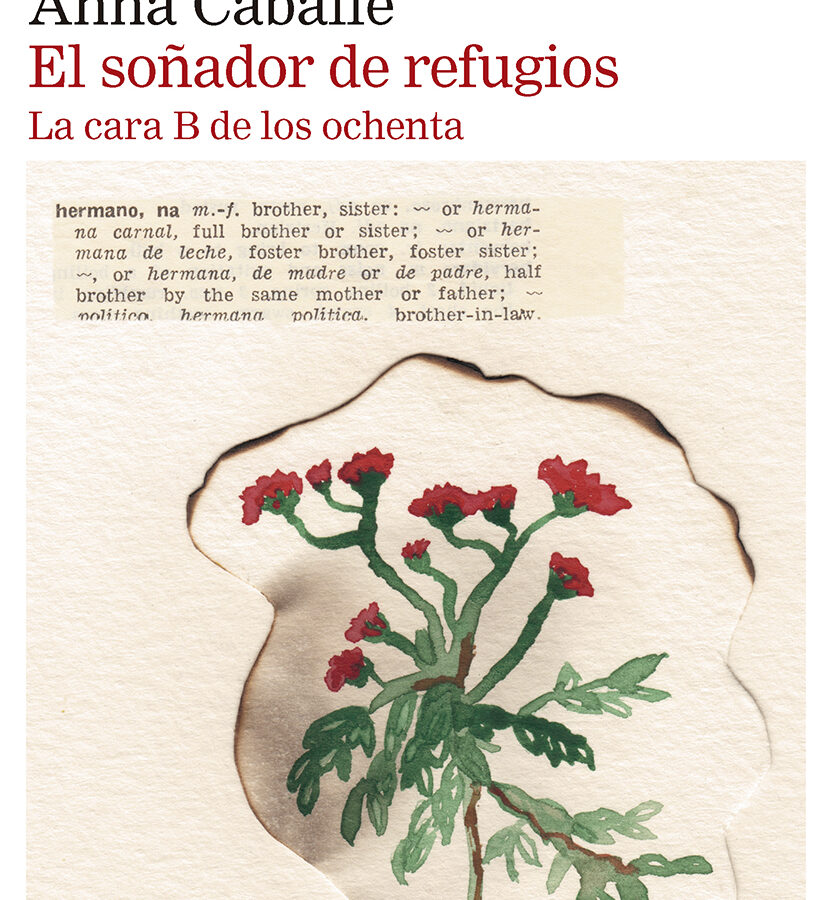
We often say with some regularity that a particular book offers a double, or even a triple, reading. We refer to distinct levels of understanding or interpretation of the text, which normally interweave or confuse, and only the analyst’s lens allows us to disentangle. In reality, it isn’t something that depends solely on the work itself but on its relationship with the reader’s gaze. Put as simply as possible, the most elementary distinction would be to differentiate a superficial or naive reading from a deep or specialized one.
That said, it is no less true that some books lend themselves more than others to that, at least, double reading. And if I bring up that trait here, as you will surely have guessed, the book I am going to discuss is particularly striking in this respect. It is not only so because of what I might say as an analyst but because of the deliberate and straightforward purpose of its author. Even the very title and subtitle reflect that duality: the singular of The Dreamer of Shelters, referring to the protagonist of these pages, is complemented by the sociological perspective announced by The B-Side of the Eighties. It is the classic landscape with a figure: context and subject are needed and explained to one another.
The subject or protagonist is Carlos Caballé, the author’s younger brother, who passed away on April 12, 1993, at the young age of 33. If I add, right from the start, that the cause of his death was AIDS, I offer a first significant datum in the sense just noted. Carlos did not die in some unfortunate accident, nor from an endogenous ailment but from a disease that came to represent the new Black Death of that historical moment, for some even a kind of biblical plague, that swept away all who wished to live to the limit. The gods always punish hubris, that is, excess.
Carlos was the dreamer of shelters, a poet, the dreamer of a life that proved elusive. He is the mirror and epitome of an era, of a culture, of an irreproducible moment, even more so in a country that was inaugurating freedom and that, in the euphoria of having left behind forty years of dictatorship, did not know very well what to do with it. In those years Raimon sang “D’un temps, d’un país”: D’un temps que serà el nostre,/ d’un país que mai no hem fet,/ cante les esperances/ i plore la poca fe. In plainer terms: yearning, uncertainty, disorientation.
But Carlos was also —as I have already written— the brother of the writer of these pages. I reiterate and emphasize it now because anyone who has followed the brilliant academic and research career of Anna Caballé would be surprised by the presence of a book completely unusual in her prolific bibliographic production. As is well known, Anna Caballé is not only a specialist in biographical studies of great Spanish authors but the author of the most acclaimed biographies in recent times in the Spanish context. It is enough to cite Concepción Arenal, which earned the National History Prize, and the most recent on Rosa Chacel, the Zenda prize, in addition to her overarching reflection on Biographical Knowledge, which won the Jovellanos prize.
Paraphrasing that famous Burning song, which was so audible precisely in the eighties, we could ask ourselves What is a girl like you doing in a place like this? The answer is given with complete sincerity by the author of these pages at the outset of her narrative: the call of an inner voice. A voice —could it be Carlos’s own?— that asked for another chance, the one he did not have in life. The chance to relive again, so that the testimony of his fleeting passage through life — his poems, his writings in general — would not remain unknown any longer: “I had an outstanding debt with him and his writing,” Anna Caballé confesses with an open heart. “Ultimately to recover, a voice in the void of what was and what stood and is no longer.”
Paisaje con figura, I wrote earlier. Because the human figure, the protagonist, cannot be understood without the socio-cultural setting. It is not that I say this in my role as critic. It is explicitly noted by the biographer: «dying of AIDS at the beginning of the nineties, as dying of leprosy in the early centuries of our era, meant (…) the purest image of vital desolation». They were years, she continues, that swallowed in a self-destructive whirlpool some restless youths who wanted to push to the limit an unsatisfied vitality, prisoners in a certain sense “of a new religion — the religion of pleasure, sex, drugs, bohemia, the night—.”
But the biographer takes on here a particular challenge, for she cannot speak only as the acclaimed and objective analyst that she is, but imposes a task of a more intimate nature: to reflect a life that is also part of her life, to capture memories and experiences that affect her both personally and her entire family environment. Sensitive material, one might say, in the deepest sense of those terms. The nakedness in the articulation of those intimate feelings is here blended with a subtle restraint to reach, in the end, an admirable balance between confidences and respect, between fraternal love and heart-wrenching disillusion in a troubled family setting.
Disillusion: I have mentioned another key term of the era, so crucial that it helped define it and turned Jaime Chávarri’s famous film about the Panero family (from 1976) into the era’s most complete symbol. But while some sank into nihilism, more or less abject, others, the younger and more impetuous, wanted to live life as if finishing one drink after another, without measure. And in a brisk pace. Another famous film from the period (1981, specifically), by Carlos Saura, depicting a portion of that youth, was titled Deprisa, deprisa. There is no better characterization.
Or, to say it in the mode of Lou Reed’s emblematic song: Take a Walk on the Wild Side. Not few were those who took it literally: the wild side of life, away from conservative constriction and bourgeois conventions. And, as I have just noted, with a thirst to drink life. At a gallop! At a horse! And injecting the horse into the vein. “To my brother, as to Burroughs — writes Anna Caballé —, as to any addict of yesterday and today, heroin provided him with a cruel and wrenching philosophy of life.”
All of that radiates from these pages. A time, a country… And a life marked by successive losses. “Within the framework that drugs had traced in my brother’s life, the losses followed one after another. Loss of trust, of family love, of his scant possessions, of comforts, of study, of any recognition.” Bob Dylan would have been pleased that times were changing, but when changes occur so quickly, they sweep away the best or, at least, the most idealistic and devoted.
Anna Caballé reflects that world with precision. And, at the end of the journey, she can feel satisfied with what she has achieved. I think she is, indeed. Or that is, in the final analysis, what can be inferred from the last lines with which she closes this beautiful fraternal invocation: “I have accumulated love for my brother, just as in life I accumulated pain toward him.” There are books that emerge from the deepest part of the human heart: “I have the sense that I have stood in this book, face to face, with the pain of the world.”