
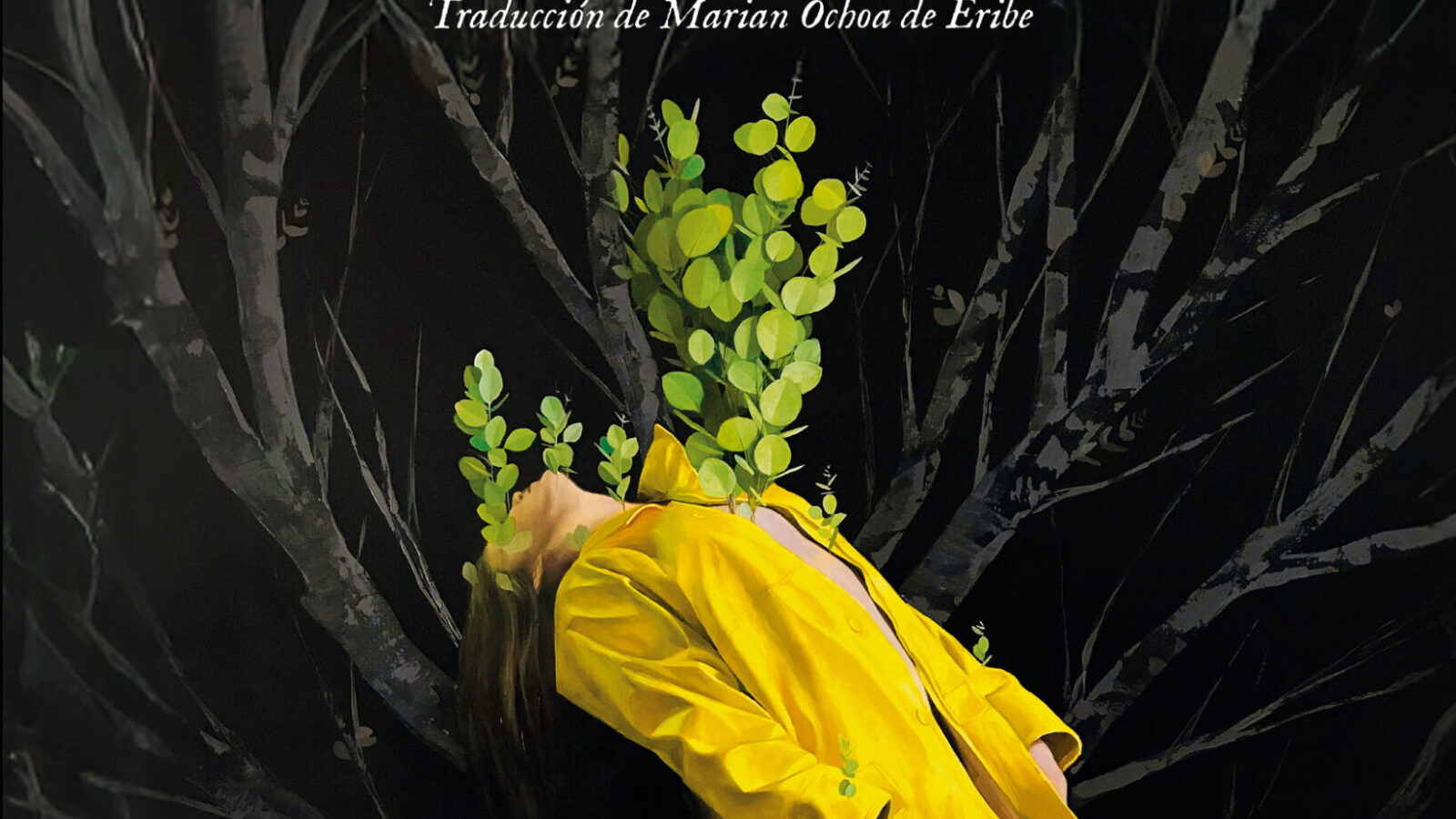
When You’re Happy, Hit First is the latest novel by Tatiana Țîbuleac, just released in 2026, published in Spanish by Impedimenta and translated by Marian Ochoa de Eribe. Once again, Țîbuleac aims with force and directness at traumas.
Mila, the protagonist, is a fifty-year-old woman who has been sober for six months. She lives in Paris in precarious circumstances, dragging a deep sadness. She is a product of the transition and the collapse of the Soviet bloc.
“Today marks six months since I swore I would never drink again. And Haim. And Ella. And other things. A night full of oaths, that night.”
With this sharp, direct prose, Mila begins to explain the scars of her life. Although many characters appear in Mila’s memories, the story places emphasis on her father, an alcoholic and somewhat bohemian journalist who teaches his daughter to love literature, but with great difficulties in conveying love. The novel revolves around that family bond that deprives Mila of the emotional tools she needs to inhabit the world with joy. But is the father the true trauma for Mila? Or is it also a political and economic context that forces her to be more on the defensive than in love? The novel opens the door to a theme that is increasingly present in our world: forced migrants, uprooted families. How do survival relations affect people?
“When my father died I sold the apartment along with its eighteen square meters of books, and I found among them dozens of hidden messages. It was a writing different from the one I had grown up with, almost indecipherable. I think he wrote when he was drunk or when his heart hurt. Some messages were addressed to me: ‘Mila, in Pitsunda there grows a pine tree that bears your name.’ Others were for him: ‘When you’re happy, hit first!’”
Displacement in the novel is not only geographical relocation but a deep emotional fracture. Paris is not a setting of freedom or romance; it is a metropolis that sharpen loneliness.
“It’s true that there are people who live worse than I do, who follow the milking-cow model. They slave away here, send all the money home to their children and grandchildren, and when the milk runs dry, they return home to die, usually from illnesses that weren’t treated in time.”
Reading Țîbuleac is to enter a no-holds-barred dimension, a torn and direct thought that takes us to the wounded spaces of the soul. We all have some scar; perhaps no one escapes experiences that have deeply marked the way we are in life. This is, in my view, the message the Moldovan author conveys to us. An ebb and flow through the dark cracks that each of us carries inside and how the choices we make, moved by the environment and personal circumstances, can steer us toward or away from better territories. Piedad Bonnett says it like this in her poem Scars: “There is no scar, no matter how brutal it may seem, that does not enclose beauty. A brutal story is told within it, some pain. But also its end. The scars, therefore, are the seams of memory, an imperfect finish that heals us by hurting us. The form that time finds for us never to forget the wounds.”
The story of When You’re Happy, Hit First, made up of memories that flow between past and present, reflects the fragility of happiness and inevitably makes us wonder where true joy is born. Through Mila’s first-person thoughts, the book tackles the impossibility of being happy when the familial past weighs too heavily.
The reading offers no easy consolations, but it does provide a narration that manages to transform humiliation, shame, and alcoholism into painful literary beauty. Whether or not it is an autobiographical novel, the point is beside the issue. Its prose, savagely lucid, underscores the universality of all scars. Invest these scars with the intensity and memory they can attain.
—————————————
Author: Tatiana Țîbuleac. Title: When You’re Happy, Hit First. Translation: Marian Ochoa de Eribe. Publisher: Impedimenta. Sales: Todos tus libros.