
To commemorate the 90th anniversary of the Civil War, José Ángel Mañas recreates in Zenda, day by day in this section, what happened in 1936, perhaps the most pivotal year in all modern Spanish history.
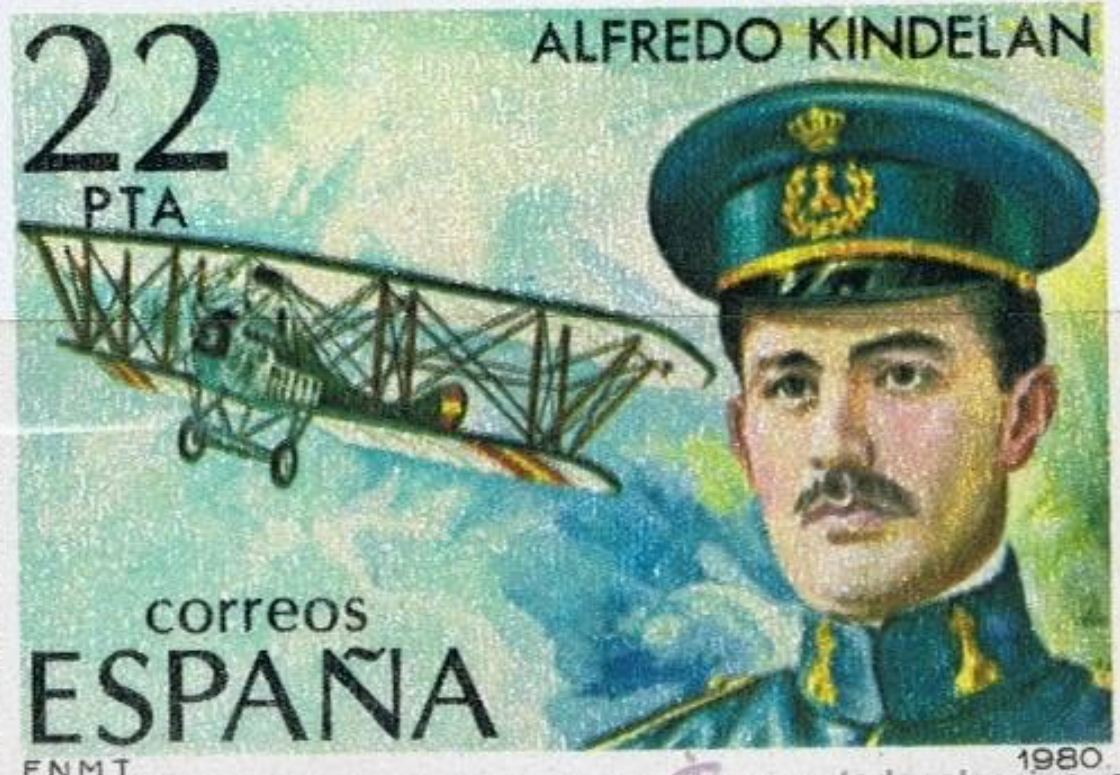
Wednesday, September 16, 1936: Kindelán Speaks
This very morning I have just laid it out for you, gentlemen. You know I never wanted to steal the spotlight from Franco, Mola, Queipo, or Cabanellas. It’s true that I could have done so. I won’t deny that, being young, I undertook certain aerial feats, out of love for my profession. In addition to piloting weather balloons, I was the first Spanish airship pilot. For that reason I earned the first military pilot’s title from the Cuatro Vientos school.
»With regard to my numerous positions before the Republic, I did everything I could to fuel the passion for aviation in Alfonso XIII. I was the one who instilled in him the itch for flight.
»With regard to my numerous positions before the Republic, I did everything I could to foster the passion for aviation in Alfonso XIII. I was the one who instilled in him the itch for flight.
»I have always been a convinced monarchist and, therefore, upon returning to Spain after my exile during the Republic, I did not hesitate to collaborate with Franquito. I already suspected that we would have the Navy against us, and I was the architect of that first air bridge between Tetuán and Sevilla, and of the crossing of the Strait. But, at my age, medals do not interest me.
»That said, and without wishing to steal anyone’s thunder, I like to think I am one of those secondary characters who, at a certain moment, influence history. Since late July Franquito has been completely focused on the campaign, and I had long realized that if I did not seize the moment, the single command could slip from him.
»I have always been a convinced monarchist and, therefore, upon returning to Spain after my exile during the Republic, I did not hesitate to collaborate with Franquito. I already imagined that we would have the Navy against us and I was the architect of that first air bridge between Tetouan and Seville, and of the crossing of the Strait. But, at my age, medals do not interest me.
»Do not forget that the Defense Junta operates in Burgos. And there are Mola, general of the Northern Army, and Queipo, general of the Southern Army, who have shown a great deal of ambition from the very start.
»Those of us who come with Franco and the Expeditionary Army are still acclimating. In this medieval palace, amid red damask curtains, there is already a movement that up to now had not been seen.
»Right now, everyone who has something to communicate comes and goes, including the German and Italian diplomats who are following us. Here we have the political secretary’s office and the aides’ room, adjacent to Franquito’s office, with telephones and three radio stations. And in another room there are easels with boards and topographic plans illuminated by projectors.
»In addition, we have six offices for the General Staff officers, all with high ceilings and floors paved with polished tiles, decorated with helmets and lions. In Franquito’s office, I usually sit on a black settee next to a lattice window that looks out onto a darkened stone wall covered in ivy.
»Franquito enters at eight, eats at three or later, and at five he resurfaces. And he does not stop again until three or four in the morning, with a brief pause for dinner.
»It must be said that Doña Carmen is still in France, though she will cross the border soon. The poor woman will hardly enjoy her husband, who spends hours in front of the maps, coordinating the advance on Madrid!
»Apart from the fronts’ exits and Sundays, when he attends Mass in the palace oratory, the rest of the time he spends in the office. At dusk they talk about numbers. His first question is always the casualty figure. Based on that, he congratulates or reprimands his aides.
»He also likes to hear about the day’s heroic actions. When there are any, his face lights up. In short, it took me a while to find the moment, but this morning I finally seized one of the rare moments we had alone.
—Look, Paco —I said to him—, I know that modesty, fear of rushing you, and hurting sensitivities hold you back. But you cannot let more time pass. For the moment, in the meeting we held on the twelfth, all the generals have verbally accepted that you command the three armies. Now we must ensure that agreement is formalized and a document signed. Your brother Nicolás and I have discussed it: we cannot settle for a verbal agreement. You must take command of the unified army and, if you can, the leadership of the State. It’s now or never; don’t think you have that much time.
All the entries of 1936 Day by Day
Interview with José Ángel Mañas about 1936 Day by Day