
To mark the 90th anniversary of the Civil War, José Ángel Mañas recreates on Zenda, day by day in this section, what happened in 1936, perhaps the most pivotal year in the recent history of Spain.
Saturday, September 5, 1936: Mr. Bowers in Hendaye
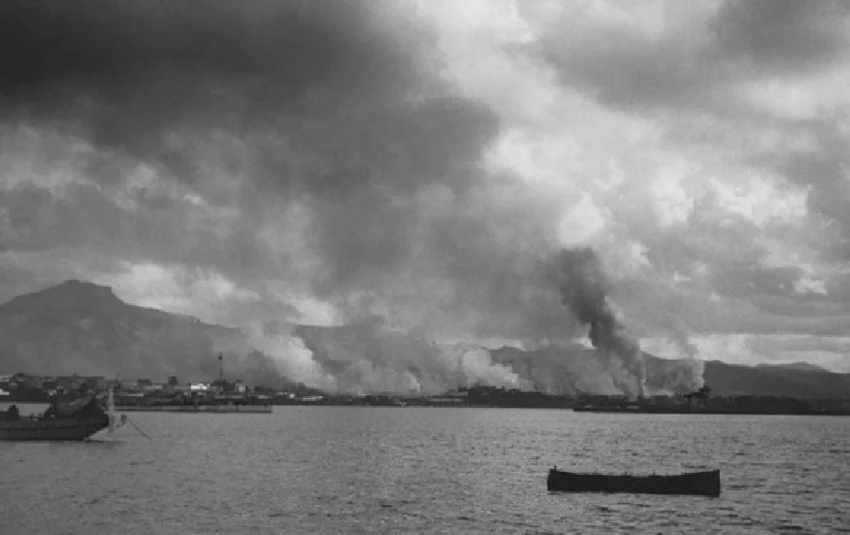
The Euskalduna Hotel, facing the sea, on the Hendaye beach, loomed with views from its windows over the nearby town of Irun. The village was on the brink of collapse after several days of bombardments that could be watched from a distance, like fireworks.
For a couple of weeks the hotel had been filling with diplomats and war correspondents. All crossed paths in the lobby where the phone rang day and night. Some ambassadors had settled comfortably in the plush chairs of the café. They drank sophisticated cocktails amid a subdued lighting. When the ambassadors crossed the border, they brought with them heads of other missions. Among them the American Claude Bowers, who the uprising caught in Fuenterrabía. They all gathered in the afternoons to exchange news.
—> “Above all, the hands,” exclaimed Bowers. “You can hardly imagine the effect Azaña’s hands had on me when I saw him at the palace. So white, fainting on his legs or lying along his body! He looked pallid, his gaze exhausted. If that is the president, how will the others be?”
—And Madrid has already endured four bombs…
—Yes, but clearly they will not spare anyone. The Republic’s gravest miscalculation has been to do away with the military. The dissolution of Army units and the executions of officers at the slightest suspicion by militiamen or troops cast the Government in a bad light. It is normal that many officers join the rebel side. In the case of the Navy, the consequences have been seen in the fleet’s impotence to prevent the crossing of the Strait to the Army of Africa. Most of the ships remain under government control, but without officers the ships are of little use.
—Well, I think it has improved the coexistence between soldiers and militiamen —observed the British ambassador—. But judging by what was seen in Irún, I won’t say the situation looks good for the Republic. Imagine that at the beginning they told us the coup would last only a few days!
Claude Bowers nodded. He still remembered his interview with the Count of Romanones, in Fuenterrabía, when the count explained that the Uprising would last four or five days: “Everything has been planned perfectly, it will be carried out quickly.” He said it with his usual sly smile, and the ambassadors who were vacationing on the beaches of San Sebastián informed their governments that the war would end, at most, in a month. But it was already clear that Romanones’s forecast was far from being fulfilled. For days, the diplomats worried about whether the flags of their countries would fly prominently on their villas and palaces and, as the Battle of Irún began, they crossed the border.
—In my country, the arrival of the Soviet ambassador in Madrid is a concern —Bowers indicated—. It is the first time since the fall of the tsarist regime in 1917.
—And what can the Republic do? Wait for France to sell them arms? France has cut off supplies. The Paris government is terrified by the idea of a war with Germany. It needs England. And in London they do not mind Spain weakening through the conflict or even breaking into two. And above all they dislike the revolutionary climate established in the Republic. Either Moscow sends the aid that Azaña needs, or it won’t arrive. Azaña may not like Rosenberg, but he is now his only ally.
While the ambassadors debated, seated on comfortable sofas, the last Republican holdouts were exhausting their meager ammunition in Irún, aware that their families were leaving their homes and heading toward the border. From the hotel windows one could see dozens of women, children, and the elderly loading as best they could the belongings, pots, chickens, and mattresses from their destroyed homes.
All the entries of 1936 day by day
Interview with José Ángel Mañas about 1936 day by day