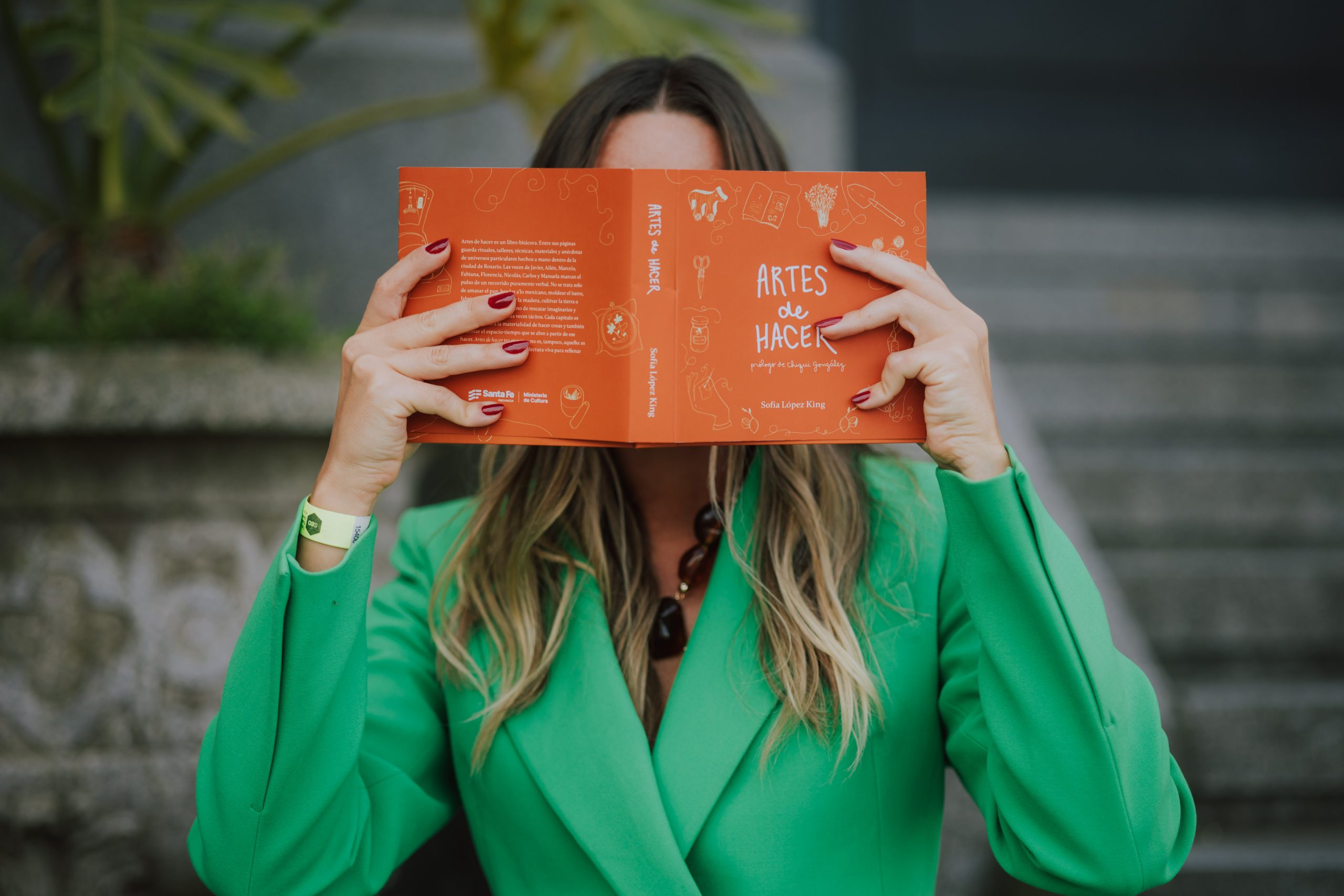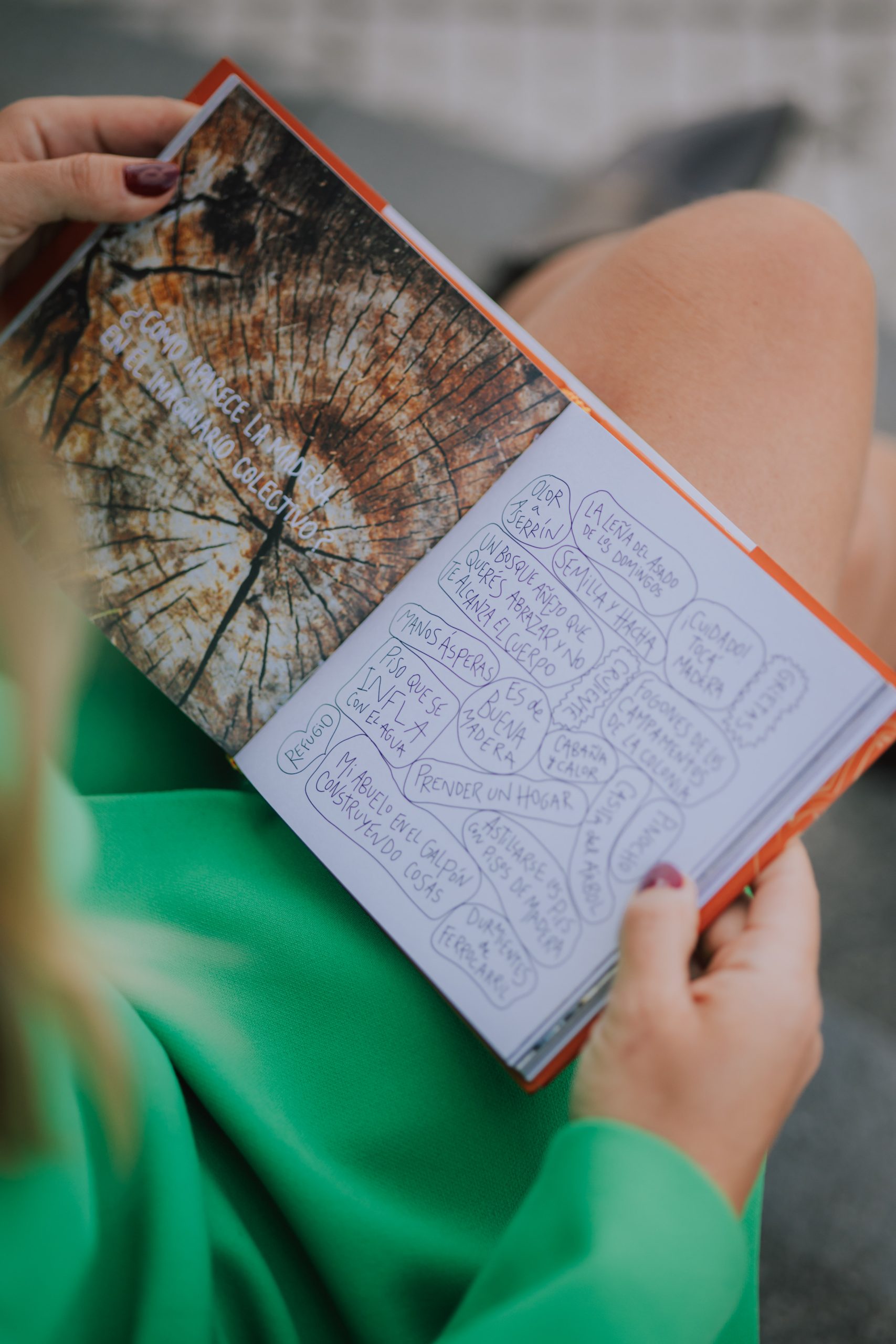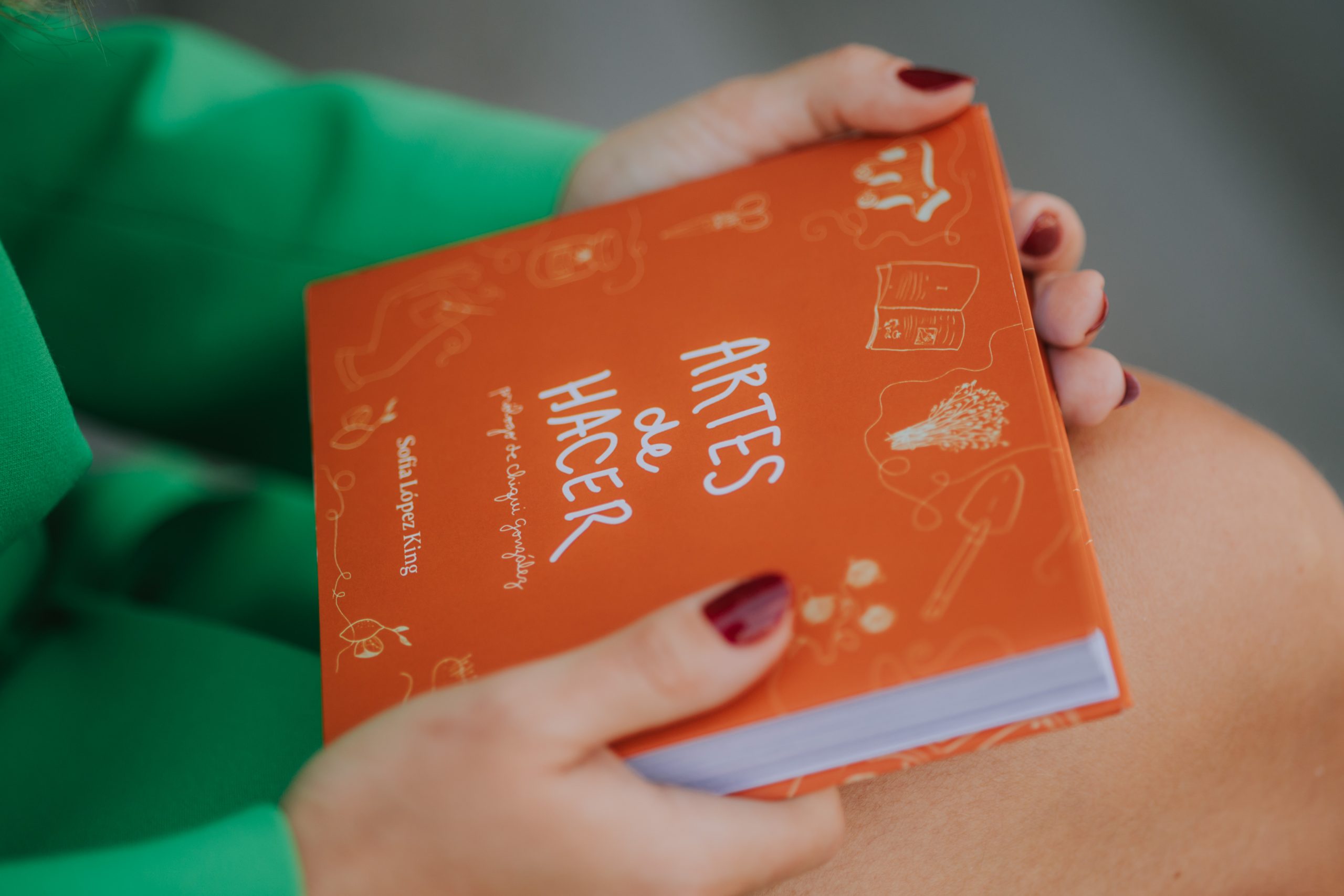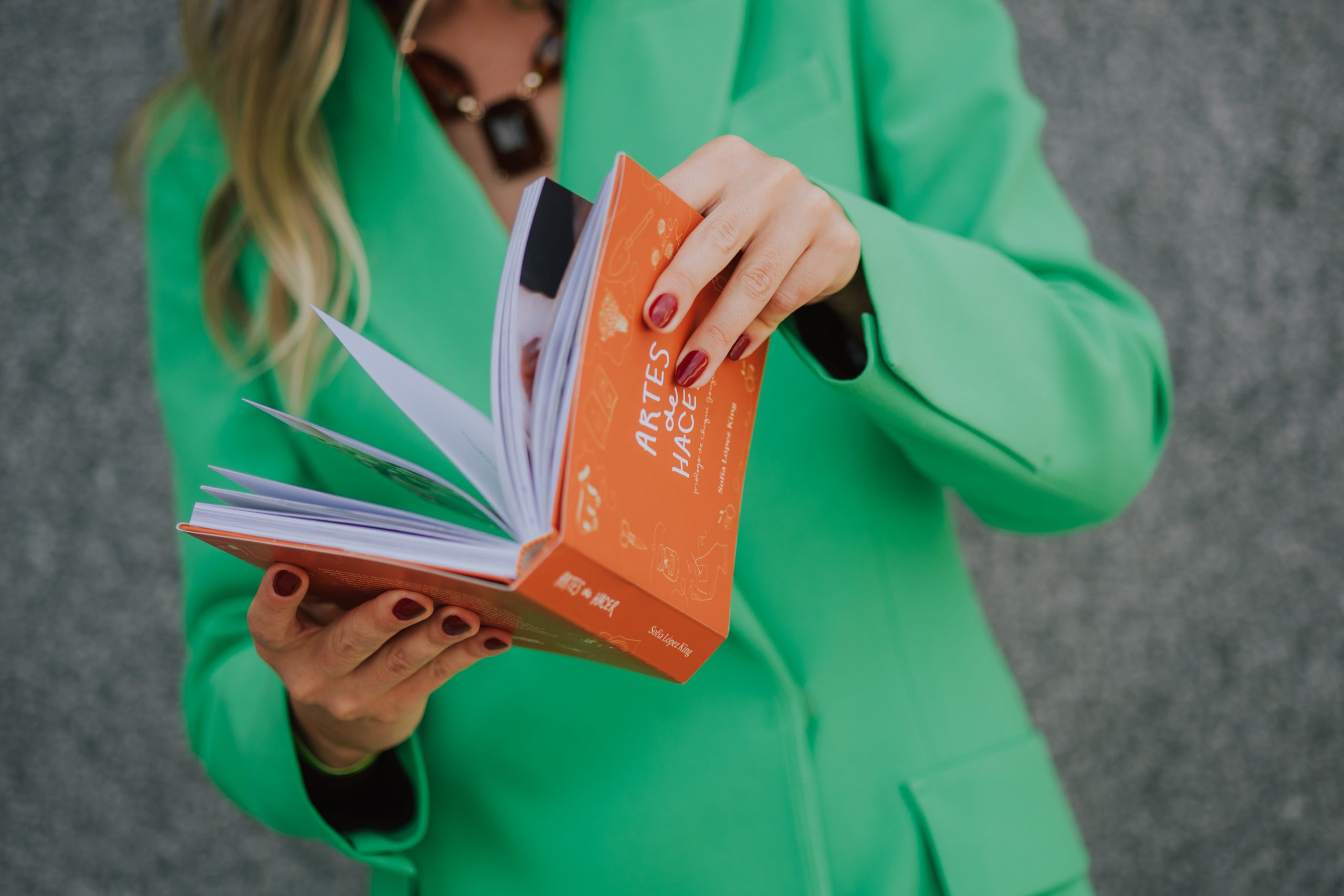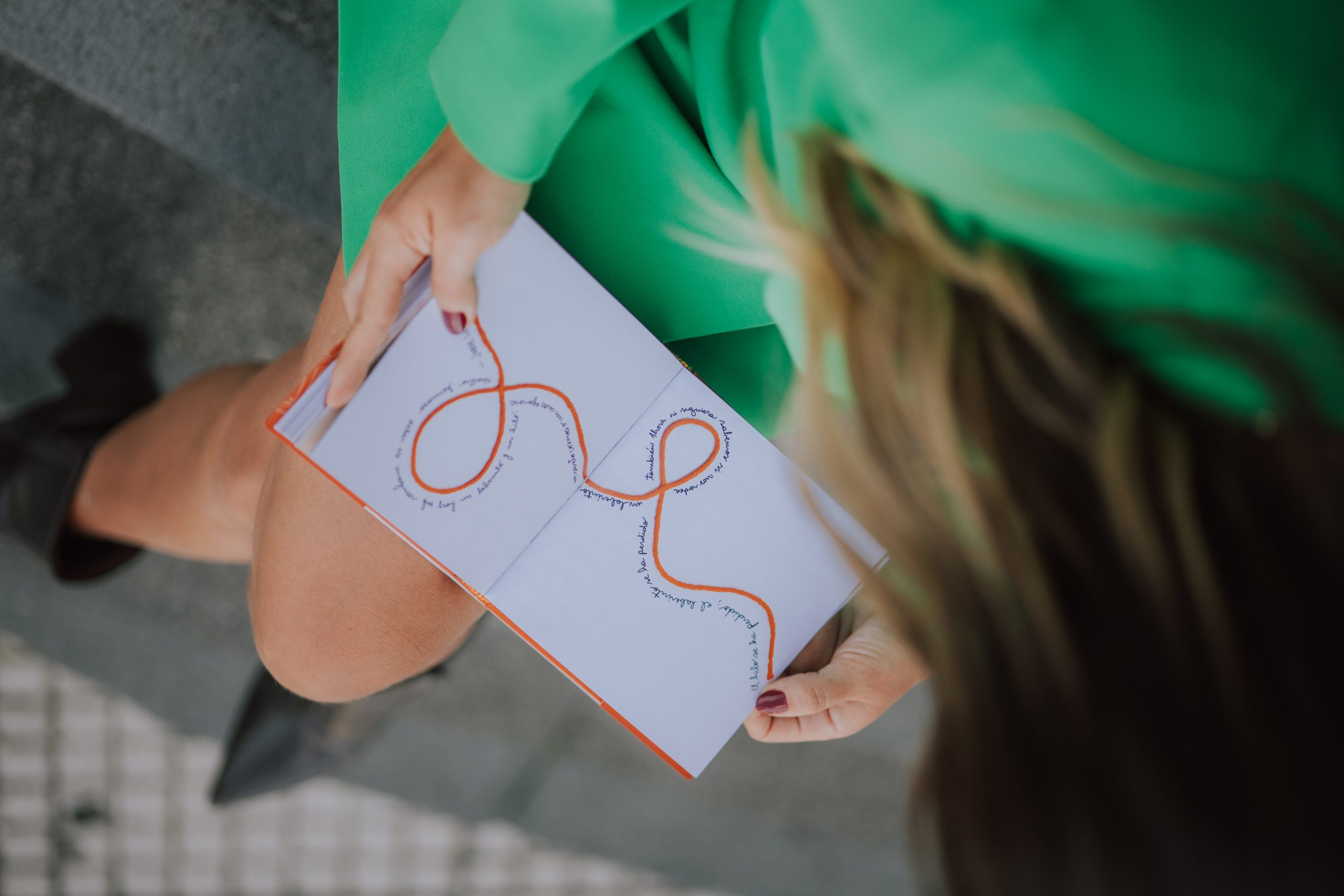
This book is the result of a research project and editorial creation that explores intangible cultural heritage through crafts, manual knowledge, and everyday practices. Its origin lies in a five-year study conducted in Rosario, Argentina, based on in-depth interviews, documentary photography, and encounters with artisans and makers.
At Zenda we offer a fragment from Artes de hacer, by Sofía López King.
***
From the Prologue by Chiqui González
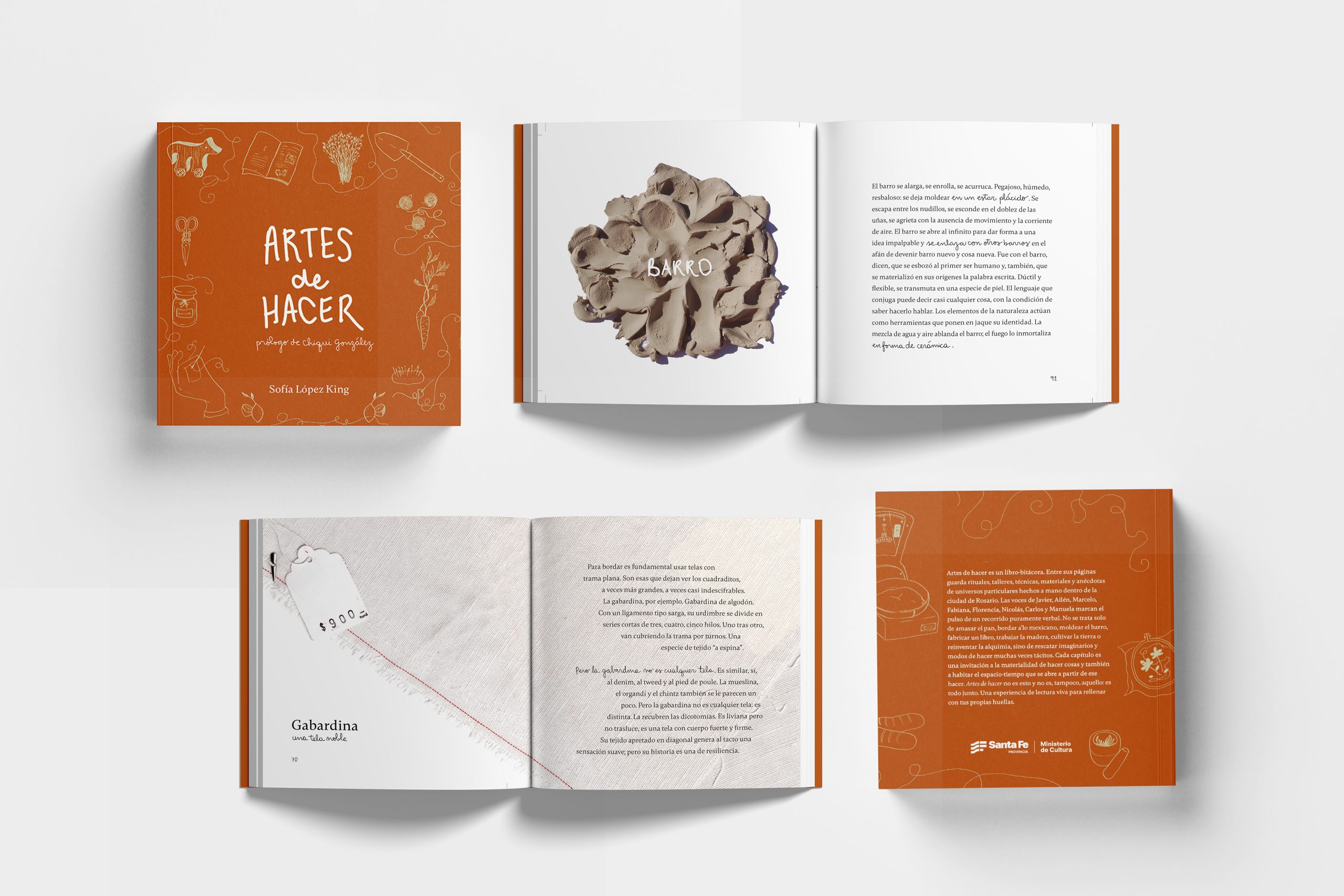
II. The Artes de Hacer by Sofía López King is a marvel, a book that speaks of that which is. From a book it becomes art in every page and corner, its ups and downs, its insides and outsides. More than a book to be looked at, it becomes a way of looking. It is a book-object that seeks to enchant the reader from start to finish: the textures of the paper speak, the photographs present metaphorical and poetic scenes: they do not illustrate, they move. The texts do not explain, they put us in motion. The author has turned to writings in multiple languages to make a polysemic, plural book that folds and unfolds with our imagination. A book of verbal, poetic and political construction. Verb and gerund so that things are prepared, designed, born, die, recycled and reborn. This rebirth of doing inspires a celebration of matter, so battered by reason, so erased on screens. It promotes the wholeness of humanity, the synchrony of what is arising.
We could tell the story of humanity through the acts of making presented in this volume: embroidery, working leather, reviving clay, composing the movable type of printing, the strength of wood and the delicacy of the alchemy that is, in the end, the great metaphor of the whole book.
[…]
A profile of paper
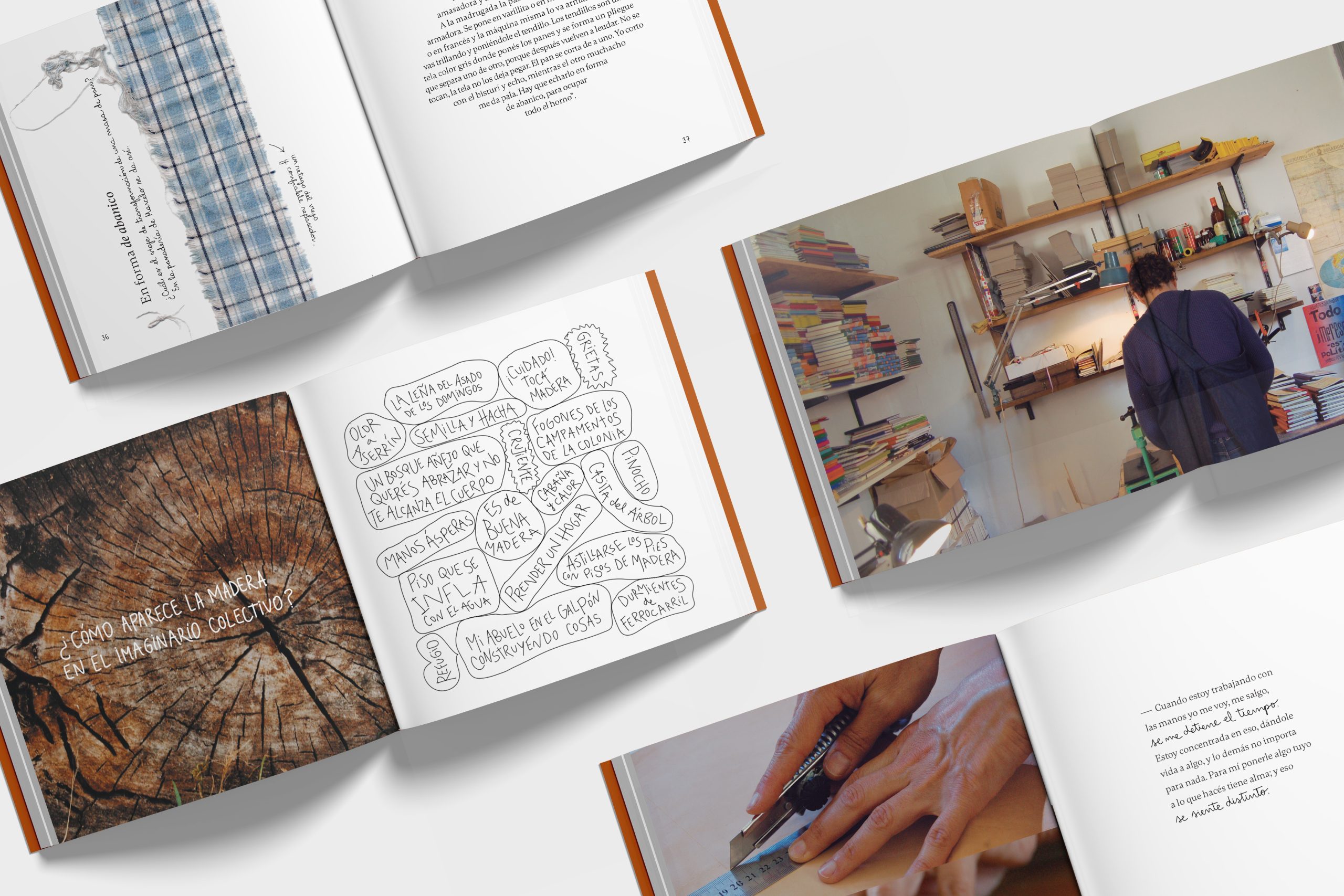
In the workshop there are many: inside drawers, piled on the floor, on the workbench and tucked into boxes. It makes sense; one cannot fabricate books without gathering and archiving papers and, likewise, without projecting a possible future onto each one. Each sheet has its own personality and quirks. Nicolás knows them, Virginia knows them too. Theirs are ancient relationships, those in which the parts already know each other by heart but still manage to find some excuse to keep walking hand in hand.
A sheet of paper is a puzzle with soft pieces that ooze. United and dry, they reincarnate as a canvas. Pieces made from pulp of cotton, hemp, pines and birches ground between machines and chemical acids. In the workshop there is plenty to choose from, because, as Nicolás says, “there is everything.” There are marbled papers from artisanal industry and smooth papers painted in color. Some are laid, like the Ingres, with lines that cross them when viewed from behind; others are almost transparent, like the Glassine, ideal for wrapping other papers.
There are German, Italian, French and Scottish papers. They are usually named after the maker. Thus, many end up being called Canson, Fabriano or ArjoWiggins. They are smooth, lightweight, vibrant, recycled and wild. With fine or coarse grain and bright whites, creams, pure whites, torn or ivory. It is good to know that the best achievement of paper is its ability to multiply uses and beauties. If you grab one you can wrap a gift, cover a shout, mold a crane, print a memory and absorb the oil that oozes from a milanesa. If you grab several you can make a book, which is really an excuse to store time. In that sense, their makers roam in the roaming ritual of reviving days between ink, needle, thread and paper.
[…]
—————————————
Author: Sofía López King. Title: Antes de hacer. Sale: All your books.