
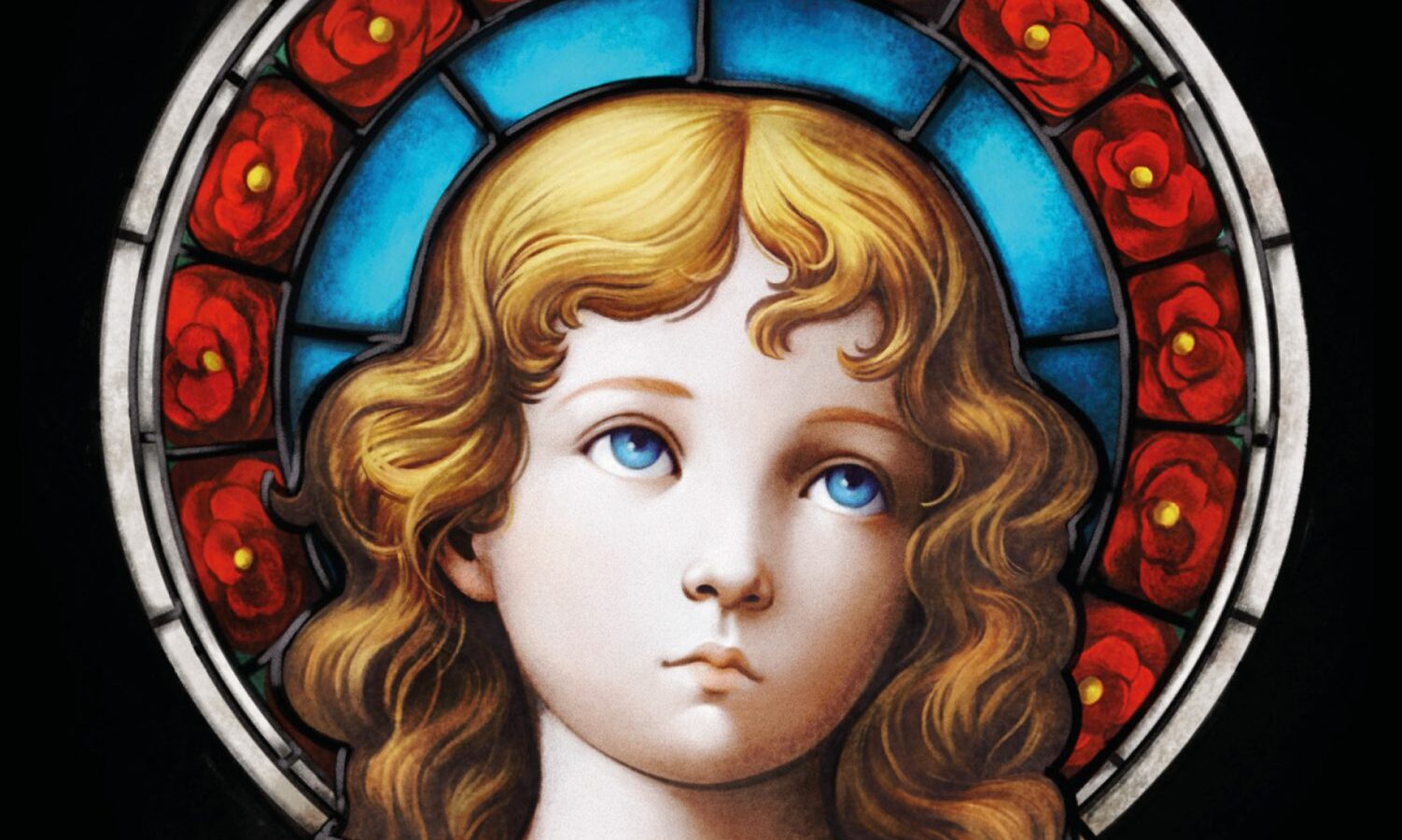
Rodrigo Cortés alumbra con Hija del cielo una audaz oración narrativa que se atreve a crear un mundo. Gabaón —pueblo, colegio, orfelinato y monasterio suspendido frente al mar— acoge un espacio habitado por monjas, sacerdotes, una niña encerrada (¿endemoniada?) y una lista de personajes desnortados. Un lugar trastornado que terminará forjando poco a poco un universo regido por sus propias leyes.
The challenge is laid, and Cortés—who has long stood out as a consummate and audacious tightrope-walker of words—arms himself with his inexhaustible capacity to conjure unexpected and provocative images, accepting the most difficult still.
There are two voices weaving a tale from markedly different stylistic approaches.
The narrator’s voice, sharp and unadorned, contrasts with the girl’s unbridled tongue, perfect for exposing horrors without flinching, always with humor at hand.
Cortés handles materials that complement each other by difference. If the first voice works from the precision of a goldsmith, the second discards corsets, breaks with logic, digs beneath traditional schemes, sheds the scales of prudence and rigor. A language that does not bite its tongue to carry reality to the other side of the mirror. Where nothing is as it seems.
That duality drives a mechanism that intimidates, fascinates, and unsettles. Order and chaos in fierce coexistence. The absurd knows no restraint in surfacing when least expected. And perhaps it is the quickest path to decipher what resists being cataloged. And, therefore, explained. Words are, in the girl’s mouth, a life of escape that slips from any leash. A being imprisoned with howls of freedom. Language as a way to carve a breach of fresh air in the walls of oppression. The curate Alén, by contrast, embraces his condition as a man “overwhelmed by stimuli,” someone fascinated by the “infant authority” of “that creature on the fourth floor, whom he feared so much and adored so poorly.”
The ambiguity marks the course of the exposed human fauna: a legion of sixty-one nuns, three rather lazy priests, and a whirlwind of lost figures who make Gabaón a miniature universe where the laws that order (or condemn) the world seem to spring from a malevolent cursed fairy tale, crossed by strokes of very dark humor and an affinity for unrestrained imagination that does not fear flirting with extravagance to unravel mysteries.
With the girl’s voice, Cortés’s talent unfolds in all its glory: a torrential narration that blends registers with a fluency and a moving intensity. Moving? Yes, because the dam breaks allow the prose to thrill and horrify at once. The extraordinary is clothed in naturalness, the atrocious drenched in humor, and readers are left to accept the rules of the game without quite knowing which card to play. To cry or to laugh, to tremble or to hold distance. Or all at once, if you please.
Cautious observation and unbridled imagination join forces to bind the sentences and render them freer. Hence the novel, in both form and meaning, becomes an absolute love letter to a language stripped of veils to reveal something that conventional style would have silenced. If Gabaón is distant from everything, it is because the worldly noise is foreign to it, and if the girl survives captive it is because her voice requires a radically intimate territory to be clear and eloquent. Provocative.
With the exact words of the priest and the disordered words of the girl, Cortés finds the perfect alchemy so that his sentences can house an idea, forge a powerful image, or issue a challenge to readers to stay highly attentive to their screens, weaving rhythms that accelerate or slow down action (and emotion) with the talent of a skilled film editor. All to probe the hidden links between what we see and what we imagine, between the heaven we would like to understand and the land where we must live confined at the edge of the abyss that binds us. And betrays us.
—————————————
Author: Rodrigo Cortés. Title: Hija del cielo. Publisher: Random House. Retail: Todos tus libros.