
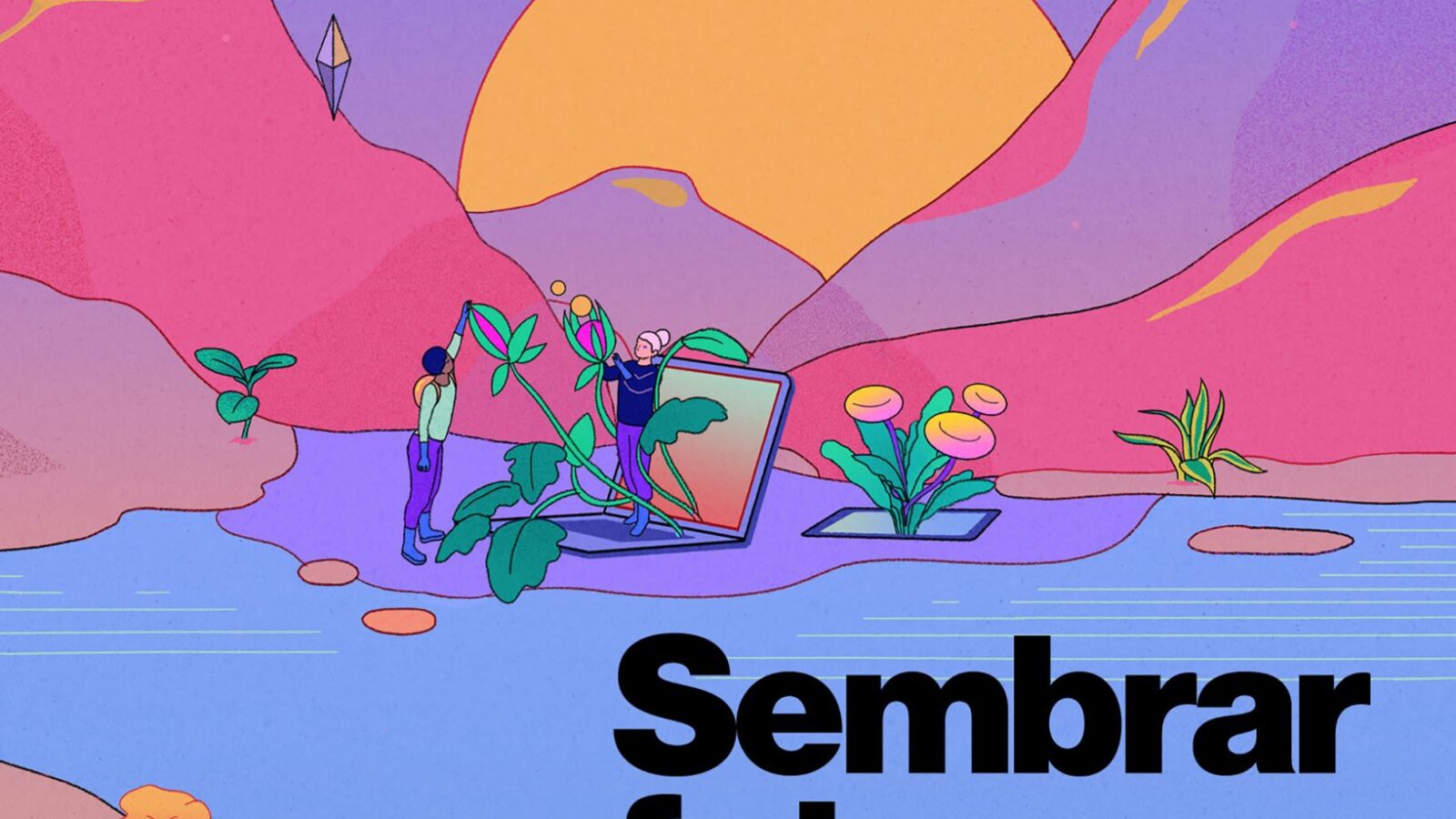
We consume sterile fruit, delegate memory to the cloud, let maps chart the way for us, and let algorithms anticipate what we want to see, buy, or desire. This book traces the wounds of digital capitalism—from the coltan mines and data centers that gulp down water and energy, to the strategies of big tech that grab our attention, shape our bodies, and monetize our intimacy.
In this Making Of, Eurídice Cabañes explains how she wrote Sowing Futures (Ariel).
***
This book has given me the chance to reclaim my voice and to check that my actions align with what I think and desire: let’s say the book has written me as much as I have written it.
And something so strange became possible thanks to the publisher, and especially to Silvia, my editor, who opened the door for me to move away from a scholarly register with which I never felt entirely at ease, sometimes even nudging me beyond it. Thus, the book blends the personal, the poetic, and the political without asking permission, it speaks of seedless grapes and four-leaf clovers, of my father in a town in Burgos and of the gulls that chase drones in the Barcelona sky.
Because technology is not abstract: it hurts, it unsettles, it penetrates us. And to understand it, we must tell it from the body. As I once said at a conference and it has become my mantra: “there is no code without a body” and there is no writing without a body. I wrote this book with my whole body, letting the writing pass through me and rewrite me. I had to break myself to put the pieces back together, leave behind what no longer was, start living more in line with what I write. I am not the same person when I started writing it as I am now, and I dream that whoever reads it will feel equally challenged and moved, and that they too will not be the same person when they finish.
I think the book aims to be that—a spell that awakens collective desire and fosters change toward a better world: for all people, for ecosystems and non-human beings. The title, Sowing Futures, arrived at the end, as a promise. But it was no accident: seeds thread through the entire book. They symbolize everything we have stopped cultivating: memory, time, autonomy, the capacity to imagine. And they are also the proposal: against extractivism, sowing. Against obsolescence, fertility.
I wrote these pages straddling Spain and Mexico, where my life and my heart reside. The years I spent there don’t fade away; they stay in the gaze, in the cadence, in the way I understand the world. I learned that knowledge is not imposed from above, but rather it sprouts from the earth. That the future is ancestral because desirable futures are not only in the imagination but also in practices, communities, and philosophies that have existed for many years and resist the extractivist colonialism that wants it all and destroys possible futures. Shifting the lens, thinking from interdependence and care, because the alternative leads to collapse, is not unnecessary—it is a matter of survival. Thus, that double gaze permeates the whole book: the critique of technological colonialism, the defense of situated knowledges, the commitment to a justice that is not solely human.
In this mission, it is also important to affirm the power and strength of the collective. There, here, and anywhere we must build in community; care networks are like mycelium: invisible, subterranean, often forgotten, but what truly sustains the forest. Writing this book has also been an exercise in trusting that network: in the people who have accompanied me, in the collectives that keep sowing even if they do not see the harvest, in the certainty that what we do together, even if unseen, is the only thing that truly endures.
Sowing Futures is not a cookbook nor a manual of naive hope. It is an invitation to analyze the gears of the system and to ask ourselves, together, what kind of world we want to build and what tools we have to do it. Because the future is not what is going to happen to us. It is what we still have time to sow.
—————————————
Author: Eurídice Cabañes. Title: Sowing Futures. Publisher: Ariel. Retail: Todos tus libros.