
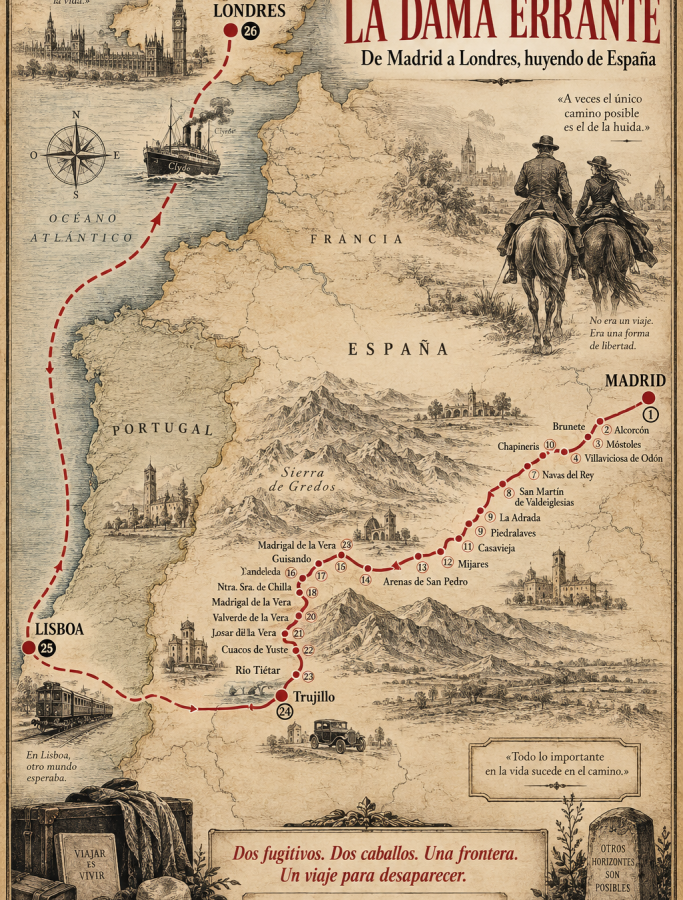
Pío Baroja published in 1908 the tale of a woman who leaves Madrid disguised as a peasant, crosses half of Spain on horseback and on foot, sleeps in inns, crosses Gredos, escapes through a window, wades a river at night, clandestinely crosses a border, reaches Lisbon and embarks for England. They called it The Wandering Lady. And indeed, she was.
Madrid, 1906. After the attempt on Alfonso XIII and Victoria Eugenia, a doctor and his daughter (“the wandering lady”) realize that, by a damned twist of fate, the police can connect them to the killer. Thus they decide to disappear. They hide for two weeks in the Casa de Campo and, when they decide that the moment to depart has arrived, France seems the logical exit. María proposes Portugal. Less surveillance, fewer people, fewer questions. And off they go.
Madrid, Alcorcón, Móstoles, Villaviciosa de Odón. They set out at night, disguised as peasants and with false names. He is now Isidro García, a guard of the Casa de Campo. She, his daughter. They carry the money sewn into the lining of the jacket, chocolate, cheese, bread, a teapot and two horses far less heroic than the adventure demands: Montesina and Galán. At dawn they leave Madrid behind. The Wandering Lady truly begins.
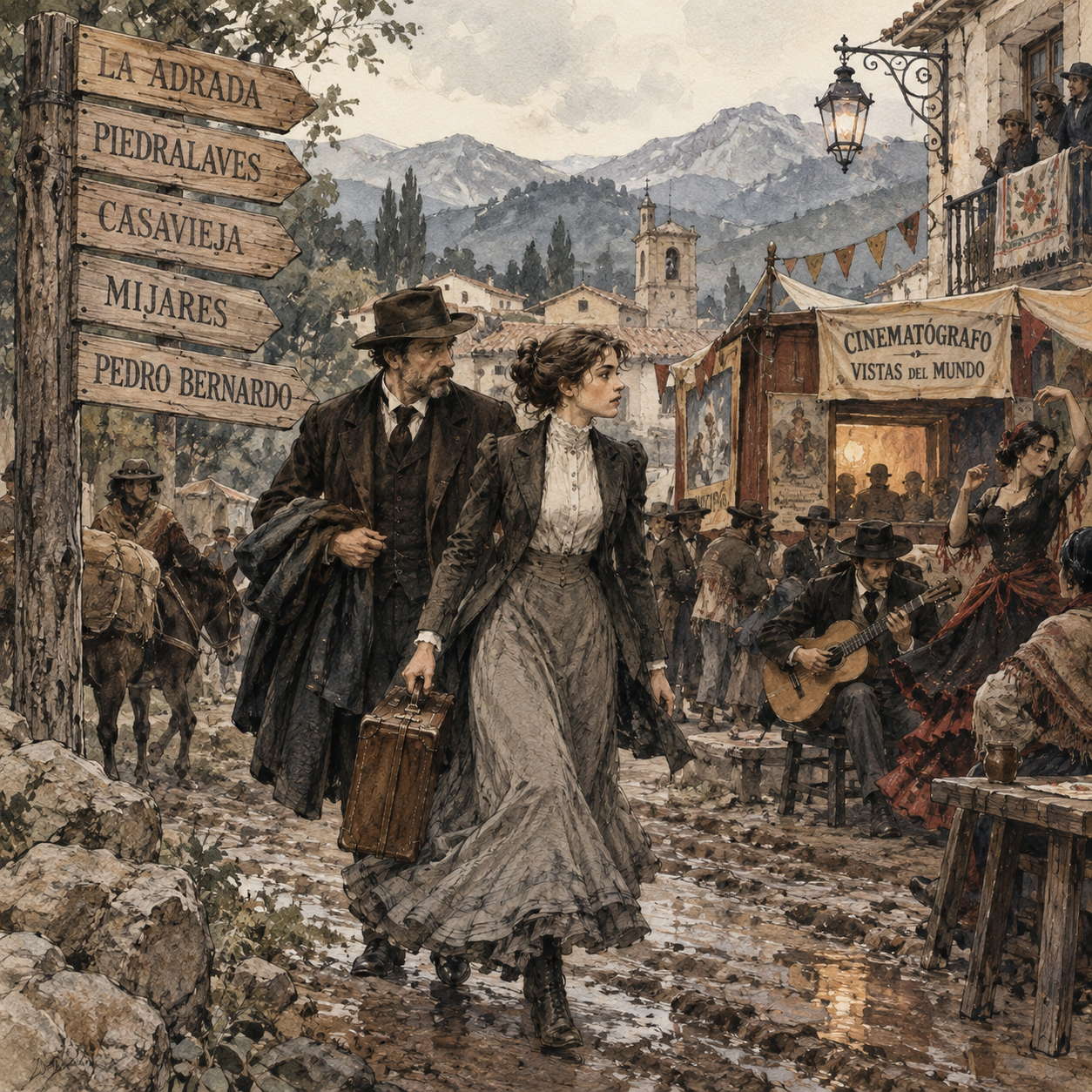
Brunete, Chapinería, Navas del Rey, San Martín de Valdeiglesias. They are no longer a famous doctor and a Madrid girl. They are two fugitives. It rains. They sleep in haylofts and inns, eat whatever they find, cross guards, beggars, shepherds, wanderers and characters who seem to have appeared on the road solely so Baroja can recount Spain as he did centuries earlier, Miguel de Cervantes.
La Adrada, Piedralaves, Casavieja, Mijares, Pedro Bernardo. Here the journey begins to take on a “Quixote-like” adventure novel feel. There are fairs, itinerant cinematographers, guitarists, dancers, furious hostesses, muddy roads and conversations with strangers that are better left not told too much. Meanwhile, María is changing. Every kilometer distances her a little more from the girl who left Madrid.
Arenas de San Pedro, Guisando, Candeleda. Gredos appears on the horizon and the landscape becomes immense. In Arenas they cross the town, pass by the castle and continue toward Guisando. Then they enter La Vera. Here the journey already has something of a Spanish western (Extremadura has always been one): horses, lonely roads, inns, Civil Guards, characters who appear and disappear and, on the horizon, two fugitives who keep glancing backward.
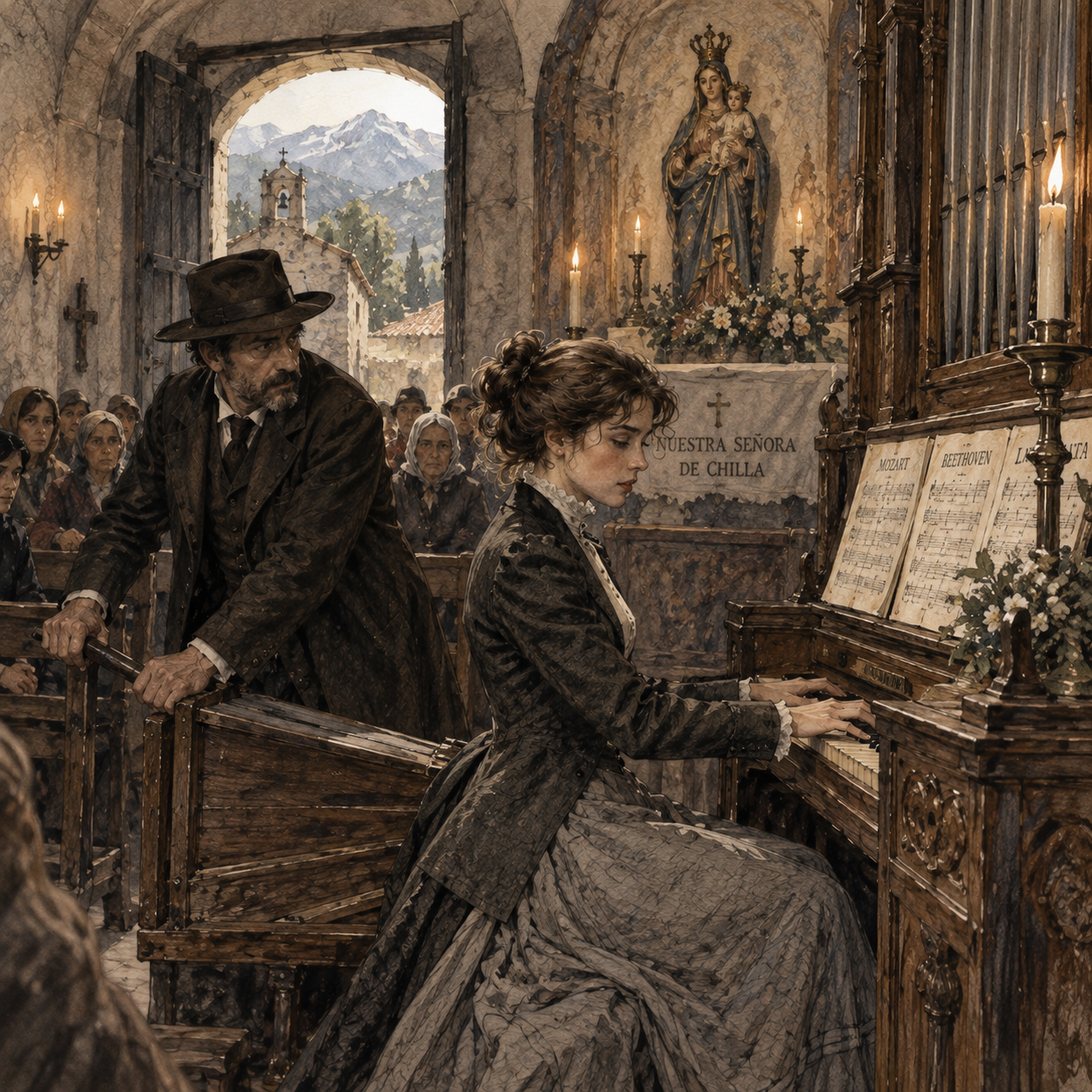
Nuestra señora de Chilla. A wrong turn leads them to the hermitage of Chilla. And there unfolds one of those scenes that explains María better than many pages of description: during the mass, the wandering lady sits at the organ and plays what she remembers, which is by no means religious music, but fragments of opera, Beethoven and Mozart, while her father operates the bellows.
Una mujer perseguida por la policía tocando un órgano en mitad de Gredos. Baroja también sabía hacer cine.
Madrigal de la Vera, Valverde, Losar, Jarandilla, Cuacos. The escape continues among gorges, paprika mills and villages of La Vera. Galán, María’s horse, dies along the way. She keeps going. In Cuacos the danger comes too close again. Father and daughter escape at night through a window, continue on foot toward Jaraíz and then seek the road to Casatejada. Then the Tiétar River appears. They cannot find a bridge. They attempt to wade it, but the water rises. They grasp a horse to cross and reach the far bank soaked, exhausted and freezing. There remains almost nothing of the two Madrileños who set out on the journey.
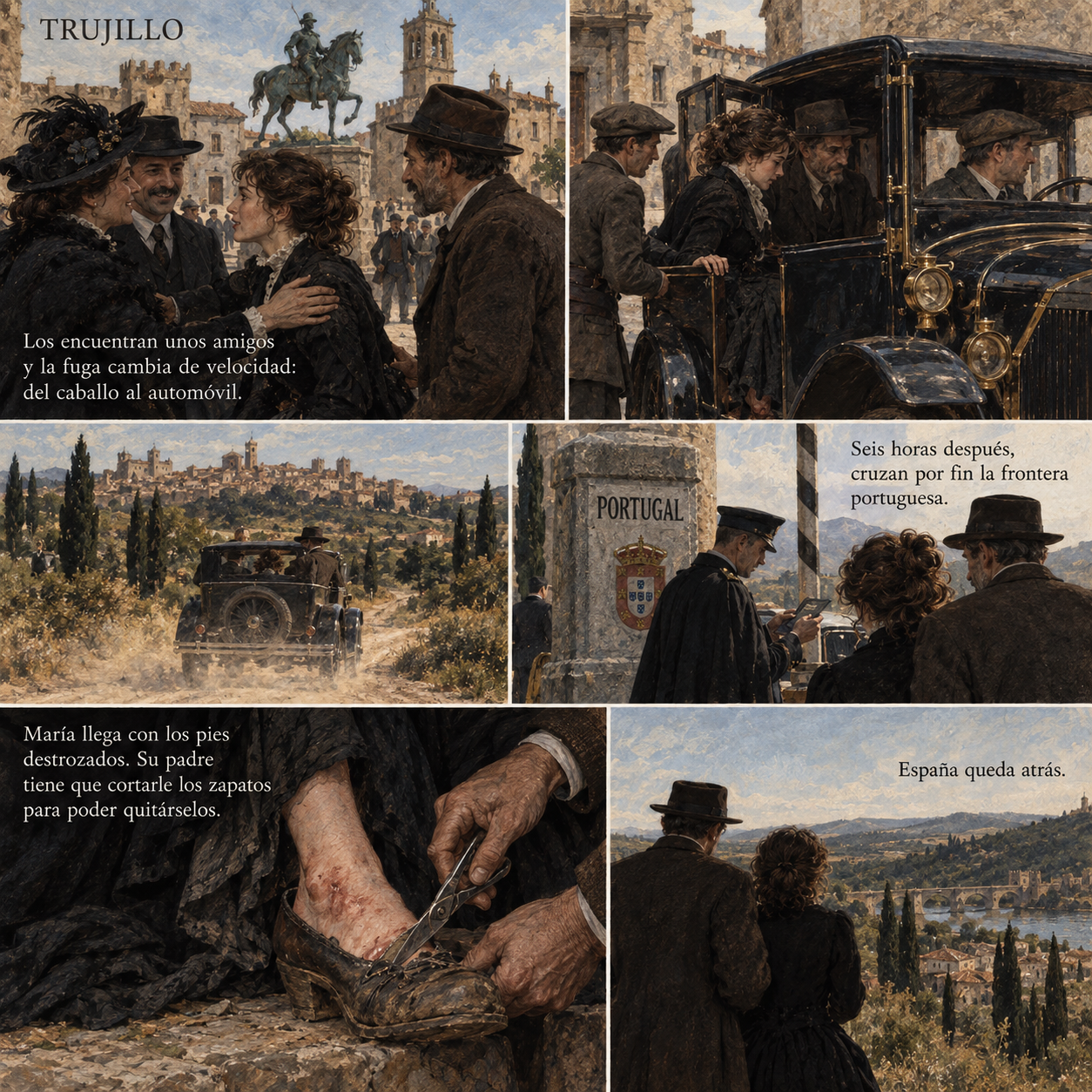
Trujillo, Portugal. They are found by some friends and the flight accelerates: from a horse to a car. They descend to Trujillo and, six hours later, finally cross the Portuguese border. María arrives with feet ruined. Her father has to cut her shoes to be able to remove them. Spain lies behind them.
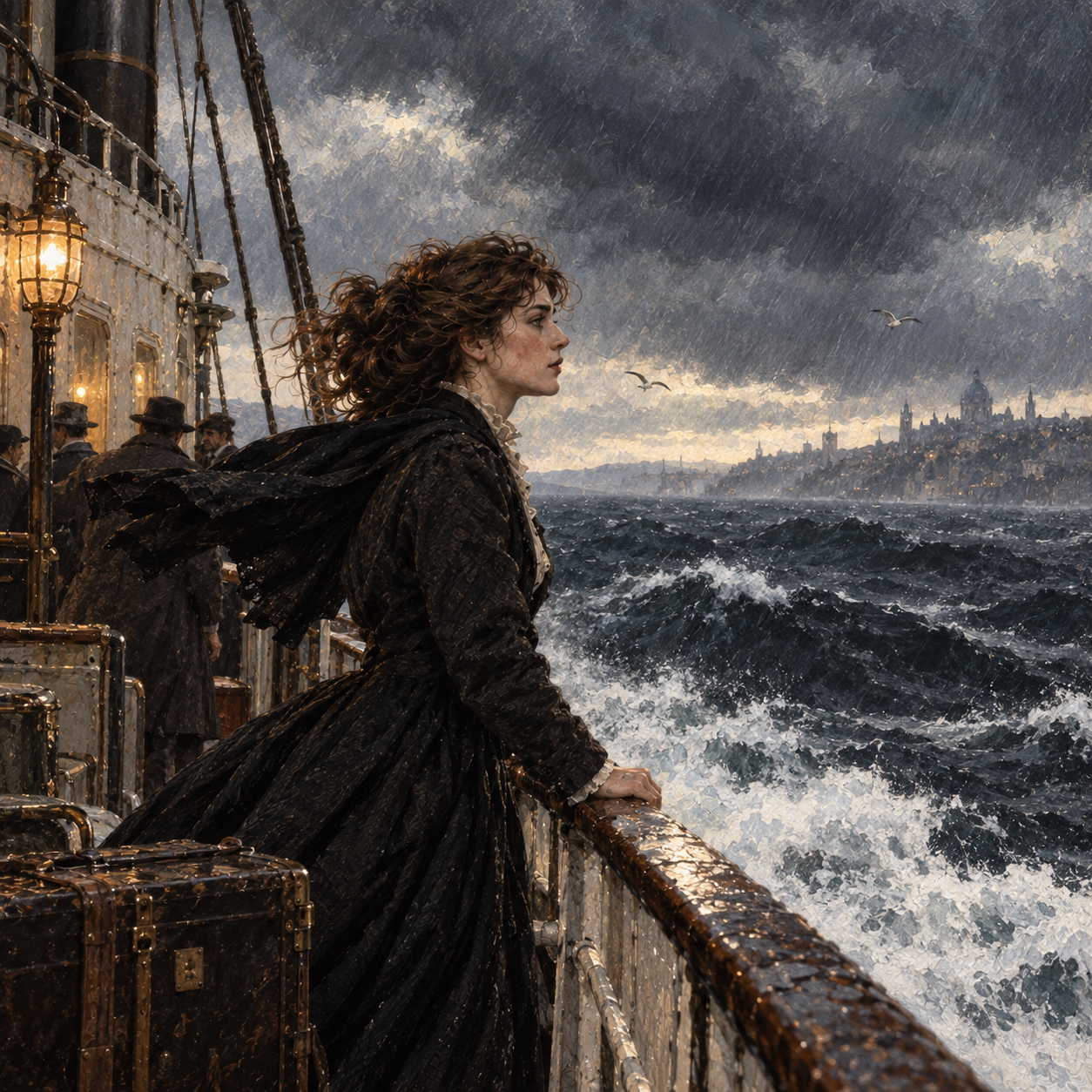
Portugal and the ocean: They stay for three weeks hidden in a Portuguese town. But there they cannot remain either. A ship, the Clyde, will sail from Lisbon to London without stopping at any Spanish port. They take the Sud Express and at eleven o’clock at night the lights of Lisbon appear in the rain. They reach the quay. They board the ship. The Clyde heads toward the Atlantic in the darkness. Aracil locks himself, seasick, in his cabin. María does exactly the opposite. She goes up on deck.
There is wind, rain, spray and a black sea. And the girl, utterly transformed by the journey and the adventure, like a modern Ulysses, watches the darkness from a ship that carries her away from a homeland that she barely recognizes.
—Tomorrow we will be in London.
Afterward will come The City of the Fog. But that is another story.
—————————————
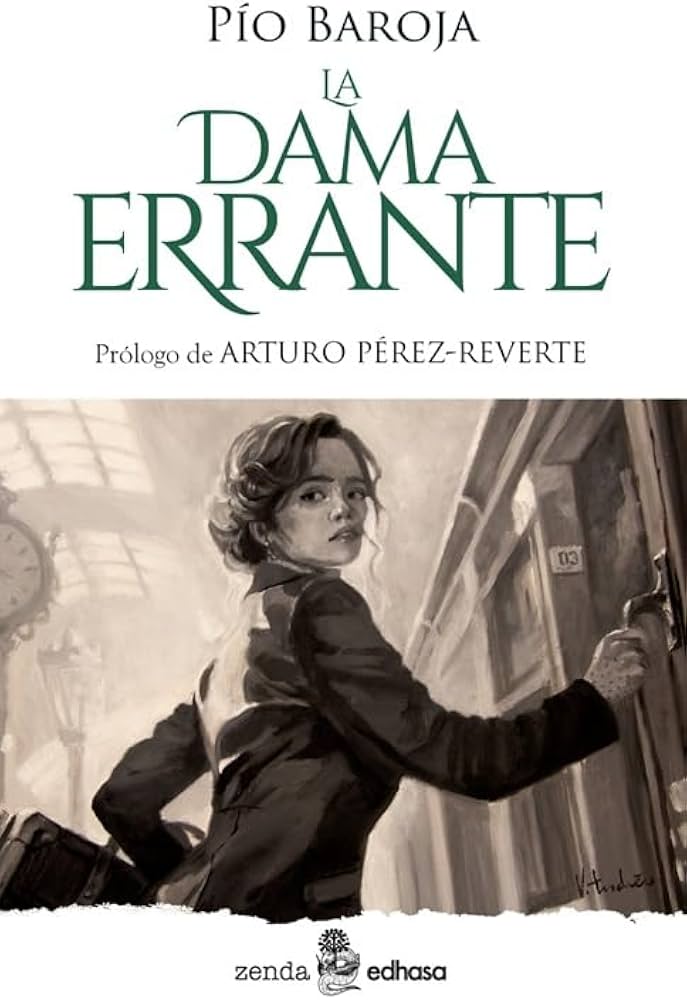
Autor: Pío Baroja. Título: The Wandering Lady. Editorial: Zenda-Edhasa. Venta: Amazon.