
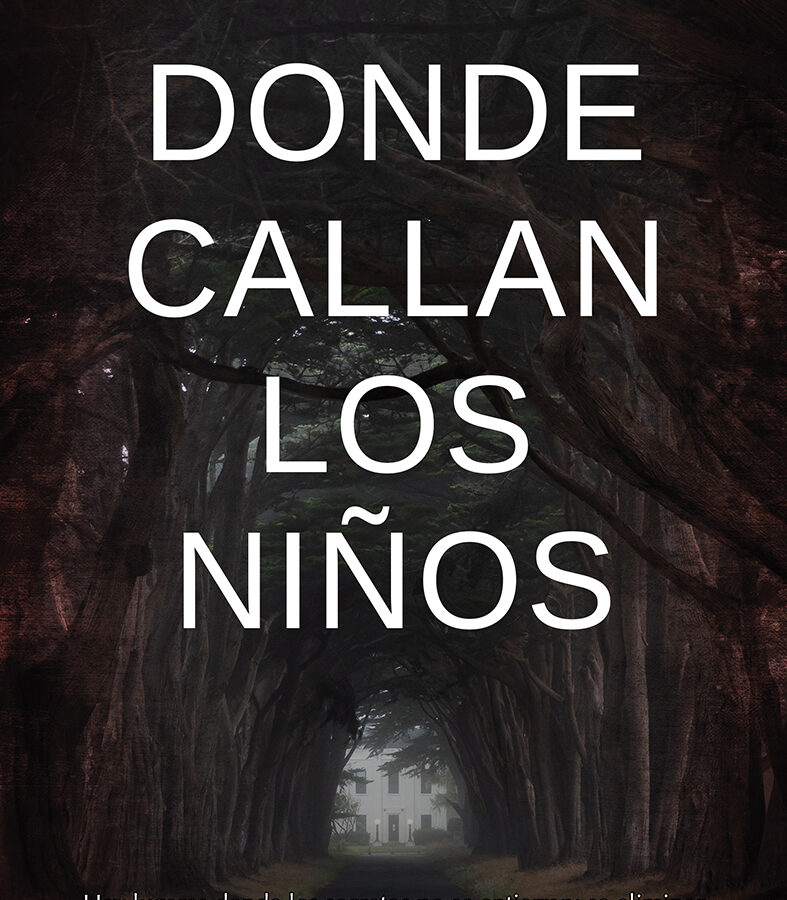
There was a great eagerness for a new novel by Eva Zamora and, this time, I was additionally incredibly lucky to know her from a privileged vantage point: as a first reader. An experience that allowed me to approach the story before its publication and verify, from its opening pages, that we were dealing with a thriller with ample mileage. Where the Children Speak No More (Imágica ediciones) is a powerful and ambitious tale, with a plot that grows as the pages advance until it explodes in full force. A novel that confirms the author’s moment of narrative maturity and demonstrates her capacity to keep the reader hooked up to the final word.
An eleven-year-old boy’s body is found on the banks of the Manzanares. He was a patient at the Fundación Tordesillas, a medical center dedicated to experimental treatments. The investigation will lead inspector Raquel Bru to uncover a plot far darker than she had imagined. What initially seems like a murder will end up exposing a complex network of corruption and abuse of power, in which the pursuit of justice will test the limits of its protagonists.
One of the aspects I liked most is the construction of the characters, especially the two protagonists. Raquel Bru is a reserved, rational and tenacious inspector, with a rather hermetic nature and a way of approaching her work that prioritizes keeping a level head. Her personality contrasts with that of Lucas Soto, her partner, much more outgoing, spontaneous and emotional. The differences between them give rise to a very interesting dynamic and bring freshness to the investigation. Surrounding them is a cast of secondary characters with their own conflicts, secrets and motivations, some of whom are caught in particularly difficult circumstances. Their stories and decisions carry weight in the narrative and allow the novel not to depend solely on solving the case, enriching a plot in which appearances do not always correspond to reality.
Zamora develops the story through several narrative lines that alternate and complement each other, offering different perspectives on the events. In addition to the police investigation, there are the happenings surrounding the Foundation and the moves of characters whose true role is not evident at first. There is also the presence of a mysterious figure, identified as Eme, which adds an intriguing component of suspense. The author doses clues and revelations with skill, making some pieces click into place when we least expect it and forcing us to reconsider what we thought we knew (oh, that twist!). The result is a plot with numerous branches and several questions that keep the interest alive until the ending. It’s one of those stories where paying attention to details pays off, because many of them carry far more weight than they initially appear.
Where the Children Speak No More tackles rather uncomfortable issues. The novel delves into corruption, the abuse of power and the impunity of those who use money and influence to control their surroundings. But it pays particular attention to the exploitation of vulnerable people and to the different forms of violence that can be exercised on those who barely have the capacity to defend themselves. The silence referred to in the title thus takes on a meaning that goes far beyond the impossibility of recounting what happened: it also represents fear, threats and all those mechanisms that allow certain atrocious acts to remain hidden.
But above the criminal investigation, there is a question that threads through the entire story: how far can one go to obtain justice? Raquel represents the defense of legality and of established procedures, while other characters question the efficacy of a system that does not always manage to punish those who should answer for their actions. The border between justice and vengeance thus becomes one of the main engines of the novel. The author translates this conflict into the decisions of characters who, for different reasons, end up confronting their own contradictions and the limits of what they consider morally acceptable.
Zamora sets much of the action in Madrid, a city that serves as the backdrop to a story where everyday spaces coexist with others that are much more exclusive and hermetic, where money and influence seem to allow living beyond any rule. The settings tied to the Fundación Tordesillas and other more secluded locations also take center stage, their atmosphere contributing to reinforce the sense of unease and threat. The author makes excellent use of the contrast between what is visible and what remains hidden, building a backdrop that matches the dark tone of the plot. The everyday details also help to define the characters and place the action in a very recognizable environment.
As for the style, the narration is brisk and very visual, which facilitates reading and keeps the pace steady throughout the story. The chapters, generally brief, the abundant dialogues and the shifts in perspective favor a dynamic narration, with frequent cliffhangers at the end of each chapter that invite you to keep turning pages. Zamora knows how to handle thriller timing, introduce new questions and maintain the tension without losing sight of the personal conflicts of her protagonists.
Where the Children Speak No More is an ambitious thriller, with an investigation that goes far beyond its starting point and that blends police intrigue with a reflection on power, corruption, and the limits of justice. But, above all, it is a demonstration of Eva Zamora’s ability to construct increasingly complex stories. Having had the chance to know this novel from the initial manuscript has been a genuine privilege and a wonderful way to witness firsthand its evolution as a writer. A reading that confirms she still has many stories to tell and that it is worth keeping a close eye on her next steps.
—————————————
Author: Eva Zamora. Title: Where the Children Speak No More. Publisher: Imágica ediciones. Sales: Todostuslibros.