
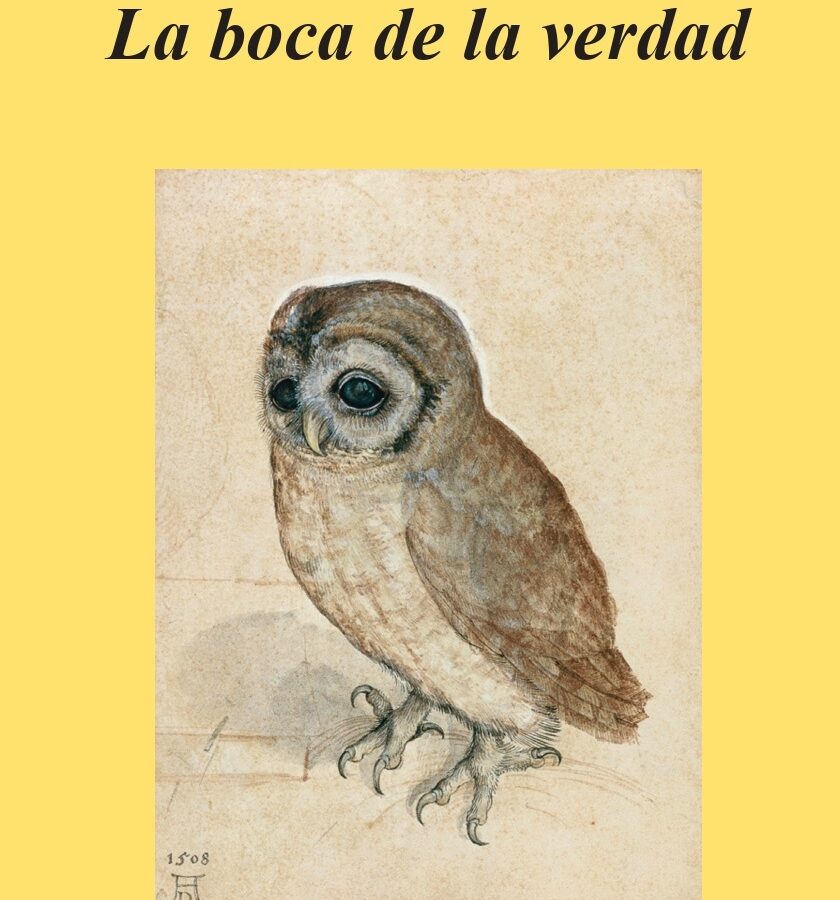
Ischadia Island, the Mediterranean Sea. The zenith and the sunset of the Renaissance. From his exile in the New World, the now elderly Sempronio, tavern boy, recalls the prodigious decades that preceded the fall of his Republic. The peasant uprisings, the height of art and commerce, the imperial siege and the epidemic, the rule of fanatics and the rule of bankers, the heroic days of printing, conversation and free thought.
In this Making Of, José Marzo explains how he wrote The Mouth of Truth (Panta Rei).
***
Art, science and democracy grow on the common ground of dialogue, and they die where dialogue breaks down. More than twenty years ago, moving away from my realism-oriented approach, the idea arose of writing a trilogy of independent historical novels. They would be set in three periods in which humanism tragically reared its head. I began by writing the last one, the third. It was titled Wind in the Ears, and it is the ironic-to-bitter narrative of those times when civil war was incubating, told by the voice of a child who transmits the memory of events he did not live through. The other two novels waited many years in the drawer of intentions. Life tends to take us where it wants.
The first novel could only be set in no other period than ancient Athens, a narrative I am now embarking on. The birth of science, philosophy, the first democracy… its fatal crisis. The second novel was to be set many centuries later, in the Renaissance.
It would be titled The Mouth of Truth. Writing a novel sometimes resembles chasing an idea. A historical novel is also a journey through time. The heroic era of printing. The type lead and the press. The strategies by which a book crossed customs and defied dogmas, enemies of truth. But we do not live in isolation. The story of the printer would be told by his young friend Sempronio, a tavern boy. More than the printer’s story, Sempronio would tell the story of Ischadia, the entire island and its town, of the printer’s colleagues, his patrons, his salon friends, of politicians, priests and friars and merchants. It is against the backdrop of a place and a time where the small history of each individual gains meaning.
Diving into Renaissance history reveals prodigious landscapes. This period is a touchstone for anyone who values culture, in its broadest sense. It has been fascinating to live surrounded by its books, the echoes of those humanists who had not yet acquired the habit of separating science, the humanities and art into rigid compartments.
For students of literary technique, it is enough to say that the voice of a narrator is steeped in the voices of his time, and that the plot of the narration is woven from the perspectives of its protagonists.
—————————————
Author: José Marzo. Title: The Mouth of Truth. Publisher: Panta Rei. Availability: Revista Mínima.