
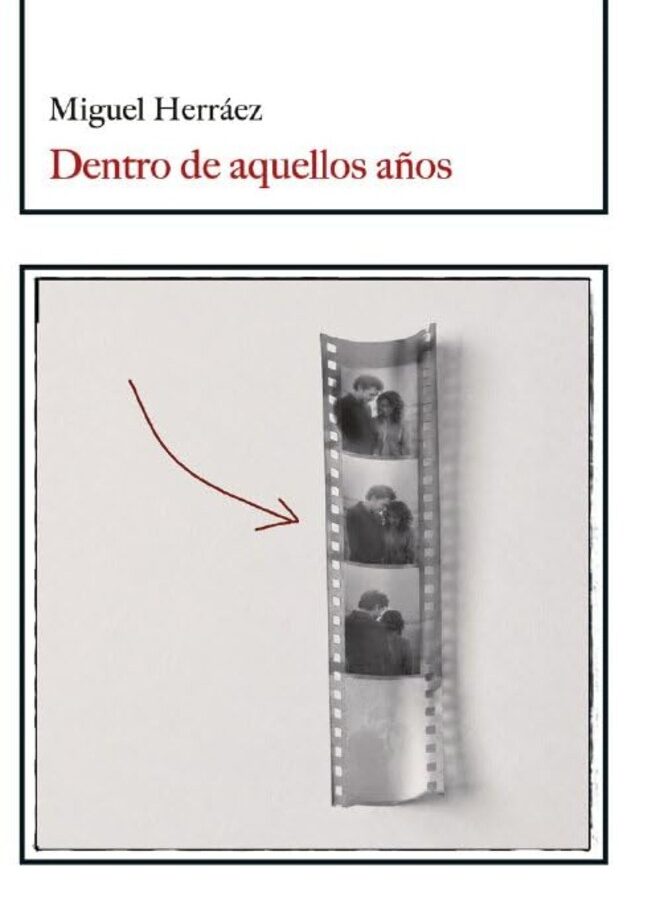
In this Making Of, Miguel Herráez explains how he wrote Dentro de aquellos años (Piel de Zapa).
***
The memory, gentle and compliant, is always there, accompanying us with fidelity, even when camouflaged. We watch a film or listen to Carole King, and that action may catch us off guard, relaxed, with our guard down, sipping a cup of coffee, leafing through a Chekhov short story, and then it sends us back to the realm of another time and another space without any apparent involvement of the brain. We’ve known this since Marcel Proust, who wasn’t a neurologist but seemed as if he were. He knew a great deal about this, more than many neurologists. That memory assaults us through sensations and dizzying synapses, unhinging our everyday life: the memory materializes, takes shape, and imposes itself on us in leaps, even though it lay in a corner of our cerebral cortex in a virtual state. It seemed trivial, devoid of vitality yet alive. It’s reminiscent of that forest frog, Lithobates sylvaticus, which can survive being frozen, with vital signs at a minimum, for more than half a year thanks to a chemical shield that protects it.
But often another memory—a memory even more untimely—erupts, one that had become entrenched in the oblivion of oblivion, at the bottom of one of the two hippocampi, or both, there hidden among folds of neurons that believed themselves deactivated, and this unruly memory confronts us suddenly, insistent. This memory —these memories—, which had lain dormant, becomes, in this way, an overwhelming surprise, a determinant of the present that degrades and conditions it: how is it possible that I had forgotten those sequences in which (the character of my novel) longed to become Antoine Doinel and live with Christine Darbon (she is Julia in the novel) in Paris, in the eighteenth arrondissement, to color flowers and sell them in that Montmartre courtyard, as they do in Truffaut’s film, even though we had nothing and could not get beyond a surviving French with “Bonjour, madame” and “Une soupe à l’oignon, s’il vous plaît,” and we aspired to be poor but happy just like Hemingway.
Dentro de aquellos años goes on to explore that. It is about human existences, cross destinies. Of a writer who cannot break the shell of his anonymity: who decides to assemble a novel about Romans, about Ancient Rome, to get out of him, who has a cat that adores his wife, who has a partner (his wife) who works in Brussels, who has a son who lives and draws comics in distant Reykjavik, who soon shifts from Roman tales (of Ancient Rome) to writing a Nordic noir, so fashionable, or a Stanisław Lem–style story, or whatever, and who suddenly is overwhelmed by a ghost from the past, that love from twenty-one, from twenty-two, from taverns and garrets, from film clubs, from late Francoism, from life both exuberant and naive at the same time, an unforeseen destabilizer that blocks him and that requires him to rescue from oblivion the strength of years already distant and irrecoverable but that operate with zeal in his daily life and make him falter. They unsettle his here and now.
—————————————
Author: Miguel Herráez. Title: Dentro de aquellos años.Publisher: Piel de Zapa. On sale: Todos tus libros.