
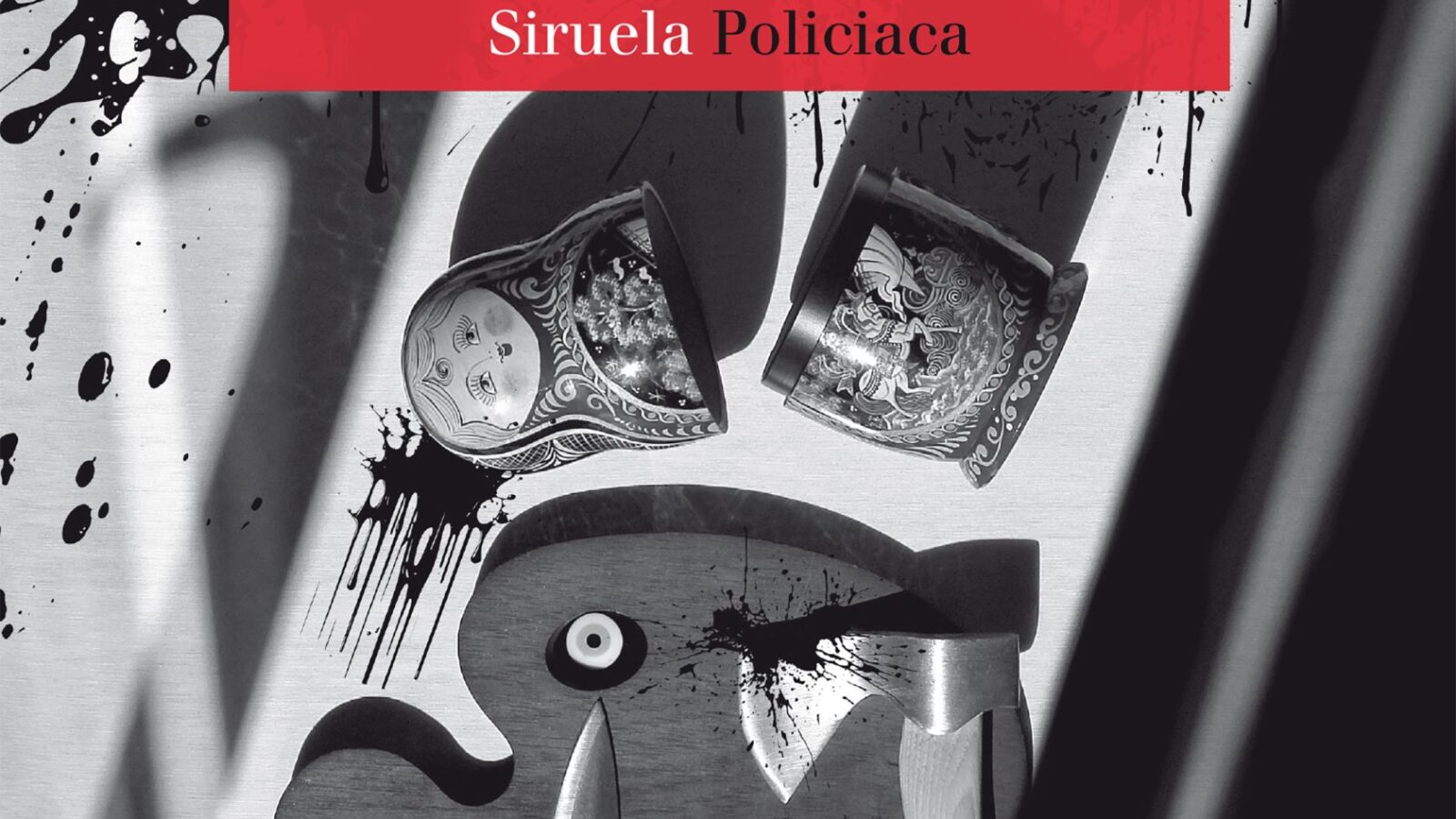
A drop of red paint slides down a pedestal as the queen opens the Contemporary Art Fair. A bodyguard wet the handkerchief, brings it to his nose, and triggers a level-one alert by radio. The hyperreal sculpture crowning the invited artist’s self-portrait is not a sculpture: it is his bleeding head. What follows are one hundred ninety pages recounted backward, like an arrow aimed at the only data that matters, which is not only who did it, but why.
I Will Keep Your Last Blood has an unusual origin: it’s written by someone completely detached from the publishing world, with no track record, no workshop, no sponsors, and it possesses a quality rarely found among the hundreds of debut works we’re surrounded by.
It isn’t a promising manuscript, but a solid, authentic book, the product of an author with a long career, more so than that of a newcomer. The reasons are three, and it’s helpful to separate them, even if they communicate with one another.
The first reason is that there exists a particular gaze. From the opening page — that revelation about those who chase fame and those who shy away from it — you know the writer has looked at the world on her own terms and has not returned reassured. It is a gaze both heartrending and lucid, without the self-pity or the luridness that usually accompany the former, nor the coldness that usually accompanies the latter. Its best embodiment is Ana Dema, the psychiatrist who ends up pulling the case: white hair, premature from a summer night in a car with the doors locked, taekwondo, marijuana, Vespa, and a confessed inability to keep distance from her patients. Ana could have been a catalogue of tics, but she is, instead, a conscience: she spurns almost everyone, yet continues to believe in loyalty, in favors that go unbilled, in people who suffer deserving someone to accompany them to the police station. That remnant of faith is what prevents the book from turning into a pose.
The second reason is a powerful, unforgiving, yet fully literary style: there are images that linger — the women of the Fair who reappear each year like swallows, the old money that hides away but never enough, the house where money only ever shows up on the walls. The author has read classic noir, and it shows in her formal decisions: the weight of dialogue, the descriptions drawn in two strokes, and the way no one explains what the reader can deduce. Furthermore, Guerra possesses the most difficult gift of all: she preserves her own personality while giving each character a voice of their own. Inspector Millán Ariza, a dashing man with a perpetual sadness, does not speak like his sub-inspector Teo, who interrogates with affectionate rudeness. Neither do they speak like the dealer, who betrays themselves in a sentence and corrects themselves late; nor like the professor who dismantles the entire enterprise on television while the host laughs, unaware that he is being called an accomplice.
The third reason is the structure. It is a noir novel in the classic sense, in the best possible way: an enigma, an impossible corpse, an investigation that advances through a buildup of small discoveries. But here the enigma serves as a pretext to reveal a world. There is the gallery owner who keeps only half, the collection-builder who once had a hundred kilos of cocaine found in cement sacks and now presides over one of the country’s finest collections, the bubble of contemporary art, explained with the force of someone who has seen it up close, and a Madrid society laid bare in its folds and counterfolds: who invites whom, who inherits, who pretends. The comparison between a painting worth a million euros and a Louis Vuitton bag is among the most telling ones.
Beneath all that lies a profound reflection on secrecy and deceit, the motives behind the world. No one escapes them in this book, whether for shame, for money, for love, or for habit. And the solution to the case does not rest so much on finding a guilty hand as on uncovering authorship. When it arrives, the reader understands that the decapitation was the least of it.
—————————————
Author: Natalia Guerra. Title: I Will Keep Your Last Blood. Publisher: Siruela. Availability: All Your Books.