
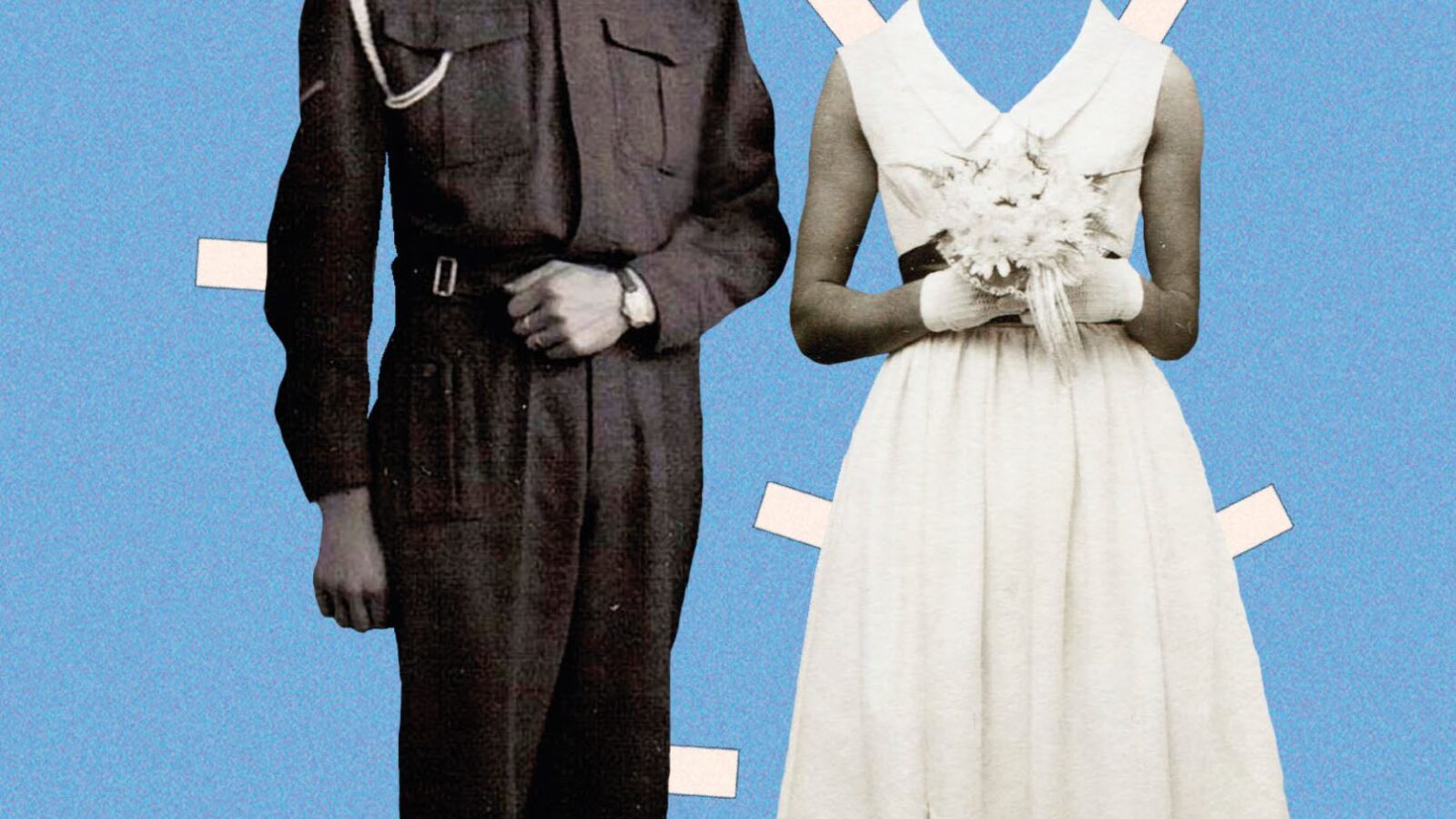
There are bonds that spring from the brazenest self-interest and end up becoming an invitation to believe in hope. And that evolution is fed by harsh feeling when it comes wrapped in ruin, pain, and despair. The Undertaking, Audrey Magee’s debut novel, happily recovered by Sexto Piso, unites Peter Faber, a German private on the Eastern Front, with Katharina Spinell, a young Berliner. Ordinary people who agree to marry by proxy without ever having met. Their motives could hardly be more romantic: ten days of leave for him, a future widow’s pension for her. The bureaucratic exchange becomes a route of escape in 1931 Germany, when a large portion of German society still believes Hitler’s war-lies and prefers to look away at the first signs of catastrophe. In that world where the scent of rot is already in the air, something unexpected arises: the convenient couple finds themselves suddenly swept up in a whirlpool of desire that escapes the predictable. Kisses to the grave. The ill‑fated soldier returns to his homeland mentally shattered, infested with lice, inwardly demolished by the horrors accumulated from a war that can only be defended through fanaticism. His sudden wife survives with dreams reduced to ashes, scraping by with inhospitable parents tormented by the absence of a son condemned to the Russian hell.
Magee leaves the facts to cry for themselves. There is no emphasis whatsoever, no hint of epic in the battles, even the love scenes reject any temptation toward tenderness or sentimentality, letting unleashed desire rule, forged in the slow-burning fire of a probe into urgencies and carnal needs. An odd way to reach emotional territory, perhaps that is why it feels so truthful, so ravenous. Magee does not dig into the wounds; she merely exposes them with direct, precise language, backed by meticulous descriptions of terror: the mutilations, the cold that freezes every pore, the burned flesh, the rats as the daily fare, the snipers who leave nothing standing, the senseless deaths on both sides. The endless bombardments. And the mud, mud acting as a shroud of infernal seams in a chaos of blind obedience.
Aways from afar, Katharina rises as she can, paying the toll of submission in a boned Berlin where everyone moves for self-interest in a diabolical landscape where the newcomers, the traitors, and the soulless patriots hold power. Where crime is legalised and the lesser evils become our everyday plan. Crimes without punishment, silences that reek of collective convenience. Magee ventures into that map of ordinary monstrosities without cloak or whip. We observe the neighbours, who in normal circumstances could be friendly and welcoming. All of them have signed an imaginary vow of voluntary muzzling, of murder by omission. No chances for redemption are granted: there cannot be any with so many demons in charge. Fear, pain, loss. A stench of blind impotence. What does the suffering of the Jewish neighbours matter if one can, in exchange, “inherit” their clothes, their jewelry, their houses? In that bog where morality and humanity drown, the central marriage is capable—whether knowingly or not—of finding pathways to moments of emotion where intimacy survives only with great difficulty, on the edge of feeling, and with a bitter sting. Their only burning nail is an uncertain hope of sharing a future, should hell ever stop knocking at their doors.
Indeed, the price is bitter: the struggle for survival amid the catastrophe of war, the humiliation of women in the hands of the Russian invaders. And when one might glimpse something resembling a hopeful ending, Magee opts for an ending that is as uncomfortable as it is necessary, as inevitable as it is cruel. Her novel intertwines the intimate map with the political one; its dryness is soaked in truth: after reading it, it is impossible to view the images of a ruined Germany with the same eyes. As in Günter Grass’s work, The Undertaking is inhabited by ordinary people who accepted complicity with Nazism, by action or omission. The styles are opposed: Magee neither distorts nor ridicules, she does not settle scores. Her prose is a deft, sharp scalpel, not a tin drum beating to call our attention to the ills of humanity; it is enough to show them and let them speak. Let us listen.
———————
Author: Audrey Magee. Title: The Undertaking. Translation: Francisco González López. Publisher: Sexto Piso. Available at: Todoslibros.