
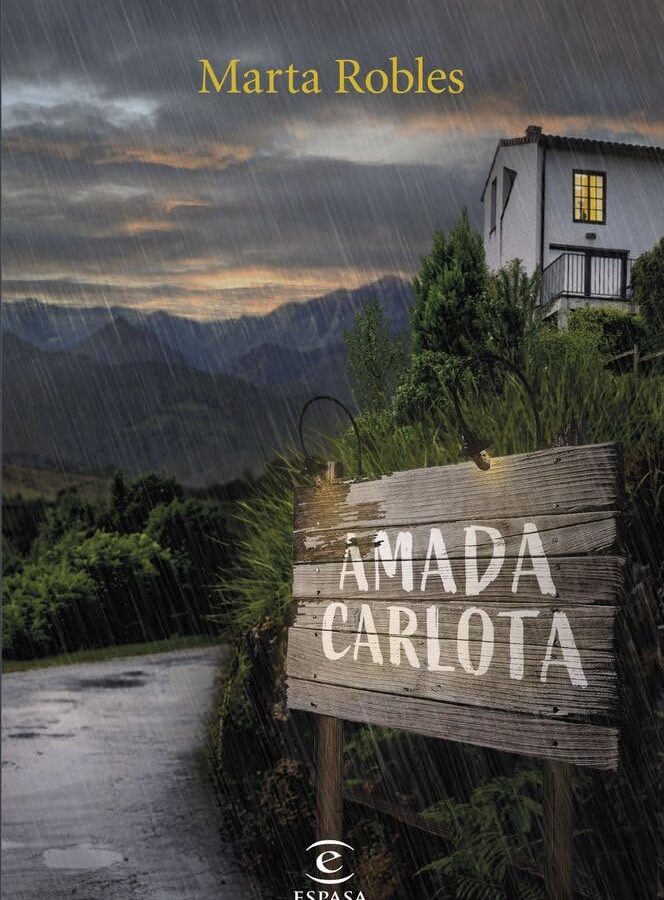
It is hard to leave Beloved Carlota without the sense of having traversed a deeply painful story. The writer and journalist Marta Robles builds a tale of family secrets, but above all, of women whose lives others have tried to decide.
Todo comienza de forma feroz. Mari Carmen, con apenas dieciséis años, da a luz en una clínica clandestina y apenas puede sostener a su hija unos minutos antes de que se la arrebaten.
Después llega la imposición del silencio: debe asumir que esa niña nunca ha existido. Desde ese momento queda claro que estamos ante una historia sobre la capacidad del poder para intervenir en la identidad ajena, porque tan terrible resulta el robo de un bebé como el intento posterior de borrar incluso su recuerdo.
The tale begins in a ferocious fashion. Mari Carmen, barely sixteen, gives birth in a clandestine clinic and can barely hold her daughter for a few minutes before she is ripped away. Then comes the imposition of silence: she must accept that this child has never existed. From that moment it becomes clear that we are facing a story about the power to intervene in someone else’s identity, because the theft of a baby is as terrible as the subsequent attempt to erase even its memory.
La trama atraviesa varias generaciones y avanza de la mano de Tony Roures, el carismático detective recurrente en la narrativa de Robles, que vuelve a actuar como hilo conductor de la investigación. Antes de Carlota está Magdalena, su madre, atrapada en una existencia que otros han diseñado para ella. Se casa muy joven con un hombre al que no ama y entra en una vida burguesa aparentemente privilegiada en la que, sin embargo, apenas puede decidir. Su marido y su entorno determinan qué esposa y qué madre debe ser. Durante años representa el modelo de mujer que se espera de ella, hasta que la distancia entre lo que aparenta y lo que desea se vuelve insoportable. La música se convierte entonces en uno de los pocos espacios en los que todavía consigue reconocerse.
The plot traverses several generations, moving forward with Tony Roures, the charismatic detective who recurs in Robles’ narratives and again serves as the through-line of the investigation. Before Carlota there is Magdalena, her mother, trapped in a life designed by others. She marries very young to a man she does not love and enters a bourgeois life that appears privileged, yet she can barely decide. Her husband and her circle determine what wife and mother she must be. For years she embodies the model of the woman expected of her, until the distance between appearance and what she desires becomes unbearable. Music then becomes one of the few spaces where she can still recognize herself.
The Franco regime does not merely function as a backdrop, but as a structure capable of intervening in bodies, maternities, memories, and identities.
Carlota, en cambio, estudia, llega a ser jueza e intenta construir una identidad propia. Sin embargo, decisiones tomadas por otros décadas atrás continúan condicionando su historia y su relación con la maternidad. A partir de ahí, el relato de los bebés robados se amplía hacia una reflexión más profunda sobre el dominio del cuerpo femenino y sobre la violencia entendida como mecanismo de apropiación y poder, una concepción que encuentra resonancias en el pensamiento de Rita Laura Segato sobre la violencia ejercida contra las mujeres.
By contrast, Carlota studies, becomes a judge, and tries to build her own identity. Yet decisions made by others decades earlier continue to shape her story and her relationship with motherhood. From there, the tale of stolen babies broadens into a deeper reflection on the control of the female body and on violence understood as a mechanism of appropriation and power—a notion that resonates with Rita Laura Segato’s thinking on violence exercised against women.
Uno de los aspectos más destacables de Amada Carlota es que Robles no diluye determinados episodios históricos tras nombres ficticios, sino que los introduce de forma explícita en la narración. La novela recupera las teorías psiquiátricas y eugenésicas asociadas a Antonio Vallejo-Nájera, la persecución ideológica durante el franquismo y la separación de hijos e hijas de mujeres consideradas políticamente indeseables, al tiempo que recuerda la intervención de médicos, instituciones religiosas y estructuras de poder en prácticas de apropiación y ocultamiento. De este modo, el franquismo no funciona únicamente como telón de fondo, sino como una estructura capaz de intervenir sobre cuerpos, maternidades, memorias e identidades.
One of the most notable aspects of Beloved Carlota is that Robles does not dilute certain historical episodes behind fictional names, but rather introduces them explicitly into the narrative. The novel revisits psychiatric and eugenic theories associated with Antonio Vallejo-Nájera, the ideological persecution during Francoism, and the separation of sons and daughters from women deemed politically undesirable, while recalling the involvement of doctors, religious institutions, and power structures in acts of appropriation and concealment. In this way, Francoism functions not merely as a backdrop but as a structure capable of intervening on bodies, maternities, memories, and identities.
Marta Robles intertwines fiction, historical memory, and intimate violence without offering the reader too many refuges from what she chooses to tell.
La obra establece, además, un vínculo con la dictadura argentina y la apropiación de bebés nacidos en centros clandestinos de detención. Sin equiparar procesos históricos distintos, la novela señala una lógica inquietantemente parecida: la de un poder que se arroga el derecho a decidir quién puede criar, qué memoria debe transmitirse y hasta qué identidad puede conservar un niño.
The work also establishes a link with the Argentine dictatorship and the appropriation of babies born in clandestine detention centers. While not equating distinct historical processes, the novel points to a disturbingly similar logic: a power that arrogates the right to decide who can raise a child, what memory must be transmitted, and to what identity a child may retain.
En ese sentido, la novela trasciende el misterio que articula su argumento. Los secretos familiares, en lugar de permanecer anclados en el pasado, atraviesan generaciones y continúan condicionando a quienes ni siquiera participaron en los hechos que los originaron. La identidad aparece así como algo profundamente individual, pero también como una construcción atravesada por silencios, decisiones ajenas, mandatos sociales y memorias heredadas.
In that sense, the novel transcends the mystery that drives its plot. Family secrets, instead of remaining anchored in the past, cross generations and continue to condition those who were not even involved in the events that gave birth to them. Identity thus appears as something deeply individual, yet also as a construction stained by silences, others’ decisions, social mandates, and inherited memories.
Con una escritura minuciosa que, por momentos, me ha resultado difícil de sostener ante la crudeza de lo narrado, Marta Robles entrelaza ficción, memoria histórica y violencia íntima sin ofrecer al lector demasiados refugios frente a aquello que decide contar. Amada Carlota es, en última instancia, una novela sobre la identidad, la memoria y el poder, pero también sobre una herida más íntima que reside en la dificultad de reconstruirse cuando otros han intentado apropiarse de tu historia y escribirla en tu lugar.
With a meticulous prose that at times has been hard to sustain given the bluntness of what is narrated, Marta Robles intertwines fiction, historical memory, and intimate violence without offering the reader many refuges from what she chooses to tell. Beloved Carlota is, ultimately, a novel about identity, memory, and power, but also about a more intimate wound that lies in the difficulty of rebuilding oneself when others have tried to appropriate your story and write it for you.
—————————————
Autora: Marta Robles. Título: Amada Carlota. Editorial: Espasa. Venta: Todos tus libros.
Author: Marta Robles. Title: Beloved Carlota. Publisher: Espasa. Available from: Todos tus libros.