
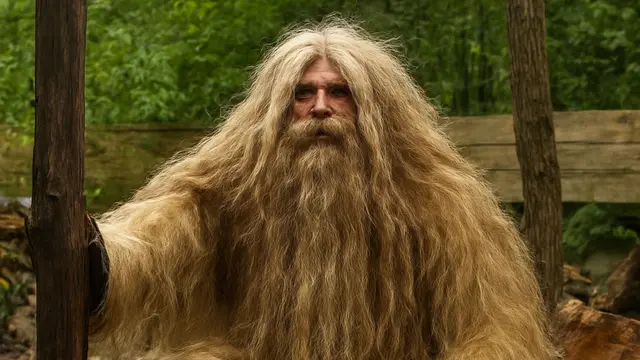
In the Basque village of Ahatsa in Lower Navarre, a road sign marks a spiritual fork: straight ahead lies Église-Eliza; to the right, Irati. Here below, the Christianized world; up there, the jungle of pagan creatures. The Basques descend from bears, a resident of Santa Grazi told ethnologist Txomin Peillen, and the intermediate link is the hairy humanoids of the woods: Basajaun, that sublimation of the bear glimpsed amid beeches and mists, that creature who rises to stand and resembles us, with immense strength and admirable cunning; that friend of shepherds and protector of livestock when it is in good mood, a bad beast that uproots oaks and hurls gigantic rocks at Christians when they do not show respect. The lady who cleans the Romanesque hermitage of Saint Salbatore, on the Haltza pass, shows me “the golden candelabrum of Basajaun”. It is actually made of iron and copper, but in the time of legends it was gold. They say a shepherd climbed to Irati and saw a cave that shone as if it contained the sun inside: he discovered the candelabrum, took it, and its owner Basajaun pursued him in a fury, but the shepherd found refuge in the hermitage, rang the bells, and the beast had to retreat. In these mountains Christian shrines are always near (or atop) dolmens and cromlechs: they replaced the pagans. And to Saint Salbatore people ask for protection of the livestock: the same vocation as Basajaun, who did not speak Latin and ended up unemployed.