
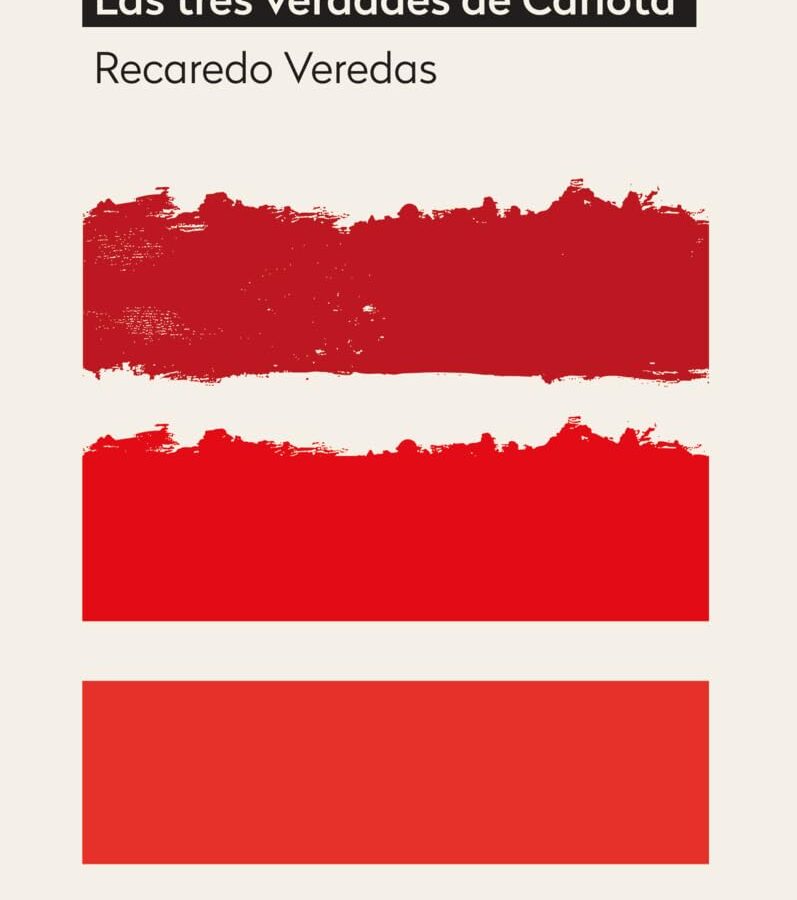
Alicia y Tirso han fundado Las Manos Tendidas, editorial donde publican los libros que les gustan. Pronto descubren que el entusiasmo no basta. Cuando se reencuentran con una antigua amiga, Carlota, de familia rica, aceptan que entre en el negocio. Lo que empezó como el proyecto de dos amigos pronto se convierte en causa de disputas y resentimiento.
In this making of Recaredo Veredas explains how he wrote Las tres verdades de Carlota (Sr. Scott).
***
The writer does not fear death, but disappearance. The fear that his name will vanish, that no one edits him, buys from him, or reviews him. This is what happens to one of my characters, whose obituary sits halfway between the headlines and oblivion. I have spent almost thirty years in the publishing world, and I have seen hundreds of authors and editors disappear who, in their moment of glory, believed themselves immortal. In those distant years editors smoked Ducados, even Winston, and everything was decided between smoke and whiskey. Today meetings are conducted via Teams, artificial intelligence writes synopses and reviews, and authors go to the gym. The one thing that hasn’t changed is the drive, that crazy desire for recognition that sustains businesses that almost never make money.
Las tres verdades de Carlota is a novel about vampires, although it contains no fangs.
The opening quotation from Bram Stoker:
Bienvenido a mi morada. Entre por su propia voluntad.
The first part is titled
Déjame entrar, because vampires never cross a threshold unless invited. Why do Alicia and Tirso allow Carlota to bite them? Because the remaining option is disappearance, and nothing is worse, not even death.
Let us set the context: Alicia, a neighborhood girl who blindlessly believes in the redemptive power of literature, and Tirso, her partner, an aesthete convinced of his own genius, have founded in Malasaña a small and prestigious publishing house, Las Manos Tendidas, that is slowly sinking. Then Carlota reappears, a spoiled girl who returns from New York after nearly a decade, in search of a purpose. Her family makes weapons. They open the door to her. She enters.
From there, the novel is also a corporate thriller, with a touch of Succession: shareholding, notaries, suited advisers, Luxembourg-based entities, and a family that teaches Carlota to command. It contends between fidelity to her own and her editorial vocation. She also knows that her money saves the project and, at the same time, devours it. Around them revolve Juana, an author who writes from a psychiatric hospital, and Newman, an old rottweiler, the only being Carlota loves without caveats.
I have always been obsessed with social classes: I believe origin determines almost everything and that class is inherited. I am materialist and, however, I do not share Marxist solutions. I think the answer does not exist and the only thing left is acceptance. The world is thus, complex and inexplicable. That is why I understand the motives of all: those of Alicia, who also deceives when she believes the cause justifies it; those of Tirso, who only wants to be immortal; and those of Carlota, who ends up accepting three truths. That she is insignificant. That reaching out to beings as small as she is the only thing that gives meaning to literature. And that, even if she makes mistakes, she must defend what is hers.
The origin of it all was my tinnitus, which I turned into the breath of a dead woman who haunts the living. It is not the only presence of the ineffable. There are omens, shared dreams, and a predawn call that only says: “We are going to kill you.” There are parallel universes, like a trip to the Arctic that the characters cancel and that the novel tells as if it had happened. Perhaps it happened. And there are the deepest layers of the subconscious, those we never have access to, where we keep what we forget and the hatred we do not confess.
I learned to write at the School of Letters and then had to unlearn. Since then I seek a difficult blend: clarity and style. Each sentence should be understood at first read, but it should have music. That the novel works as an artifact, entertains and that the reader wants to turn page after page, without sacrificing irony. Logically, I have my references, though the authentic ones are those the reader identifies, whether I have thought of them or not. Bertold Brecht, Lars von Trier, Javier Marías, Vladimir Nabokov and Patricia Highsmith always accompany me. Also Houellebecq, though at times it sits unevenly with me.
Hopefully you’ll like it. And if you do, let it in and let it bite your neck.
—————————————
Author: Recaredo Veredas. Title: Las tres verdades de Carlota. Publisher: Sr. Scott. Available at: Todos tus libros.