
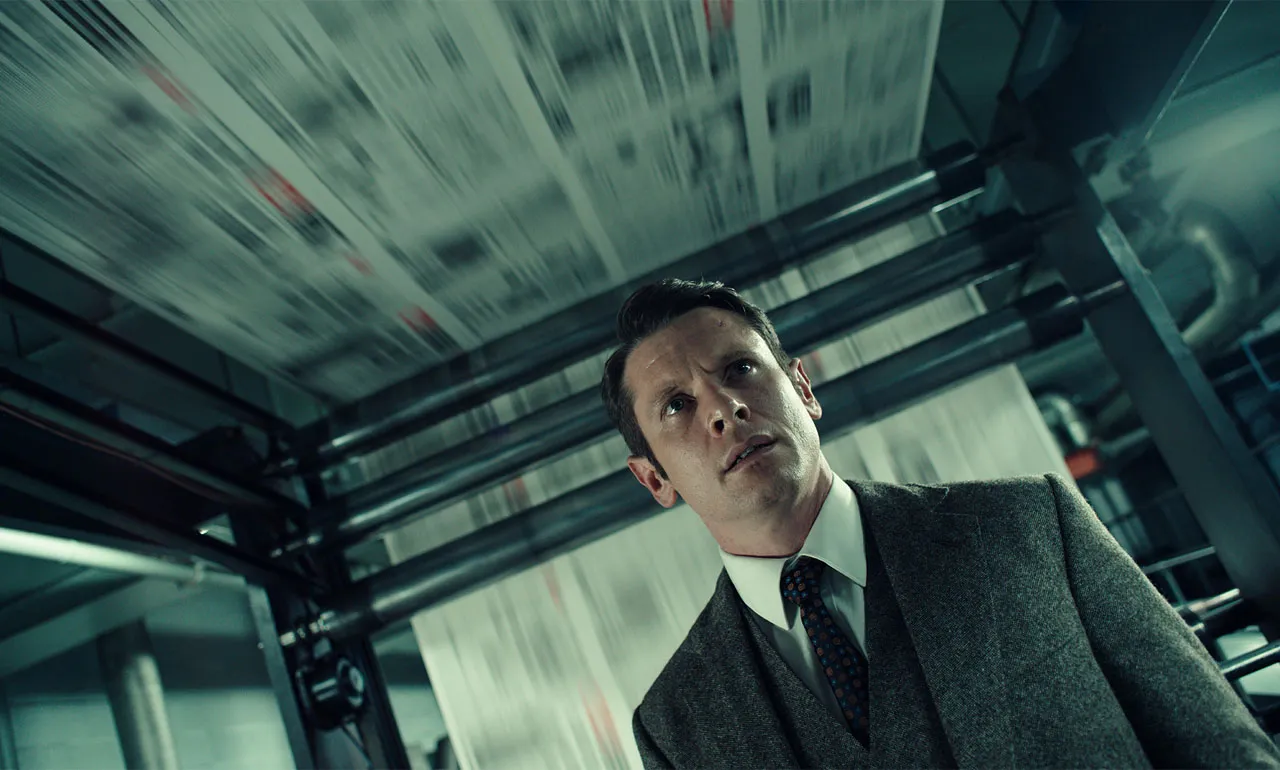
The 83rd Venice Film Festival raises the curtain on September 2 at the Lido with Ink, the film with which Danny Boyle returns to a terrain he knows well—the energies of collective crowds that propel a country forward without anyone fully governing them. Written by James Graham based on his own stage work, and featuring Jack O’Connell, Guy Pearce and Claire Foy, it reconstructs the birth of Britain’s popular press, that machinery that discovered before anyone how to manufacture the attention of millions of people and what can be done afterwards with it. A logic of capturing attention that today threads through industries as varied as media and online betting platforms like 1 x Bet. That a festival dedicated to generating anticipation for eleven days opens with a story about the industrialization of the headline has something of an involuntary wink, or perhaps an early confession.
Behind that opening night lie twenty feature films world premieres, a figure that Alberto Barbera unveiled in Rome with the resolve of one who has long refused to count others’ funerals, describing an art that still behaves like a “living organism” even as cinema audiences shrink, and noting that wars, migrations, climate and social tensions thread through much of the selection without lingering in the chronicle. The lineup, indeed, reads like a map of contemporary urgencies drawn by people who have spent decades sketching such maps.
Because the first thing that stands out at Venezia 83 is the roster of veterans returning to the Lido with the natural ease of coming home. Werner Herzog competes with Bucking Fastard, Lee Chang-dong breaks a long silence with Possible Love and Hirokazu Koreeda adapts in Look Back the comic by Tatsuki Fujimoto, a story about drawing, friendship and guilt that in his hands promises something more than a literal translation. To them is added Nanni Moretti, who had not competed in Venice since Palombella rossa, in 1989, returning with a film co-produced with Spain and starring Louis Garrel and Jasmine Trinca, a reunion that works nearly as a generational milestone for those who witnessed that water-polo match turned self-portrait of a left in disarray.
The rest of the competition is divided between directors in their prime and industry bets. Martin McDonagh places Wild Horse Nine in Chile before the coup of Augusto Pinochet, with a coral cast — John Malkovich, Sam Rockwell, Steve Buscemi, Tom Waits, Parker Posey — foreshadowing the crossing of black humor and political violence that the Irishman handles like few others. Florian Zeller presents Bunker, a psychological thriller with Penélope Cruz and Javier Bardem accompanied by Paul Dano and Stephen Graham, where the Spanish presence returns to the Lido through co-production rather than by flag. Lance Oppenheim directs Robert Pattinson in Primetime, produced by A24, and Casey Affleck signs off Company, his fourth work behind the camera.
That roll‑call of names exposes a figure that no press release can disguise. Among the twenty titles contending for the Golden Lion, only one is directed by a woman, the Danish‑Egyptian May el-Toukhy, who debuts in Venice with Woman Unknown, a drama set in the postwar era. The ratio is striking in a festival that prides itself on surveying the contemporary world and which this year has chosen to do so almost exclusively through the lens of established male directors. The debate will arrive at the Lido before the films, and it is unlikely to fade with the awards.
The official programming broadens later in directions that the red carpet showcase tends to obscure. Orizzonti gathers the less predictable writings, Venice Spotlight seeks works with a singular relationship with the audience, Venice Classics rescues restorations that return to the Sala Grande films many know only in home copies, and Venice Immersive continues exploring virtual reality and installations, a territory in which the Lido stakes its claim more forcefully than its rivals. Outside of competition, documentaries and series parade by, including Don’t Look Back in Anger, the chronicle of Oasis’s reunion and the subsequent tour, which promises to fill the Lido with a liturgy quite unlike that of auteur cinema. The Biennale College Cinema completes the whole with projects made on minimal budgets—those that rarely find space in the summaries and that often decide the festival’s look five years down the line.
The prize list will be decided by a jury chaired by Maggie Gyllenhaal, and including Kaouther Ben Hania, Daniel Blumberg, Francesco Casetti, Xavier Giannoli, Shahrbanoo Sadat and Johnnie To, a combination of direction, music, theory and industrial craft that does not promise easy verdicts. The edition will also award two honorary Golden Lions, to George Clooney and to Ellen Burstyn, with the latter receiving it shortly before the screening of a short film directed by Gyllenhaal about the myth of Marilyn Monroe, timed to the centennial of her birth, with Burstyn and Dakota Johnson embodying two versions of the same impossible figure.
The closing, on September 12, will be Dio ride, by Giovanni Veronesi, featuring Pierfrancesco Favino, Silvio Orlando and Alma Noce, screened out of competition once the prizes have been handed out and the Lido begins to thin. Until then, eleven days remain of premieres, encounters, endless queues and conversations that will exhaust themselves in their own noise. Venice, meanwhile, has fulfilled its first objective again long before the lights go out in the Sala Grande, which is to turn a list of titles into something to talk about. It is exactly the same trick that Ink is poised to tell on screen on the opening night.